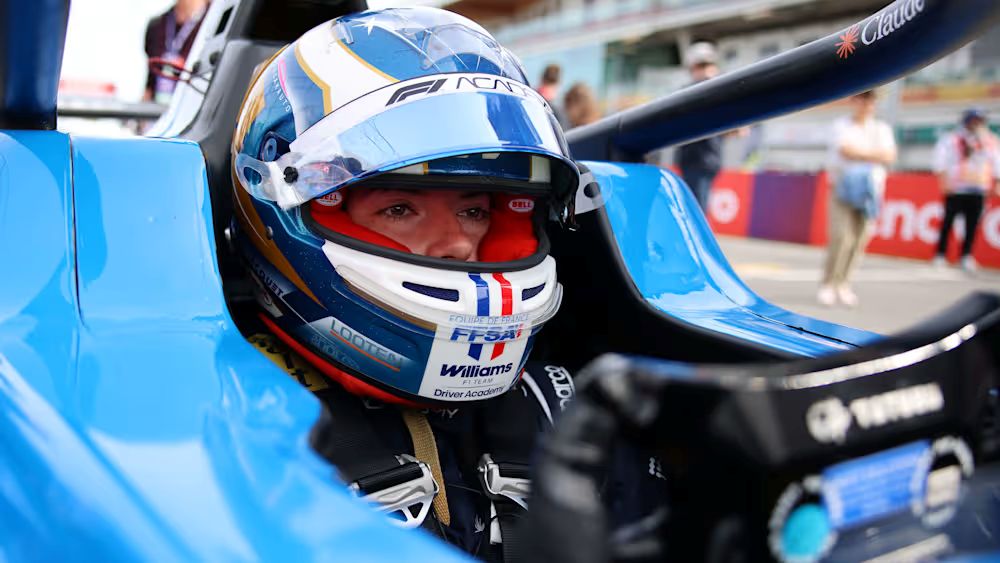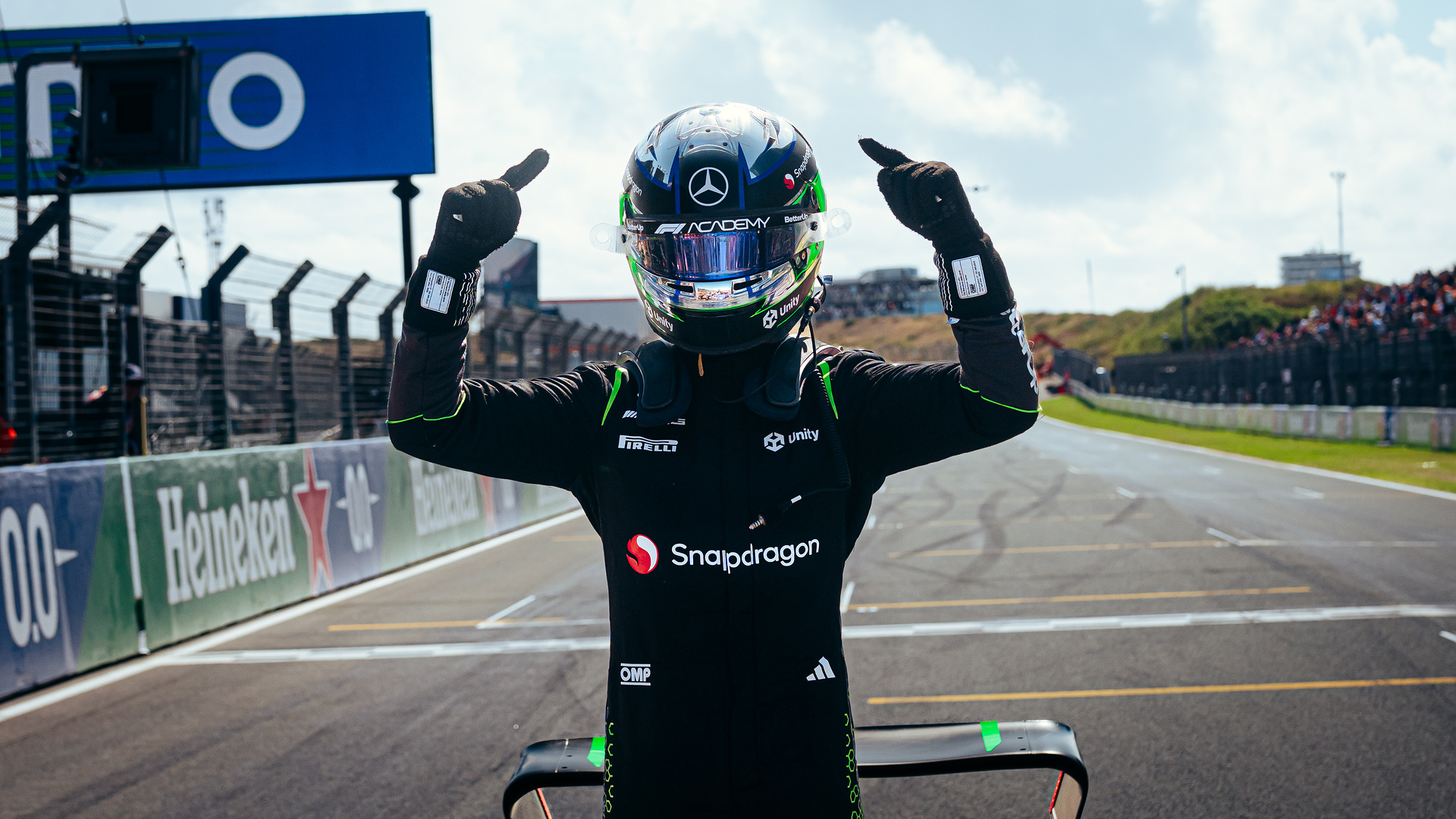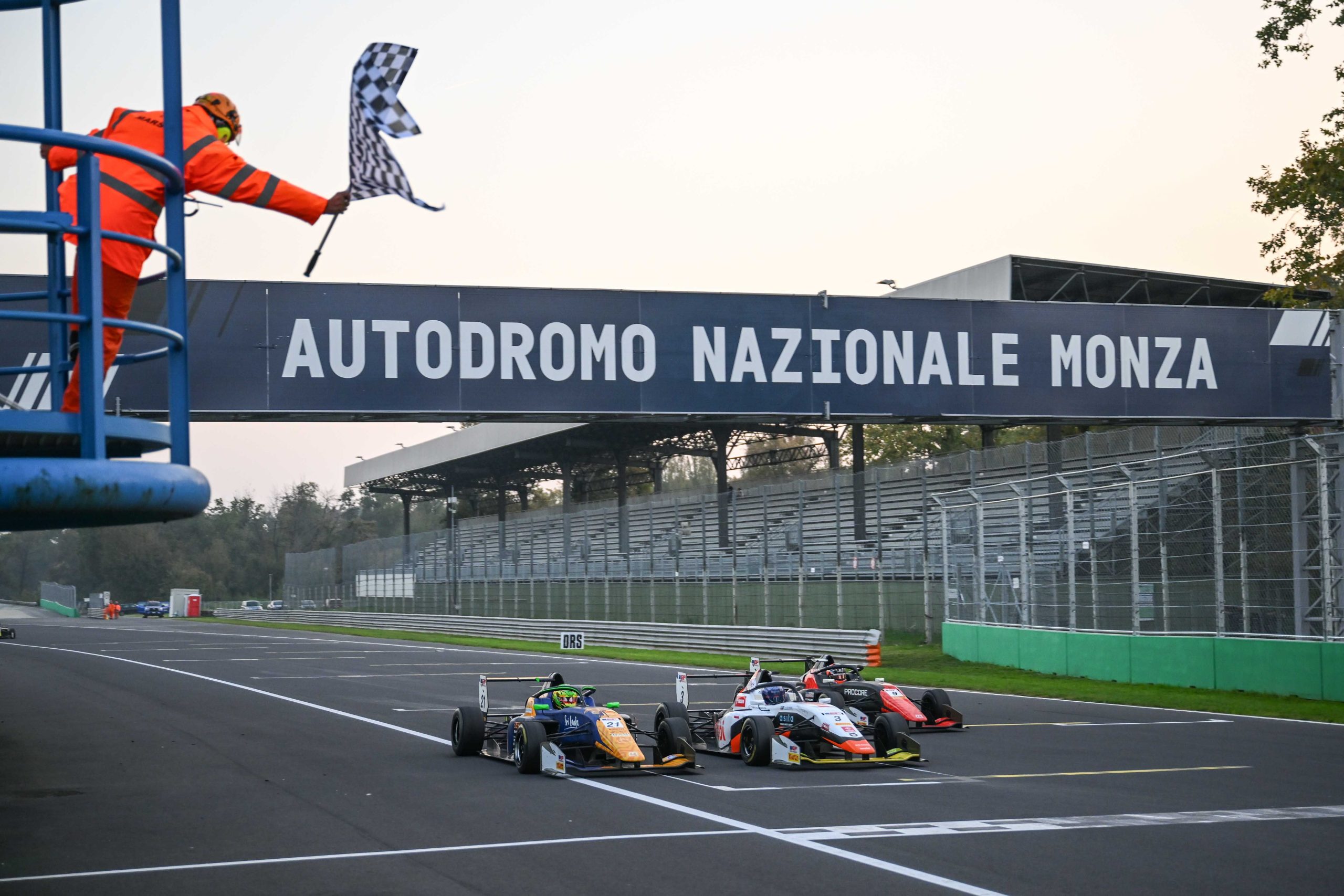
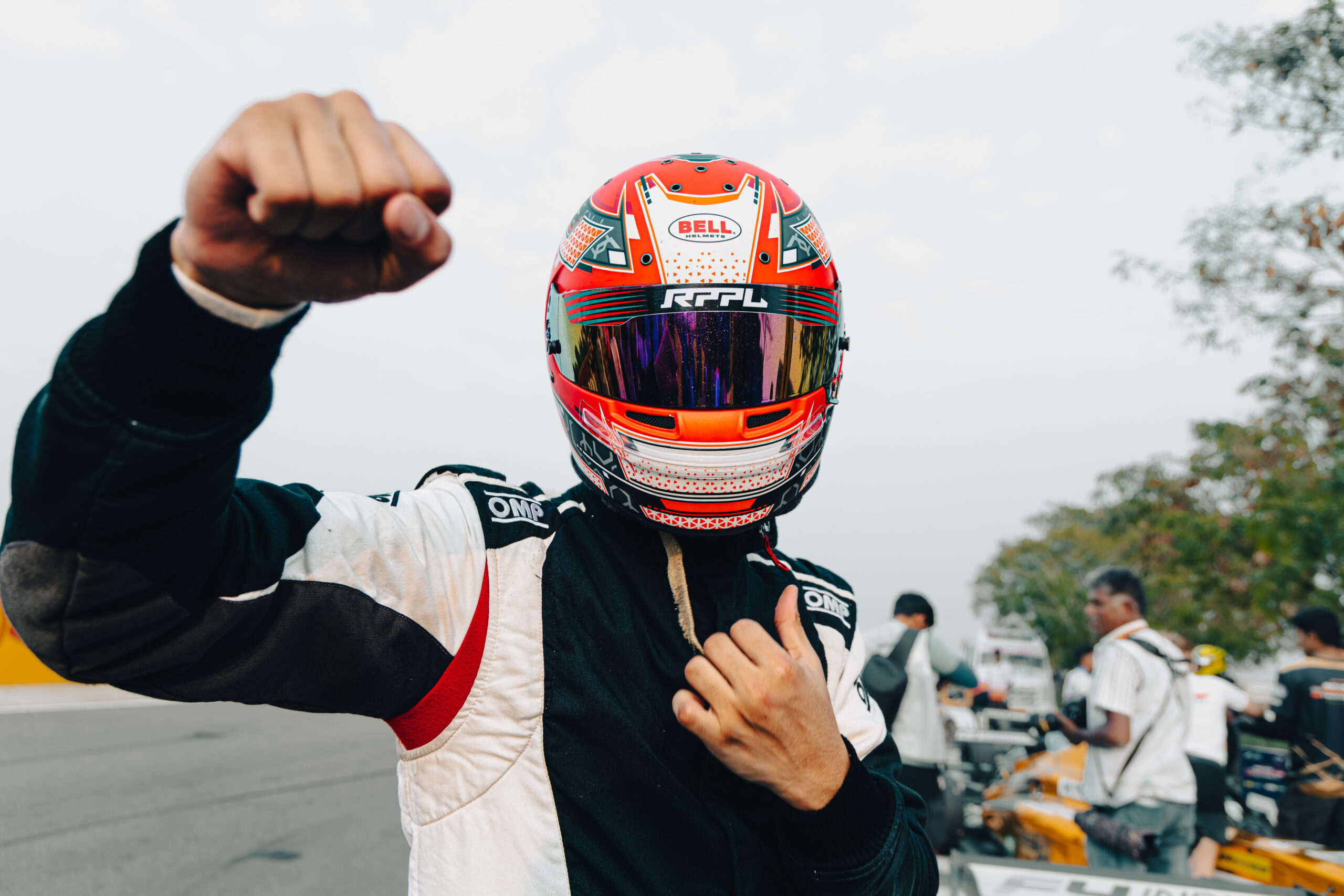
For Shane Chandaria, race weekends represent only the visible peak of a much longer and more demanding process. While fans often focus on qualifying sessions and race results, the reality involves months of preparation, detailed planning, and constant refinement. In an exclusive interview with Pit Debrief, Chandaria discussed his preparation for and approach to an F4 race weekend.
For Chandaria, preparation for F4 begins long before the track
Long before arriving at the circuit, Chandaria commits to a structured and continuous preparation programme. Rather than treating race weekends as isolated events, he views them as the culmination of a year-round effort.
“Yeah, so preparation for the races obviously starts very early. I mean, you’re training your physical body basically throughout the year. So I’m going to say you start on January 1st.”
That long-term mindset ensures that both physical fitness and mental sharpness remain consistent throughout the season. As pre-season approaches, the focus gradually shifts towards technical preparation and familiarity with circuits.
“And then normally you have your testing, your preseason tests start at the end of Feb, start of March. So you have a few, maybe a month of testing. And then like the week before the race, you’re really focusing on your diet, making sure that you’re well, you have good energy, you’re recovered well, ready for the race, a lot of hours on the simulator, and just trying to get as ready as you can [by] watching onboards the data.”
By the time race week arrives, the groundwork has already been laid. However, the final stages of preparation remain just as important in setting the tone for the weekend.
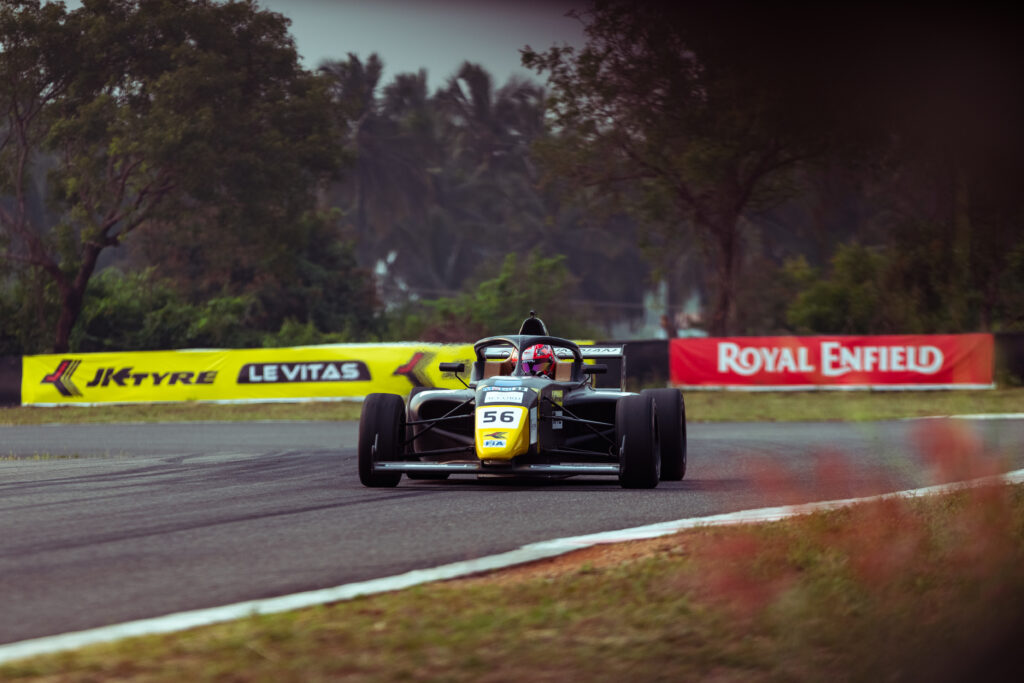
Building the weekend from the ground up
Once at the circuit, Chandaria prioritises settling into the environment and establishing clear communication with his team. Arriving early allows him to approach the weekend with clarity rather than urgency.
“And then the actual race weekend comes around you, you normally go one day earlier than your testing starts so that you can meet everyone at the track, have a chat with your engineer about what the plan is for the weekend, walking around, go for a track walk, just see it. And just that you’re there and not stressing in the morning of the testing.”
Testing sessions then provide the first real opportunity to fine-tune performance. Rather than chasing outright pace immediately, Chandaria focuses on incremental improvement and understanding the car’s behaviour.
“And then in India, we had one day of testing before the race. Normally it was, I think the Friday before normally, but I’m in the French F4 now, and we have the Thursday and Friday before. So yeah, with the testing, it’s just making, making the most of it, not focusing on position too much, just focusing on like where you can improve your driving, spotting out where things might get tricky in the races.”
This methodical approach continues through data analysis, where even small adjustments can make a meaningful difference.
“A lot of data review, just trying to sharpen yourself so that, because by the time you get to Quali, after Quali, it’s really hard to improve yourself in terms of lap time. In Quali, you want to be the best that you can be throughout the weekend. So, you really need to be done with the lap time and the data stuff by then.”
Managing pressure and maximising performance
Qualifying represents one of the most critical moments of the weekend, particularly in junior categories where overtaking can be challenging. As a result, Chandaria places strong emphasis on delivering when it matters most.
“So yeah, you just need to get a good Quali, try and get a good Quali. So the track position and kind of ignoring the pressure from outside, especially if you have some like parents or people around you, it can be quite a, quite a lot of pressure on you just to perform well. But it’s important to like take a minute and just breathe and just remember why you’re there and to drive.”
Race days, meanwhile, require a balance between routine and adaptability. From early starts to pre-race briefings, each step plays a role in ensuring readiness when the lights go out.
“And then for the races, it’s normally about seven o’clock start, so it’s not too bad. Just again, focusing on nutrition and sleep. And yeah, for the races, I’d say you start off with a warm-up, then you have a debrief with your engineer, jump in the car, and you’re ready to go.”
Despite the structured nature of the schedule, Chandaria acknowledges the sheer volume of activity involved across a typical weekend.
“Yeah, there’s a lot, a lot in it.”
Chandaria on the role of the simulator in F4 preparation and modern motorsport
In today’s racing landscape, simulators have become an essential tool for driver development. For Chandaria, they provide valuable preparation, particularly when track time remains limited. However, he maintains a balanced perspective on their role.
“Yeah, I definitely agree that the simulator is important, but it’s not a replacement. I think the simulator is there because it’s a lot more accessible to you than going out and testing every day. So I think it’s, it’s been quite good.”
Modern simulation technology offers increasingly accurate representations of circuits and car behaviour, allowing drivers to prepare in detail before arriving at the track.
“Like the models that we get of the tracks and the cars nowadays are pretty accurate. But of course, when you go and drive on track for the first time, or even if it’s a track you know, and you know you’re going to drive, there are going to be some big differences.”
Nevertheless, Chandaria emphasises that no virtual experience can fully replicate the realities of driving a race car.
“So, the sim is really good for learning, maybe how to race and learning the tracks. But I would definitely say the track time that you get in a real car, it’s really different in the way you feel in it, you know, the sense of danger, I guess. In a sim, if you crash, you can restart, but in real life, you’re gone.”
This distinction highlights the importance of combining both tools effectively. While simulation builds familiarity, real-world experience ultimately defines performance.
“So, it’s a good tool to use, but it’s not the only thing that matters. I would definitely say if you’re fast in a sim, you wouldn’t necessarily be fast in a car and vice versa.”
Precision, preparation, and progression
Chandaria’s insight into race weekends reveals the depth of preparation required to compete at the highest levels of junior motorsport. Every detail—from physical conditioning and simulator work to data analysis and mental focus—contributes to the final result on track.
As Chandaria continues his progression in F4, this structured approach to his preparation provides a strong foundation for future success. More importantly, it reflects a growing understanding that performance does not begin when the lights go out—it begins long before the driver even arrives at the circuit.