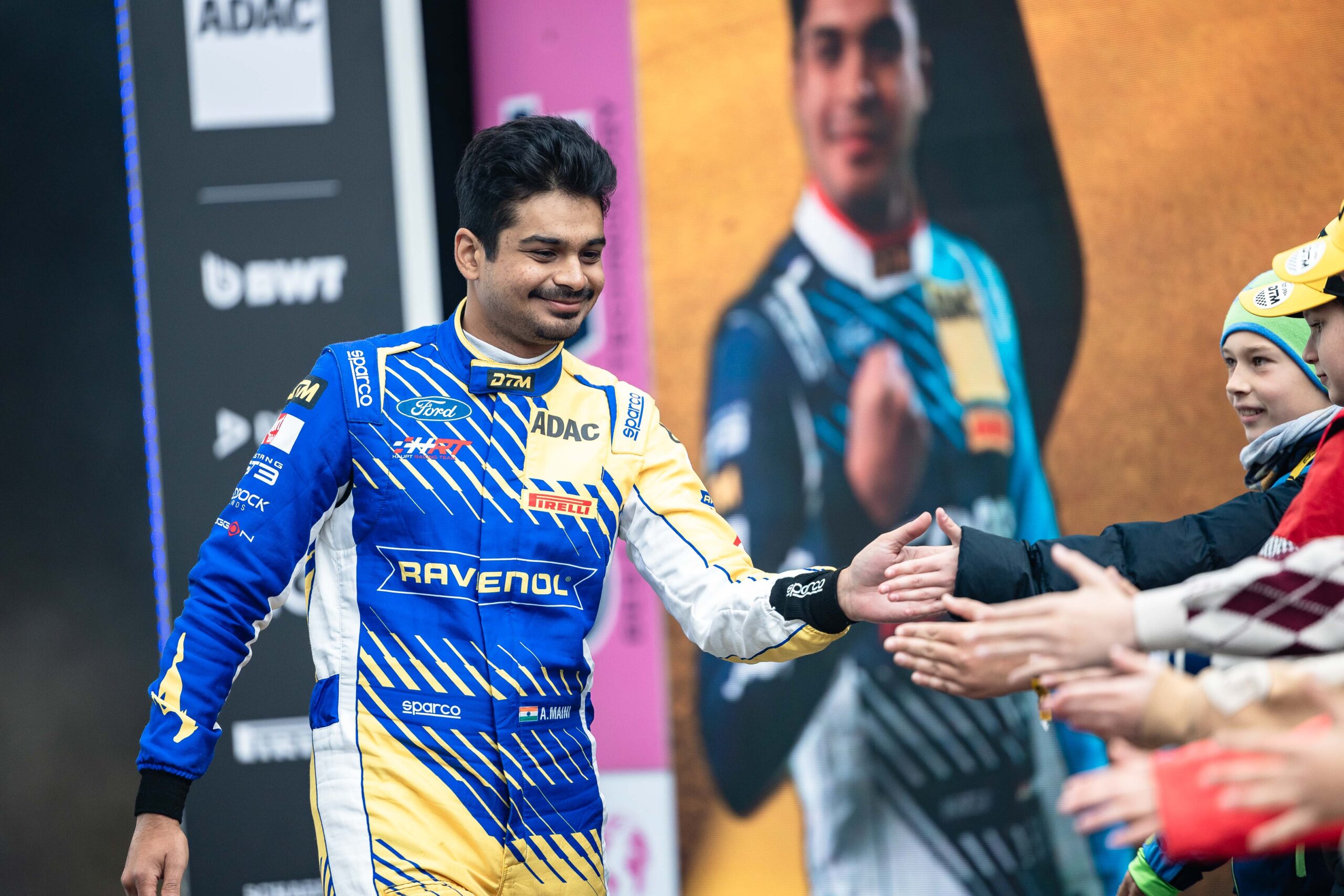
Arjun Maini approaches the 2026 season of the Deutsche Tourenwagen Masters (DTM) with a refined and structured methodology. As a Ford factory driver for Haupt Racing Team (HRT), he competes in an environment where marginal gains define results. Consequently, preparation, communication, and mental resilience now sit at the core of his performance philosophy, shaping how Maini extracts pace across a tightly contested DTM grid.
In an exclusive interview with Pit Debrief, Maini detailed his race weekend approach. He explored how he uses data, collaborates with engineers, and manages both physical and mental recovery. His insights highlight the layered complexity behind modern GT racing, where success depends on far more than raw speed.
Maini on the foundations of preparation that define his DTM approach
Maini’s preparation begins long before he arrives at the circuit. After a full season working with the Ford Mustang GT3 platform, he and HRT now rely on a far more comprehensive data pool. This shift allows the team to approach each race weekend with clarity rather than uncertainty, particularly when refining baseline setups.
“Yeah, for me, it is very important, especially since we have a lot of data from last year now to go back to. Last year was a little bit like guessing what we need to do when we go to a new track, what kind of setup we need to pull on and all these kind of things.”
With this data-driven approach, Maini can focus more on optimisation rather than discovery. As a result, preparation becomes more efficient, especially during compact race weekends where practice time remains limited.
Adapting to new variables and conditions
However, while historical data provides a strong foundation, Maini remains fully aware that motorsport rarely follows a fixed script. Changes in tyres, track evolution, and environmental conditions introduce fresh variables that require constant adaptation.
“Of course, it’s going to be a different case with the different tyres we have this year. But we have a lot of learnings from last year, you know, in terms of what we know what to expect this year.”
Therefore, preparation extends beyond reviewing past information. It involves anticipating how new factors might influence car balance and behaviour. In this context, flexibility becomes just as important as preparation itself, allowing Maini and his team to respond effectively to changing circumstances.
Maini highlights the importance on collaboration and continuous improvement in his preparation for DTM
A critical element of Maini’s preparation lies in collaboration. Modern GT racing demands seamless communication between driver and engineering team, ensuring that data translates into meaningful performance improvements.
“So, of course, that plays a key role in preparation because it’s something we need to go through with our engineers. Also looking at driving weak spots from the year before where we could do to improve and all these kind of things. So, for sure, preparation is always key.”
Despite this structured preparation, however, unpredictability remains an unavoidable aspect of racing. Even under controlled conditions, variables such as temperature, track grip, and car behaviour can shift unexpectedly.
“And, yeah, at the end of the day, the only thing is there’s always something in racing that’s going to be different. Like if you do two test days at the same track, sometimes there’s always a variable that is different because there’s always so many different variables like the weather, the temperatures and so on. How the car behaves on that certain day is always different. But as long as I think you’re well prepared for all these kinds of circumstances, then that’s the best way to go about it.”
As a result, Maini treats preparation as a dynamic process. Rather than aiming to eliminate uncertainty, he focuses on building the adaptability required to respond to it. This mindset allows him to remain competitive even when conditions deviate from expectations.
Maini offers perspective on his selective approach to the simulator in his DTM preparation
In contrast to many drivers, Maini does not rely heavily on simulators as a primary preparation tool. Instead, he views them as supplementary, particularly given the amount of real-world testing available in GT racing.
“I enjoy driving the simulator as a separate sport, but I don’t really use it so much in terms of preparation. I feel it’s different for us compared to maybe some formula series where you don’t have testing and all these kind of stuff. So, we end up, I think, testing a decent amount during the year and it’s always, you sort of know the tracks.”
Nevertheless, Maini recognised the value of simulators in maintaining competitive sharpness, particularly during quieter periods. Rather than using them for circuit-specific preparation, he uses them to stay mentally engaged in racing scenarios.
“So, I don’t really feel the need to use it so much in preparation for races, but I think during the off-season it’s nice to have competitive iRacing so you stay in the shape of Qualifying, of racing and you’re still like sort of in that racing brain phase.”
However, Maini also emphasised that preparation methods vary significantly between drivers. While some may rely heavily on simulators, others, like him, prefer alternative approaches.
“But in terms of like if I’m racing next week at Red Bull Ring that I need to practice Red Bull Ring with the team or stuff like that, I’m not such a big fan of that. But I think each driver is unique like that and different.
He added, “But yeah, overall, I do enjoy sim racing. It’s just I look at it like as a form of a separate sport from the actual racing and not looking at it as a preparation for a race.”
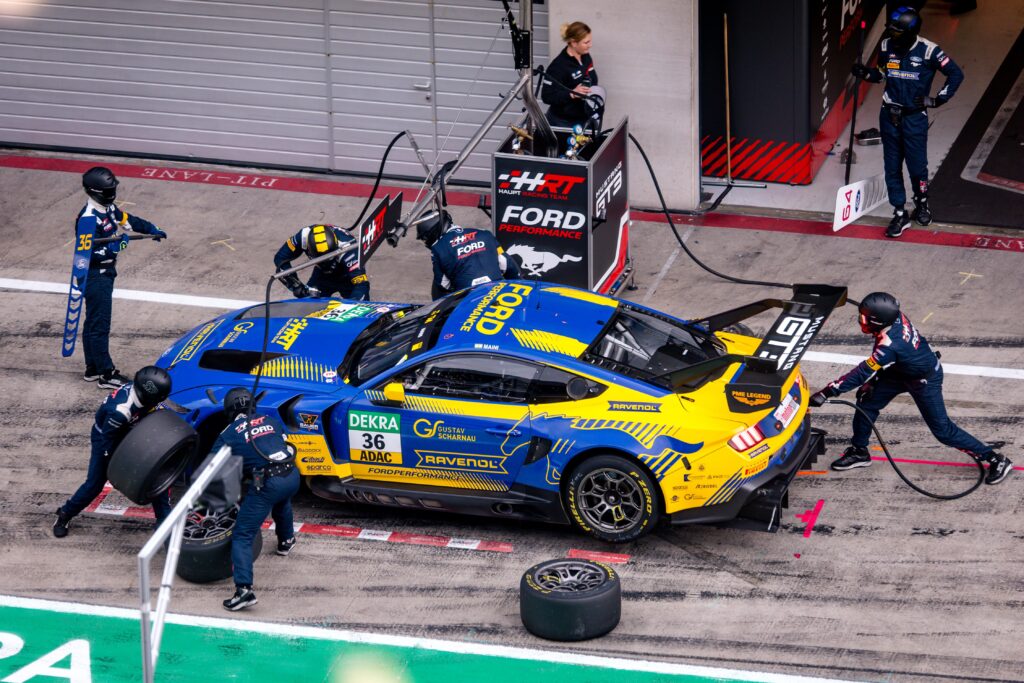
Maini on recovery and resetting after race weekends
After the intensity of race weekends, Maini adopts a deliberately simple approach to recovery. Instead of structured routines, he prioritises rest and mental detachment, allowing himself time to reset before the next event.
“I think for me, it really depends,” he explained when asked about his method for recovering from the race weekend and all its intensity. “It depends what part of the year we’re in. And, yeah, mostly after a race weekend, I just enjoy just staying at home, maybe watching a few shows and doing some couching for a little bit and then getting back on the road. So, yeah, just enjoy some quiet time, being by myself. And that’s my favourite way to wind down.”
Managing the mental and physical demands
For Maini, the mental aspect of racing presents the greatest challenge. After each event, reflection becomes inevitable, often accompanied by thoughts of missed opportunities or alternative outcomes.
“Yeah, the mental side is, I think, more complicated because it’s sort of like a lot sometimes goes through your head in terms of what could have been different, what could have, yeah… and you always have these kind of regrets. It used to happen a lot more when I was younger, so maybe Finn can answer this better.”
However, experience has allowed him to develop more effective coping mechanisms, helping him manage these thoughts more constructively. Over time, he has learned to balance self-criticism with acceptance. Rather than dwelling on imperfections, he now focuses on extracting lessons and maintaining forward momentum.
“But yes, recently it’s, yeah, just managing that, managing your expectations and accepting that it’s not always going to be perfect and learning the best you can and, of course, moving on and letting go. I think that’s the best way to look at it.”
While mental recovery remains complex, the physical aspect follows a more straightforward path. Maintaining fitness and loosening muscles form the core of his post-race routine.
“And I think in terms of, of course, physical recovery, I mean, there’s really not much you can do except for, you know, loosening the muscles and stuff like this.”
Maini on the influence of DTM race scheduling on mindset and preparation
Interestingly, Maini finds that a busy race calendar can ease the burden of mental recovery. Frequent races reduce the time available for overthinking, allowing drivers to remain focused on upcoming challenges.
“So, I think for me, it’s more of a mental thing and, yeah, that can be quite complicated. Actually, for me, I find it much easier when you have, like, two or three race weekends in a row and it’s quite, like, intense, so you don’t have a lot of time to think about it. But when you have a race and it’s not going well and there’s like two weeks after, then, yeah, good luck.”
This observation highlights the psychological nuances of motorsport, where timing and rhythm can significantly influence a driver’s mindset.
A holistic approach to performance
Taken together, Maini’s insights reveal a comprehensive and balanced approach to racing. He integrates data-driven preparation with adaptability, values real-world experience over simulation, and prioritises mental resilience alongside physical readiness.
As the 2026 season unfolds, this methodology could prove decisive. In championships like the DTM, where margins remain razor-thin, Maini’s ability to combine preparation, collaboration, and mental strength positions him to maximise both his own performance and that of HRT.