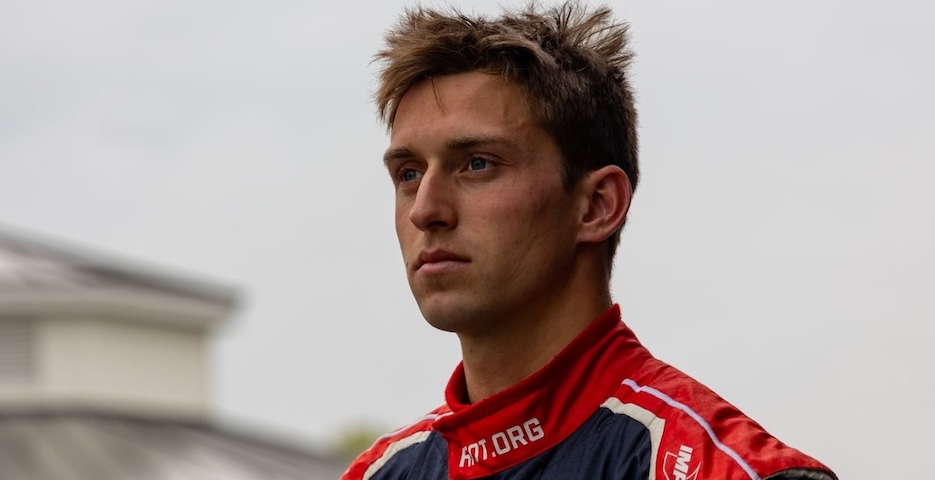
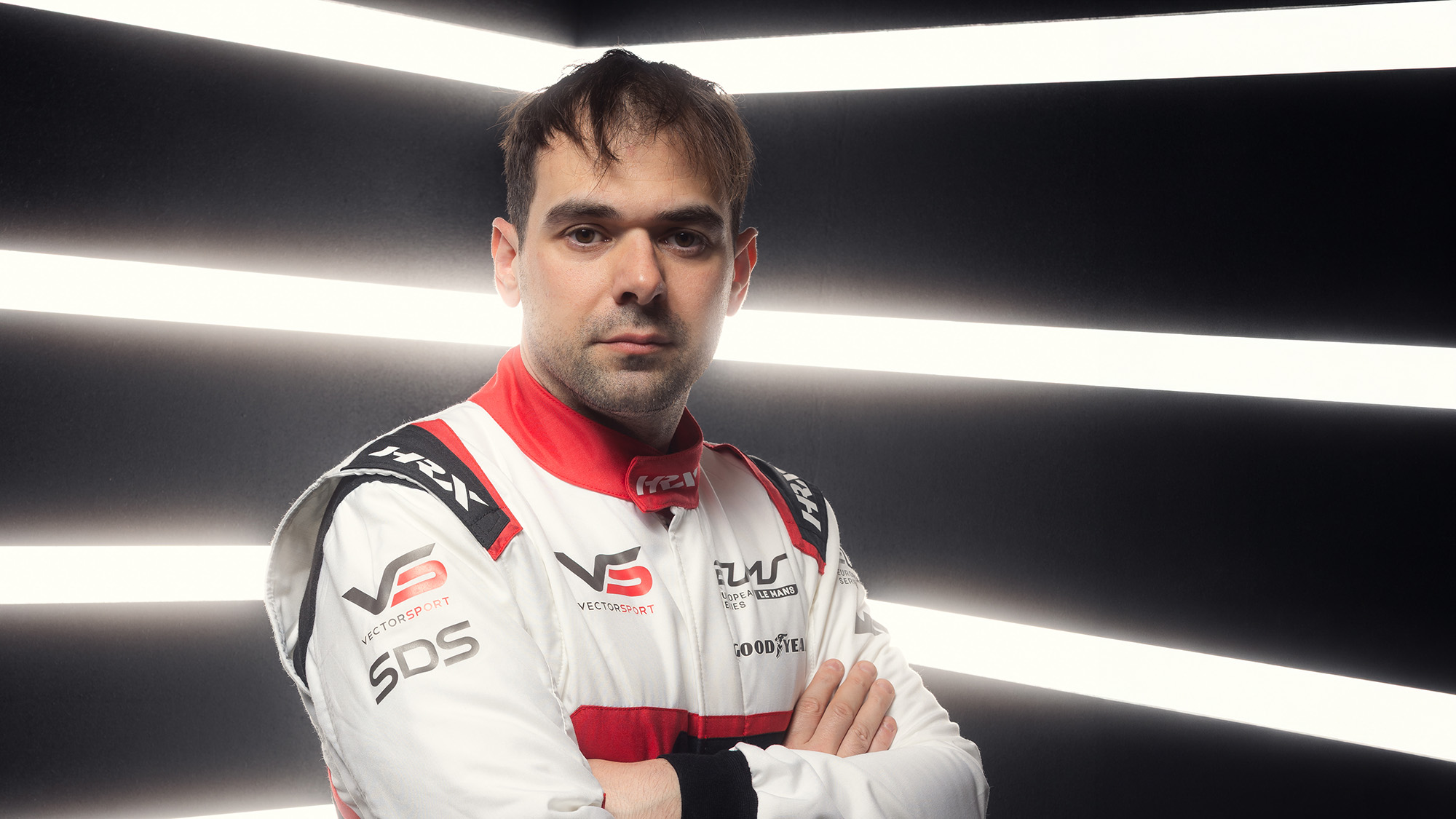
Ryan Cullen heads to the 2026 24 Hours of Le Mans with experience, momentum, and a clear target. Cullen will contest the endurance classic for the eighth time, while continuing his fourth Le Mans campaign with Vector Sport.
He arrives alongside his regular European Le Mans Series teammates Vlad Lomko and Pietro Fittipaldi. That continuity could prove crucial, especially after Cullen narrowly missed the LMP2 podium in 2024. On that occasion, he finished fourth, just six seconds away from the top three after a full day of racing.
Now, after a solid start to the 2026 ELMS season, Cullen wants to turn preparation into execution. Vector Sport has already collected useful points in Barcelona and Le Castellet, but Le Mans offers a different challenge entirely. It demands pace, discipline, adaptability, and a flawless team effort across every hour.
ELMS consistency gives Cullen a strong foundation for Le Mans outing with Vector Sport
Cullen has started the 2026 ELMS season with sixth place in Barcelona and fifth at Le Castellet. Those results did not deliver a podium, but they gave Vector Sport a solid championship base and valuable race mileage before Le Mans.
Moreover, the opening two rounds helped Cullen and his teammates assess their competitive level against a strong LMP2 field. Barcelona also brought some frustration, as the timing of a mid-race Full Course Yellow helped several rivals and limited Vector Sport’s ability to capitalise. Nevertheless, Cullen, as he told the European Le Mans Series, believes the team has already shown the consistency and front-running potential it needs.
“The biggest positive of the 2026 ELMS season to this point is that we have achieved a decent chunk of points to be in a solid championship position. It has been a pretty good showing considering the strength of the LMP2 grid and the fact we had a bit of bad luck in Barcelona; a lot of teams benefited from a mid-race Full Course Yellow pit stop and we weren’t able to capitalise.
“The Barcelona and Le Castellet rounds have definitely readied us for the 24 Hours of Le Mans, because we have shown we can fight at the front, we’re consistent and don’t make many mistakes. The races really have put us in a strong position. Not much has changed within Vector Sport’s driver line-ups and the team structure over the past 12 months, yet we have improved in a lot of crucial areas.”
Therefore, Cullen enters Le Mans with more than optimism. He has evidence that Vector Sport can stay in the fight, avoid costly errors, and build on the stability it carried through the past year. That combination matters at Le Mans, where continuity often gives teams an advantage before the race even starts.
Le Mans demands a sharper and more aggressive approach
Although Cullen races with the same team and driver line-up, he does not treat Le Mans like another ELMS round. A four-hour championship race rewards controlled execution and consistent points. By contrast, Le Mans gives teams one chance to attack the biggest endurance race in the world.
That difference shapes Cullen’s preparation. He has focused on fitness, weight, video review, and direct engineering work with Vector Sport. In LMP2, small details can influence performance, and Cullen wants to remove every avoidable weakness before race week begins.
“My preparations for an ELMS race and the 24 Hours of Le Mans are very different. I’m keeping on top of my fitness and trying to lose a few kilos because there’s no minimum driver weight and it makes a big difference in LMP2.
“Elsewhere, I’m spending a lot of time reviewing footage of previous editions of Le Mans while also collaborating directly with the team’s engineers at Vector Sport HQ. We want to win Le Mans, and the approach is completely different to a four-hour ELMS race because, rather than playing the long game that’s about netting consistent championship points, you’re going flat out with one shot at victory.”
As a result, Cullen’s mindset shifts from accumulation to execution. Vector Sport cannot rely on a conservative points strategy. Instead, the team must combine speed with control and attack the race without sacrificing reliability.
Cullen welcomes the pressure of Le Mans
Le Mans does not count towards the ELMS standings. However, that does not reduce the pressure for Cullen. In fact, the race carries its own weight because of its history, scale, and status within global endurance racing.
Cullen has raced at Circuit de la Sarthe several times, so he understands how the event has grown. The rise of the Hypercar category has increased attention on the race, while LMP2 teams have also raised their standards year after year. Consequently, Cullen sees pressure as part of the appeal rather than a burden.
“For me, there’s a good pressure at the 24 Hours of Le Mans. I’ve raced there several times, and I’ve seen it evolve and get bigger each year, especially since the introduction of Hypercar. The ELMS creates pressure because the races are relatively short and the level within LMP2 has risen immensely. Everybody steps up their professionalism each year, with LMP2 teams forming closer ties with Hypercar programmes.”
This environment forces drivers and teams to keep improving. The short ELMS format creates its own intensity, but Le Mans adds prestige, expectation, and greater strategic complexity. Therefore, Cullen must balance ambition with patience across a race that can punish even the smallest mistake.
Strategy and adaptability will shape the final result
Cullen knows that early pace alone does not secure a Le Mans result. Instead, teams need a car that remains quick when the race reaches its decisive phase on Sunday afternoon. They also need precise pit stops, effective strategy, and the ability to respond as the circuit changes.
That demand extends beyond the car. Drivers must manage sleep, hydration, nutrition, heat, visibility, and mental energy throughout the event. Cullen pays particular attention to these areas, as he understands that physical preparation can influence consistency deep into the race.
“The key to a good result in the 24 Hours of Le Mans is having a fast car at the end of the race. You need to anticipate which direction Circuit de la Sarthe will go in on Sunday afternoon, while also getting every pit stop right – you can’t afford to waste any time in the pits in what is a very strategic race.
“It’s more than a 24-hour race for drivers. You’re required to arrive at the track first thing in the morning, and it’s important to keep on top of your fitness, nutrition, hydration and sleep. I’m particularly interested in my nutrition; I like to know what I’m eating and why it’s beneficial, understanding what my body needs most.
“Teams have their own chefs, so we work closely with them and form clear schedules with the engineers, but the race is different every year and you have to be adaptable rather than having a rigid routine. For example, the 2025 race was very hot and that placed more emphasis on hydration and energy management. Then there are simple things like changing visors for different lighting conditions, and planning for worst case scenarios.”
Consequently, Cullen views Le Mans as a complete performance challenge. A driver must deliver lap time, but he must also manage his body, protect concentration, communicate clearly with engineers, and adapt when the race changes direction. That flexibility could prove decisive if weather, temperature, traffic, or strategy disrupt Vector Sport’s original plan.
Porsche Curves still test Cullen’s concentration
After seven previous LMP2 starts at Le Mans, Cullen knows every major demand of Circuit de la Sarthe. Yet the Porsche Curves still stand out. The sequence rewards commitment, precision, and confidence, especially when darkness and traffic increase the risk.
For Cullen, that section gives drivers a rare opportunity to make a visible difference. It also requires more mental energy than any other part of the lap, because the car moves at high speed through a complex sequence where traffic can quickly compromise rhythm.
“The Porsche Curves are the most fun part of Circuit de la Sarthe, and they’re especially enjoyable at night. I expel more energy on maximising my concentration through that sequence of corners than any other, because it’s incredibly fast and traffic can be problematic. Drivers can make a big difference there, which makes getting it right satisfying.”
That focus underlines Cullen’s respect for the circuit. Le Mans may reward team strategy, but it still gives drivers moments where bravery and judgement matter. The Porsche Curves represent one of those moments, particularly during the night when visibility drops and fatigue starts to build.
Cullen wants more than another near miss at Le Mans
Cullen’s fourth-place finish in 2024 still shapes his target for 2026. He knows how close Vector Sport came to the podium, and that narrow margin now gives the team a clear benchmark. Victory remains the dream, but a top-three finish would mark a major achievement in such a competitive LMP2 field.
With experience, continuity, and a proven driver line-up, Cullen believes Vector Sport has the tools it needs. However, he also knows that Le Mans does not reward potential unless teams execute every detail across the full distance.
“Having finished fourth two years ago, we have to do better. Of course, victory at the 24 Hours of Le Mans is always the ultimate ambition, but anyone who finishes inside the top three will have done a great job. We have the experience, the driver line-up and a good car over a 24-hour period, so all of the ingredients are in place.”
Ultimately, Cullen arrives at Le Mans with a clear mission. Vector Sport has built momentum through ELMS, strengthened key areas over the past 12 months, and retained the stability that can make a difference in endurance racing.
However, the team must still convert that foundation into a complete race. If Cullen, Lomko, Fittipaldi, and Vector Sport combine pace with discipline, the Irish driver could finally turn years of Le Mans experience into the podium result that narrowly escaped him before.