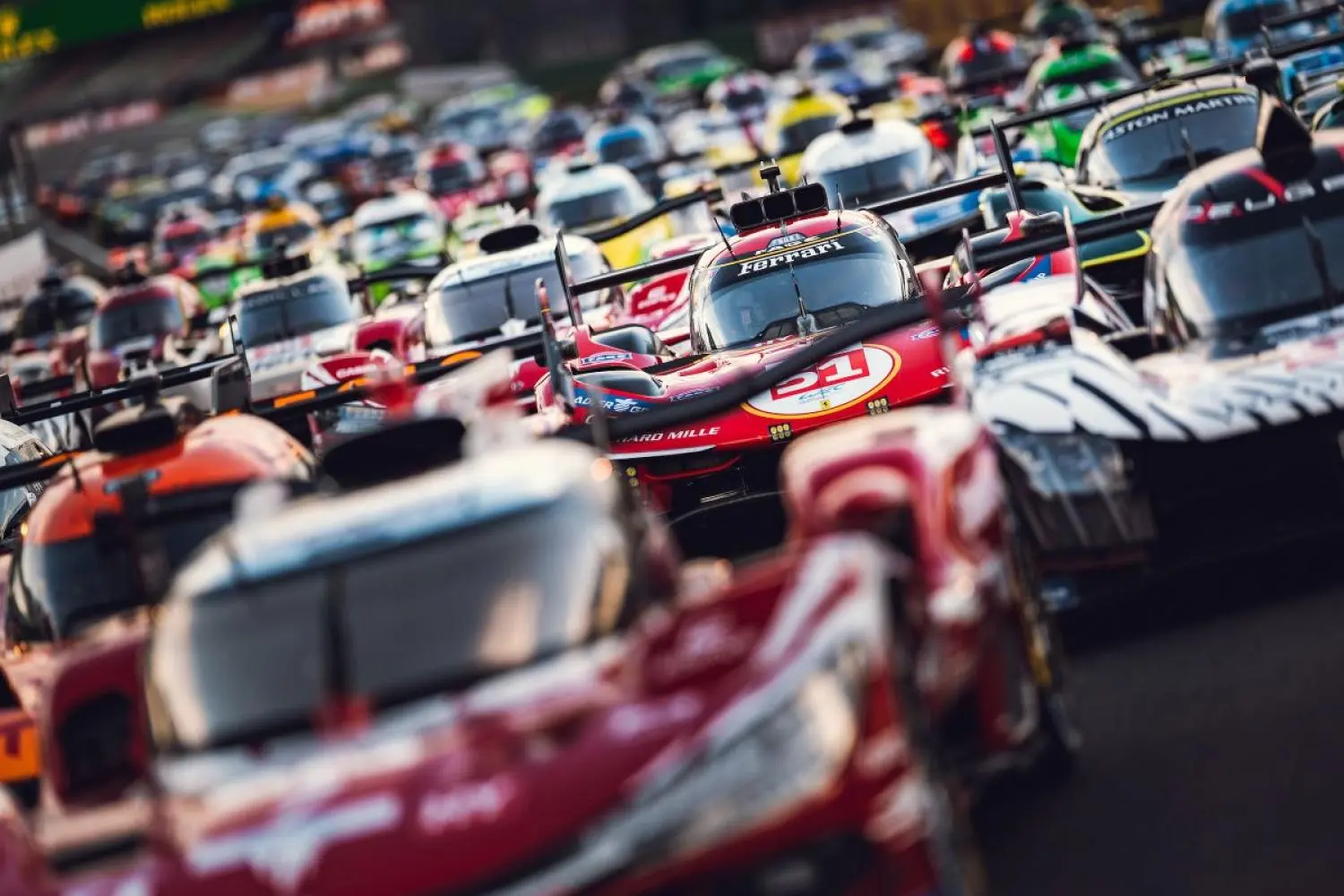
The FIA, ACO and IMSA have confirmed the foundations of a unified set of top-class prototype regulations that will debut in the 2030 FIA World Endurance Championship (WEC) and IMSA WeatherTech SportsCar Championship seasons.
Officials outlined the framework during the annual ACO press conference at Le Mans, held on the eve of the 24 Hours of Le Mans. The new regulations will govern FIA WEC’s Hypercar class and IMSA’s Grand Touring Prototype class, creating a single global technical platform for the highest level of endurance racing.
The move continues the convergence process that reshaped modern sportscar racing and helped bring major manufacturers back to Le Mans, Daytona and other leading endurance events.
Single platform marks major shift
The 2030 regulations will introduce a single two-wheel-drive platform across both championships. That marks a significant change from the current rules, which allow rear-wheel-drive and all-wheel-drive prototypes to compete in the same class.
All cars will use rear-wheel drive. In addition, each prototype will combine an internal combustion engine with a mandatory rear-mounted hybrid system.
The rules will also permit 20kW more internal combustion power than the current regulations. However, manufacturers will retain freedom over engine architecture and capacity, allowing brands to preserve technical identity within a more controlled framework.
Manufacturers retain chassis and hybrid options
Although the platform will become unified, manufacturers will still have two development routes.
They can use a registered constructor’s complete spine, alongside common components such as a hybrid system, in a similar way to the current LMDh model. Under that route, manufacturers can work with selected constructors such as Dallara, Ligier, Multimatic or ORECA.
Alternatively, they can develop their own chassis and hybrid system in-house. However, any bespoke components must comply with the same technical specifications as the common platform.
This approach gives manufacturers flexibility while still simplifying the overall rulebook. It also gives teams and brands a clearer long-term investment path across both FIA WEC and IMSA.
Five-year homologation aims to control costs
The governing bodies have designed the 2030 framework to reduce budgets, stabilise development and preserve manufacturer relevance.
Each prototype’s homologation will remain valid for at least five years. During that period, manufacturers will not receive performance evolutions or performance jokers.
Rule-makers will only allow a joker in exceptional circumstances. A manufacturer could request one to address a reliability or safety issue, or if it can demonstrate a significant performance deficit.
That restriction should reduce expensive development races and create more predictable costs. At the same time, the technical framework should still allow manufacturers to build cars with distinct identities.
Aerodynamic rules to become tighter
The 2030 cars will also operate within a more restrictive aerodynamic framework.
The regulations will include a prescribed underfloor and diffuser, while the aerodynamic development window will become smaller than under the current rules. This should limit costly aero development while helping officials maintain closer performance targets between different cars.
As a result, the next-generation prototypes should place greater emphasis on efficiency, execution and reliability rather than open-ended development.
Hydrogen future also takes shape
The ACO also revealed further details for a future hydrogen-powered class during the press conference.
That category will use a similar rear-wheel-drive platform to the common prototype rules. However, organisers will apply an Equivalence of Technology between conventional Hypercars and hydrogen-powered “H2 Hypercars”.
The hydrogen framework remains part of endurance racing’s longer-term technical direction. Therefore, the 2030 rules will not only define the next era of conventional hybrid prototypes but also create space for alternative powertrain development.
Doonan calls unified rules a win for everyone
IMSA President John Doonan said the new global framework builds on the success of modern convergence and gives endurance racing a stronger foundation for the future.
“When you look at the current era of endurance sports car racing, we’ve shown what’s possible when stakeholders come together with a common vision and today is the next step in that,” he added.
“When we announced convergence in 2020 in Daytona together the manufacturers voted yes to endurance sports car racing. Now today we open up another chapter in this story.
“Having a single platform is something I dreamed about since I was a little boy and now it’s coming together. It’s a win for the manufactures, the suppliers, the chassis constructors and, most of all, for our fans.
“As we move to the next phase it’s the duty of the technical working groups to further define what Richard [Mille, President of the FIA Endurance Commission] shared a moment ago but we’re very optimistic about this moment.
“Today’s the framework, now it’s our responsibility to make sure this platform continues to deliver value and return on investment for everyone involved. We hope this continues for decades to come.”
Doonan also said that the objective is to finalise the full regulations by the end of this year.
IMSA stresses global value of convergence
In a separate statement, Doonan said the current prototype era had already demonstrated the benefits of collaboration between sanctioning bodies, manufacturers and other stakeholders.
“The current era of prototype racing has demonstrated what’s possible when stakeholders come together with a shared vision. Our responsibility now is to carry that momentum forward and create the conditions for long-term success. Today’s announcement is an important milestone.
“Having a single, global technical regulation for top-class prototype racing is a win for everyone involved – the sanctioning bodies, manufacturers, teams, drivers, corporate partners, suppliers and, most importantly, the fans. For manufacturers, it creates a clear pathway to compete at the highest level of endurance racing around the world under a common set of regulations. For teams, it brings stability and confidence as they plan and invest for the years ahead. And for the fans, it helps ensure that the world’s leading automotive brands continue to compete head-to-head on some of the biggest stages in motorsport.”
His comments underline the strategic value of the 2030 rules. A single regulation set should allow manufacturers to compete for overall victories in both championships without building separate cars for each series.
Bennett highlights cost control and participation
IMSA CEO Ed Bennett said the rule-making process focused on responsible spending, manufacturer relevance and broader participation.
“Throughout our discussions around the 2030 regulations, IMSA, the ACO and the FIA remained focused on the same goals: managing costs responsibly, maintaining manufacturer relevance and creating opportunities for broad participation across the sport. What has been especially encouraging is the spirit of collaboration that has brought us to this point. As we move into the next phase of development, that collaboration will continue through technical working groups that include IMSA, the ACO, FIA, manufacturers and constructor partners. Their input will be critical as we work together to shape the details of the regulations and build on the strong foundation that already exists today.
“Today’s announcement gives everyone a roadmap for the future, supports continued value and return on investment and reinforces our collective commitment to ensuring that top-class endurance racing remains healthy, competitive and globally relevant for years to come.”
Bennett’s comments point to the next stage of the process. Technical working groups involving IMSA, the ACO, FIA, manufacturers and constructors will now refine the final details before the regulations come into force.
2030 rules aim to secure prototype racing’s future
The 2030 prototype framework represents the next major step in global endurance racing convergence.
By moving FIA WEC Hypercar and IMSA GTP towards a single rear-wheel-drive hybrid platform, the FIA, ACO and IMSA aim to simplify the class, control costs and protect manufacturer investment. At the same time, the rules will still allow brands to choose between common components and in-house development.
The full technical regulations still need final approval, but the direction is now clear. From 2030, top-class prototype racing will move into a new unified era designed to keep manufacturers, teams and fans invested for years to come.