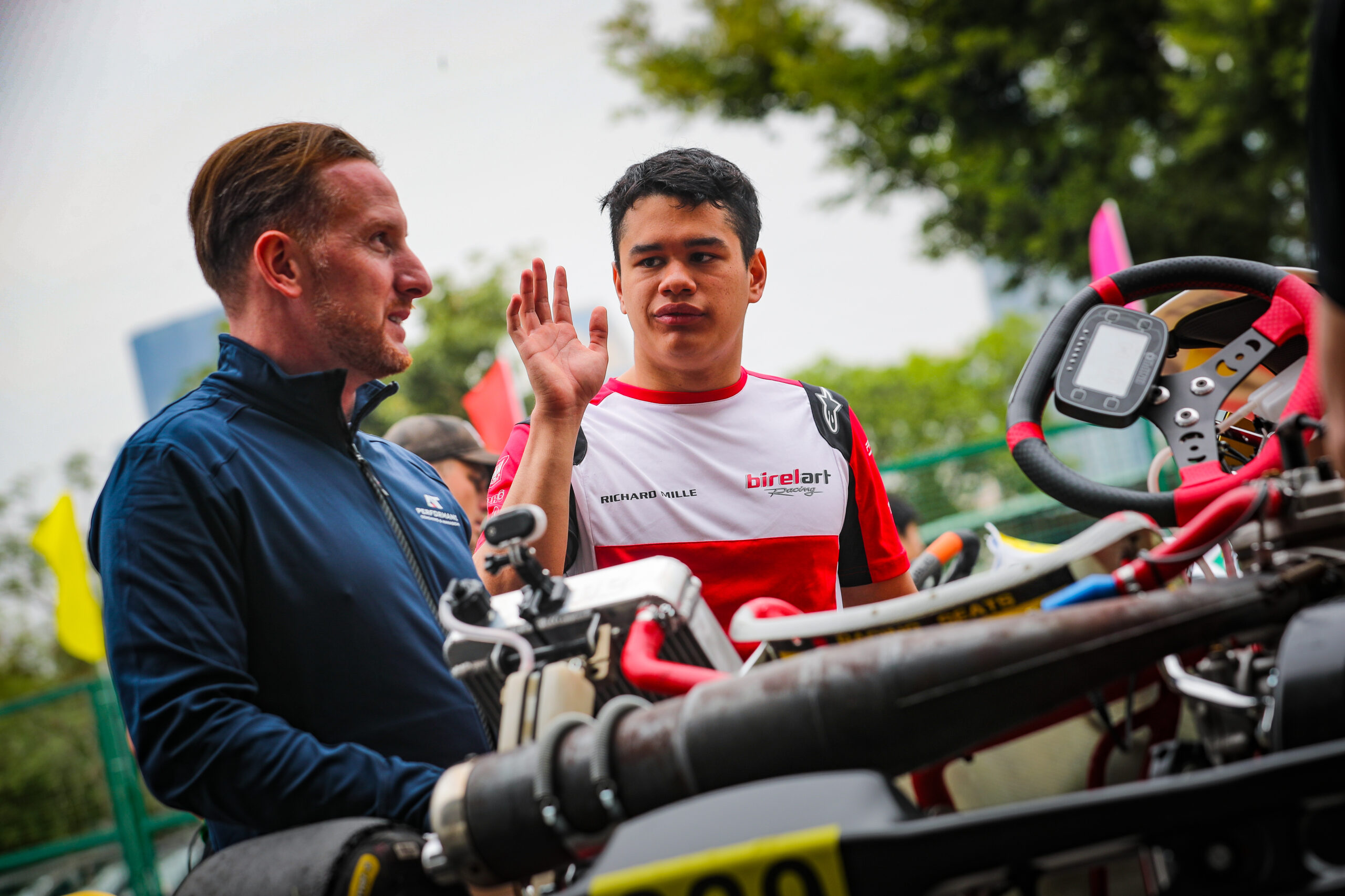
For Rafael Vaessen, the move from karting to cars has been shaped by opportunity, preparation, and attention to detail.
After returning to racing and rebuilding momentum in karting, Vaessen reached a key turning point with his first overseas race in Macau. That weekend helped him and those around him reassess what might be possible. It also pushed his career towards cars sooner than originally expected.
However, that step did not happen through one result alone. It also came through the guidance of Andrea Todisco, the structure of AT Performance, and Vaessen’s own process of adapting to a very different kind of racing. In cars, he quickly learned that the margins are larger, the details matter more, and improvement requires patience.
In an exclusive interview with Pit Debrief, Vaessen reflected on the defining result that changed his path, the influence of Todisco and AT Performance, and the challenges that came with moving from karting to single-seaters.
A defining moment: Vaessen on his first overseas race in Macau
When asked about the biggest highlights of his career so far, Vaessen pointed to Macau. For him, the weekend did more than provide a strong result. It helped shape the direction his career would take afterwards.
Until then, Vaessen’s racing experience had largely been centred closer to home. Macau gave him a different kind of reference point, placing him in an overseas environment and allowing him to measure himself against drivers with more continuous international experience.
“I’d say in 2024 or 2025, end of 2025, I did a race in Macau. This was my first overseas race. It kind of set my journey for where I am today. Because without this race, I think I’ll just be normally karting, won’t be going to cars yet.
That first overseas race became an important test of where he stood. Vaessen travelled to Macau with his father, and the result gave them a clearer sense of his potential beyond national-level competition.
“My dad and I, we went to Macau. We signed up for a race. And on my first overseas weekend, we finished P4. So we were like, “oh, okay, we have some potential here.” Then we were discussing like the next steps, what we should do. Then as later, that’s how we got Andrea actually. Because of Macau, P4 and where I should go next.
Macau’s impact: From karting towards cars
The significance of Macau came partly from the context around the result. Vaessen was competing against drivers with far more overseas experience, yet he finished close enough to them to take confidence from the weekend.
That made the result more than a number on a timing sheet. It gave Vaessen and his father reason to consider whether the next step could come sooner than they had first expected.
“So definitely Macau in 2025, when I came P4, behind the drivers who’ve been racing for the last five years competitively overseas, finishing just four-tenths behind the drivers who have been doing it for a longer time.
For Vaessen, that result became a changing moment. Having previously raced mainly in Singapore as a cadet, Macau gave him a first real indication of how he compared in a different environment.
“And that was my first overseas race ever, basically, because when I was a cadet, I never raced overseas. I just did some small cadet races back in Singapore. So that was definitely a changing moment race for what I’m doing now, my career.”
That weekend did not simply stand out as a highlight. It also helped trigger the next stage of his development, including the decision to begin working with Andrea Todisco.
Working with AT Performance: Vaessen on Andrea Todisco’s role
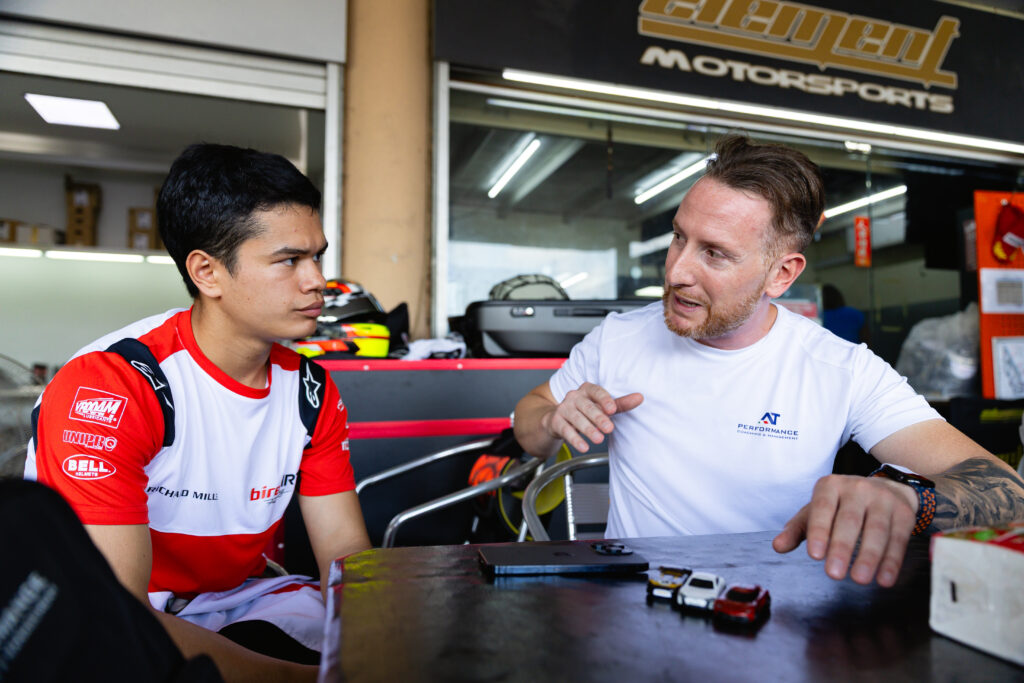
Vaessen is clear about the importance of AT Performance in his development. That relationship has become one of the most important parts of his move into cars. For Vaessen, Todisco’s impact has been direct, practical, and central to the pace of his progression.
“It’s actually just one guy. His name is Andrea Todisco. Honestly, without him, I would be nowhere, to be completely frank and honest,” he explained when asked about working with AT Performance
Before meeting Todisco, Vaessen and his father had expected to spend more time in karting. A move into cars was not necessarily the immediate plan. Like many drivers entering senior karting, they thought another year or more in karts might be the natural route.
“We contacted him back last year. And honestly, me and my dad, before we met him, we talked about just doing karting for another year, because if you do your first year in seniors, you expect to do two more years, one more year in seniors before you move up to cars.
Todisco, however, pushed Vaessen towards cars earlier than expected. That decision soon gave them a clearer view of his pace in single-seaters.
“But we contacted Andrea and he was already pushing straight away at the halfway point of the year to go into cars. So we did that. And we, we realised my pace was pretty strong in the car.
Early signs in cars: Testing potential quickly
Once Vaessen began racing cars, there were early signs that the step could work. He pointed to a UAE race in Dubai, where he outqualified Red Bull Junior driver Scott Kin Lindblom. For a driver only recently back in motorsport, that moment gave Vaessen another indication that the move into cars had not come too soon.
“And we did some races at the end of last year. And for the first time in the car and being only two years back at motorsport, I actually outqualified a Red Bull Junior, Scott Kin Lindblom. I outqualified him on my first UAE race back in Dubai last year.
For Vaessen, working with Todisco has accelerated his development. The testing, guidance, and structure around him have helped him progress faster than he believes he would have done alone.
“So, there is a lot of testing, a lot of things. So definitely without him, my progress and my development has been parabolic. It has gone so much faster than last year than last year when I was without him.
That progress also links closely to Todisco’s focus on detail. For Vaessen, the small habits around a race weekend matter as much as the driving itself. The preparation before getting in the car forms part of the same standard as the work done on track.
“He also emphasises on every small detail. So, meaning from when you wake up, when you go eat breakfast, what time you get in the car, what time you arrive at the track, because those small things are what makes you a good driver, a good person, a good everything.
Experience and trust: Why Vaessen values Todisco’s guidance
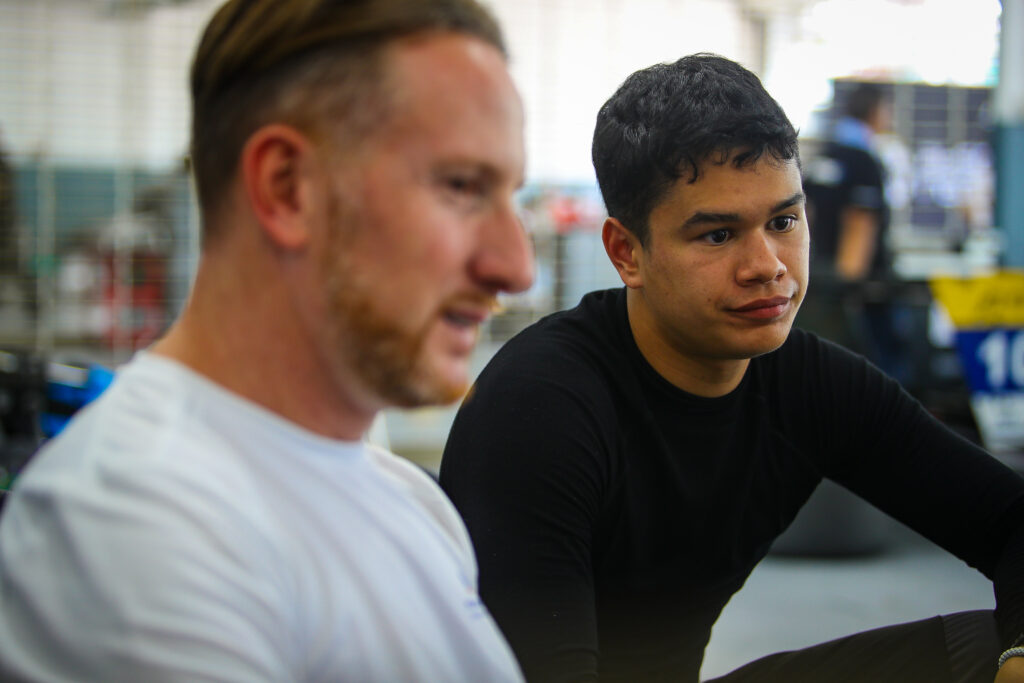
Vaessen’s relationship with Todisco also extends beyond technical guidance. He values the working dynamic, the relationship Todisco has built with his family, and the experience he brings from different levels of motorsport.
That trust matters because Vaessen’s move into cars has required quick decisions and fast adaptation. Having someone experienced around him has helped give structure to that process.
“So definitely Andrea, he’s amazing. My sister calls him the GOAT. Also my dad and him have a really good relationship. So it’s good. It’s good.
Todisco’s background also gives Vaessen confidence in the guidance he receives. His experience spans several levels of international motorsport, beginning with TRIDENT in GP3 in 2014 and continuing across GP3, Formula 4 and GP2 between 2015 and 2016. He then worked in Formula 1 with Toro Rosso in 2017 and 2018, before returning to Trident in Formula 2 in 2019.
In 2020, he gained further experience with AF Corse and Iron Lynx across the 24 Hours of Le Mans, the World Endurance Championship, the European Le Mans Series and the Italian championship. From 2021 to 2023, he worked with the CRG Factory Team, helping it secure two world championships. That breadth of experience adds weight to the details he emphasises and reinforces why Vaessen feels they chose the right person to guide his next steps.
“He also has a lot of banter. And he has a lot of experience in the motorsport world. He was in Formula 1 as a mechanic for Toro Rosso, so back in 2017 and 2018, if I’m not wrong. He did F2. He was a manager at CRG Factory Team, won two championships there. So, we really picked the right guy, which I’m really pleased about.”
From karting to cars: Vaessen on a steep learning curve
The transition from karting to cars often brings a major adjustment. For Vaessen, simulator work helped make the first step easier, because he had already built some of the basic habits before getting into the real car.
That preparation gave him familiarity with gear changes and feeling, meaning the first experience in a car was less unfamiliar than it might otherwise have been.
“Before I got into a car, I was already driving the sim for about a year. So the fundamentals of gear shifting, upshifting, downshifting, and feeling, I had already had for some time. Getting in the car for the first time was definitely a lot easier for me.
However, the move still brought new challenges. One of the first was learning how to use the clutch. Beyond that, Vaessen quickly realised that time loss in cars feels different because of the larger tracks and higher speeds involved.
“It’s just that I didn’t know how to use the clutch, so that took me some time to learn. But I realised that, because in karting, it’s a smaller track, the times you see on the board, like two tenths, are relative. On a big track like Barcelona, you have a bigger car and a bigger track, so the time loss will be bigger.
The small details: Why precision matters more in cars
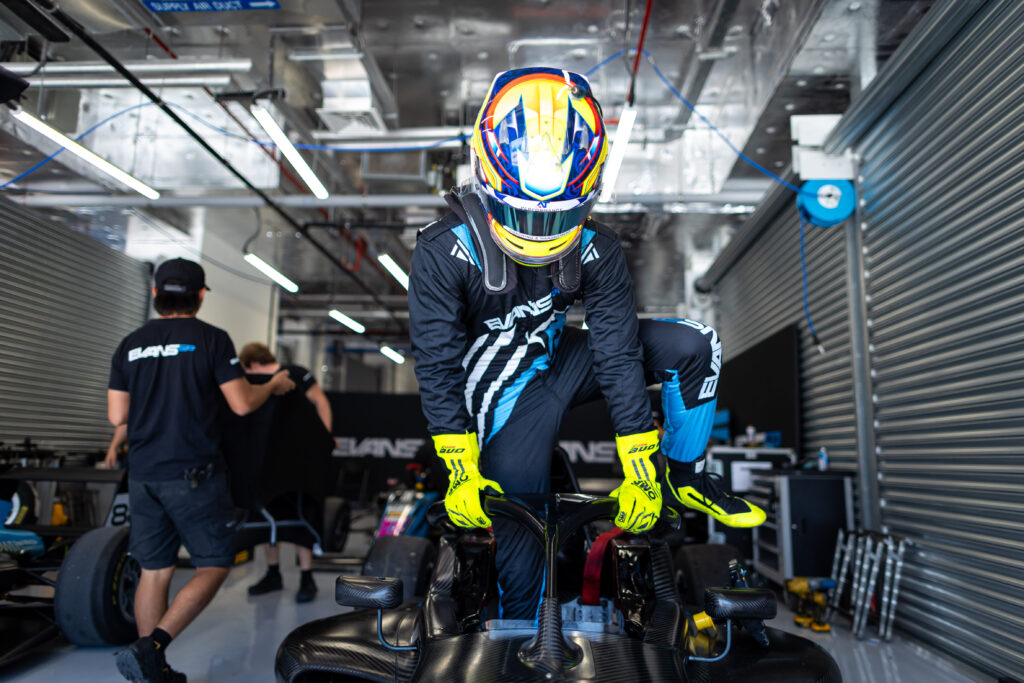
For Vaessen, one of the biggest lessons from the move into cars has been the importance of small details. Braking, turn-in, and throttle application all have a major impact on lap time, especially on larger circuits where small losses can quickly become much bigger deficits.
In karting, small mistakes still matter. However, Vaessen found that the scale of a car and the size of the circuits made those losses more visible. A slight delay in one part of the corner can cost time immediately, and that time can multiply across a full lap.
“So I realised that it really is all about the small details in the car: how you hit the brake, how you turn in on the corner, and how fast you apply the throttle. Even applying the throttle slightly too late, you can lose half a second worth of lap time. And that adds up if you do that in four corners, in real life, to like three seconds.
Adapting quickly: Why testing time matters
That difference also changed the way Vaessen approached improvement. In karting, drivers can access testing more easily and spend more time learning through repetition. In cars, however, track time is more limited and requires more planning.
As a result, Vaessen sees adaptability as a crucial part of the transition. When opportunities in the car are limited, each session carries more importance, and a driver must make the most of what is available.
“So I learned that, in cars, the time to get used to it and the time to get fast is a lot bigger than in karting. In karting, you also have unlimited testing because it’s easy to access. Cars, you cannot just get in the car and drive. You have limited days, so you have to plan it like a month in advance. So it’s very important how you go about it. I think being able to get in and straight away switch on and adapt to what you have is super important.
That is also where Todisco’s influence comes back into the picture. Vaessen said the small details remain central to their work together, even when the margins look minor from the outside.
“So that’s why I think the small details are crucial. That’s why Andrea keeps pushing small things. Even if I’m leaving less than half a tyre on the entry, he will tell me, “There’s more, there’s more. Do it, do it, do it.”
Everything feels bigger: Comparing karting and cars
Compared with karting, Vaessen feels everything in cars becomes bigger. The tracks are larger, the car is more complex, and the consequences of small mistakes can feel more significant.
That scale changes how a driver experiences progress. What may look like a large deficit on the timing screen can come from several smaller losses across the lap, making the process of adapting both technical and mental.
“So definitely, karting compared to cars, adapting and the small little details in terms of what you do in every corner is definitely more. It’s bigger. Everything’s bigger, basically. That’s for sure.
Hitting a wall: Learning through slow progress
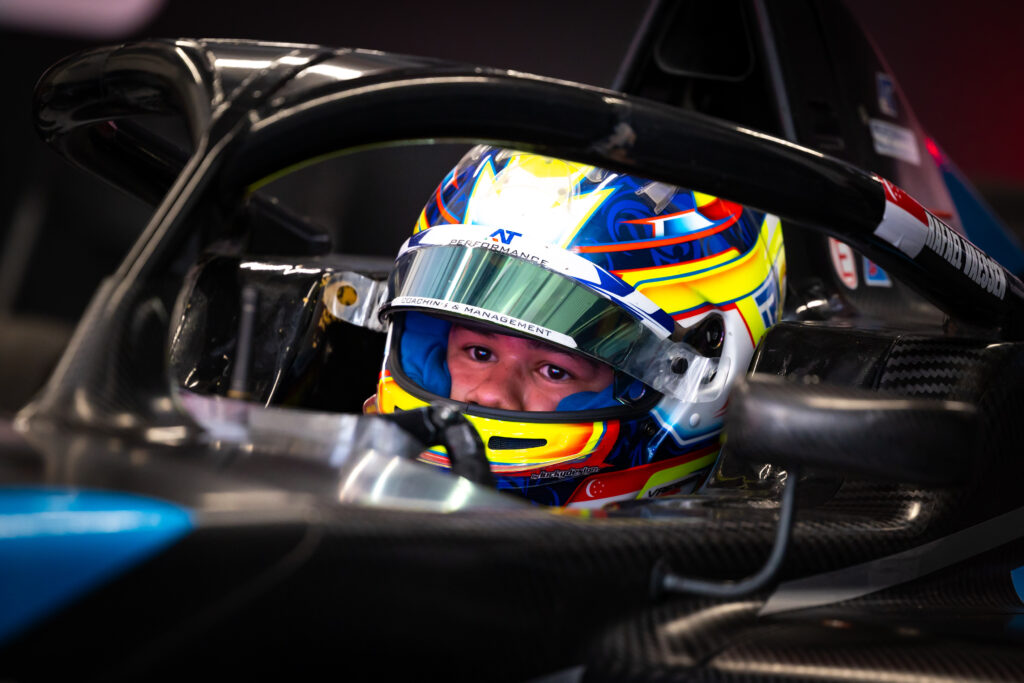
Although his first experience in F4 felt manageable, improvement did not come instantly. Vaessen reached a point where he felt he had stopped progressing, before eventually breaking through that wall.
That period tested his patience. Being close to the limit in the car did not always mean the lap time matched what he expected, and that made the learning process difficult at times.
“But yeah, for me in the car, when I got to the F4 car for the first time, getting there was okay. I was on the pace, but improving, I kind of hit a wall. So I didn’t improve for a while. It took me so much time. And then after I broke that wall, I improved a lot again.
For Vaessen, the answer was persistence. Rather than allowing frustration to take over, he had to keep working through the gap between what he felt in the car and what the timing screen showed.
“So really, keep on trying, keep on trying was one of the key things. Because I was feeling really slow. Seeing yourself being 1.5 seconds off the pace in testing, you always question, “Why am I not doing it if I really feel like I’m on the limit?’
Putting the lap time into perspective
Over time, Vaessen came to understand that a gap which looks large on the timing screen can come from smaller losses spread across a longer lap. That helped him put the challenge into perspective and continue working through the adaptation process.
“But if you think about it, 1.5 seconds is two-tenths in the corner on a big track. And karting is a lot smaller. The tracks are smaller and everything is just [smaller]. Those are the main things.”
For Vaessen, the move into cars has therefore demanded more than speed. It has required patience, trust, adaptation, and a deeper focus on small details. From Macau to AT Performance to the challenges of F4, each stage has helped shape the next step in his career.