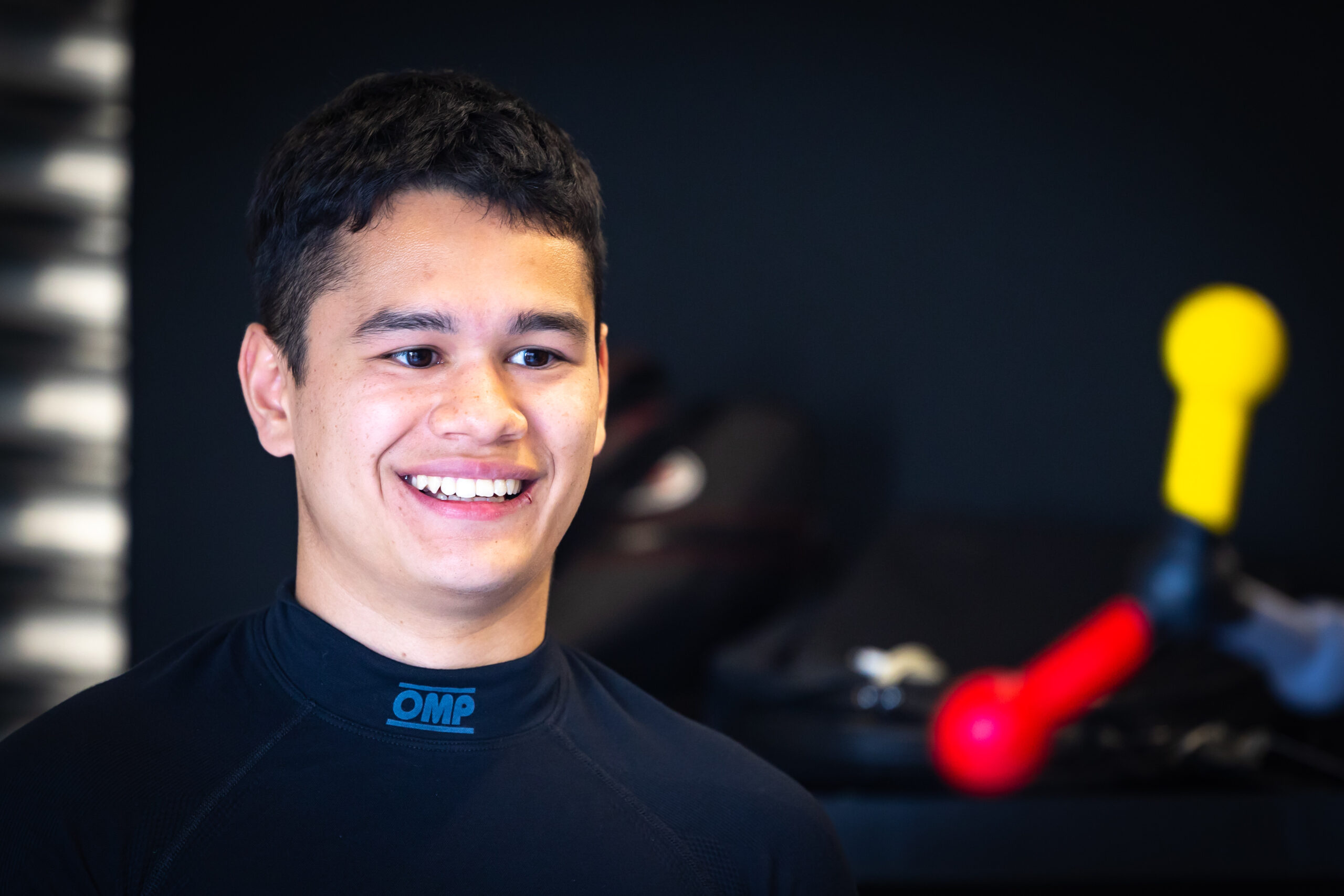
For Rafael Vaessen, the road back to racing has been as important as the road into it.
While many junior drivers build their careers through a continuous climb from karting to cars, Vaessen’s journey has taken a different shape. His introduction to motorsport came early, through family, but his relationship with racing changed over time. After several years in karting, he stepped away from the sport altogether before rediscovering the feeling that had first drawn him in.
That pause now forms a central part of his story. Rather than viewing it only as lost time, Vaessen sees it as part of a wider path that eventually brought him back to the paddock with a clearer sense of purpose.
In an exclusive interview with Pit Debrief, Vaessen reflected on his first steps in motorsport, falling out of love with racing, and the return to karting that helped set up his move into cars.
Early memories: Vaessen on finding motorsport through family
Vaessen’s first connection to motorsport came through his father. At that stage, racing was not yet a career ambition, nor was it a decision he made for himself. Instead, it began at home, long before he could fully understand where that early introduction might lead.
“So basically, let me first start when I started racing, since there’s been a big pause in my career. When I got into motorsport, I would say it wasn’t me, it was my father.
That family influence soon became time behind the wheel, even if Vaessen’s earliest experience of driving was far removed from competitive karting. Before race weekends, timing screens, or proper circuits, there was a toy car and a car park.
However, the move from that first toy car to a kart did not immediately bring confidence. When Vaessen first arrived at the track to drive a bambino, fear came before enjoyment. Yet once he took that step, the hesitation quickly gave way to something more instinctive.
“He bought me a toy car, and I could just drive around in the car park at two years old. So I was very young, three years old. I just kept driving, driving that. Then towards five years old, he brought me to the track to drive a bambino. But funnily enough, I was very scared to drive the car. And it took me two hours to finally drive it. Then after that, I couldn’t stop driving basically because it was just too much fun for me at the time.
From there, Vaessen moved into the early karting stages. His time in cadets formed the first proper chapter of his racing life, giving him a foundation in the sport before his relationship with motorsport began to shift.
“Then, after around a month or two, I started driving cadets. Then I drove cadets from around eight years old till around 12.
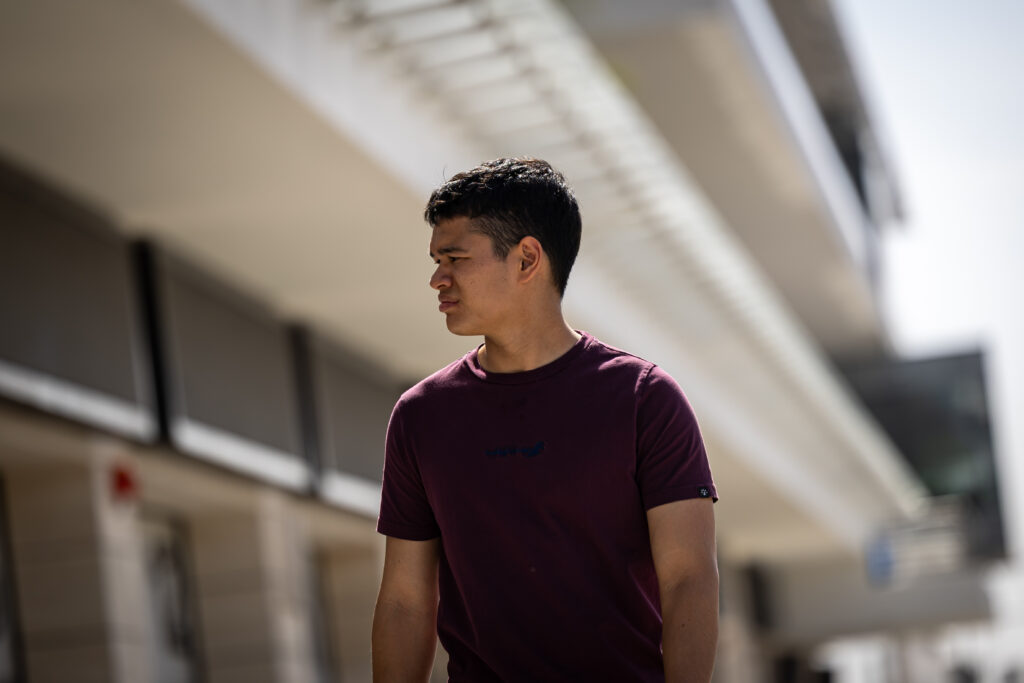
Falling out of love: The pause that shaped Vaessen’s route back
Unlike many young drivers who describe karting as an uninterrupted passion, Vaessen speaks openly about the moment racing stopped holding the same appeal. His first spell in the sport did not end through a single dramatic turning point. Instead, he simply lost interest and moved on to other things.
“And then to be honest, I just fell out, I fell out of love with the sport. That’s really it. I just, I stopped doing racing because I didn’t find it interesting, and I moved on to other things. Yeah, that’s the start of my racing career.
That break could easily have closed the door on his motorsport story. However, racing remained present in the background, particularly through Formula 1. Over time, that continued connection became strong enough to make him question why he had walked away in the first place.
“Then, when I when I came back, I was actually around 18 years old. Then I was just thinking about it, like, “Why did I stop?” Because it’s such a cool sport. I still watched Formula 1 since I was 10. So, I was always wondering, like, why did I stop? Why did I stop doing that?
Once Vaessen returned, his progression quickly gathered pace. What began as a return to karting soon became the start of a more serious path, eventually leading him towards cars.
“Then I got back into karting, got back to racing, did some national races, and they went pretty well for my first time. Yeah, and then now here I am doing cars already. So moving quite fast now.”
Karting connections: The people who kept the sport close
Although Vaessen stepped away from racing, the relationships he formed during his early karting years remained important. His return to the sport was therefore not a complete step into the unknown. In many ways, the paddock still carried traces of the world he had first known as a young karter.
For Vaessen, that continuity remains one of the most meaningful parts of his first spell in motorsport. While his own path paused for several years, many of the people around him continued racing, developing, and moving into different categories.
“Definitely,” he replied when asked about the lessons from karting that continue to shape him today. “Okay, so the people that I raced with back in 2010, 2014, I still know them to this day. So, I’m still friends with them, and I still talk to them quite often. Mostly friends. Like I’ve met so many people when I was younger, and I’m surprised to still see them at the track today, racing whatever they race.
Those friendships now stretch across several parts of the motorsport ladder. Some of Vaessen’s former karting peers have moved into GT racing and prototypes, while others remain in karting or have progressed into single-seaters.
“One of my friends is racing GT3, and one of my friends is doing Le Mans now, LMP3s. I’ve got some friends still in karting, so they’re still around. There’s also another guy in GB3, so they’re still there, but we’ve all expanded to do our own things. For sure, it’s the friends, like the people you meet.
A familiar paddock: Why old connections still matter
That sense of familiarity also extends beyond fellow drivers. Even after his time away from racing, one figure from Vaessen’s early karting environment remains part of his career today.
“My current karting team boss back in the day, still I’ve known him for, I would say, 12 years now, since when I first started. He still takes care of my kart. So it’s just the people you meet, to be honest.
In that sense, karting gave Vaessen more than a competitive foundation. It gave him a community that stayed close, even as his own career took a different route. When he eventually returned, those relationships helped make the sport feel familiar again.
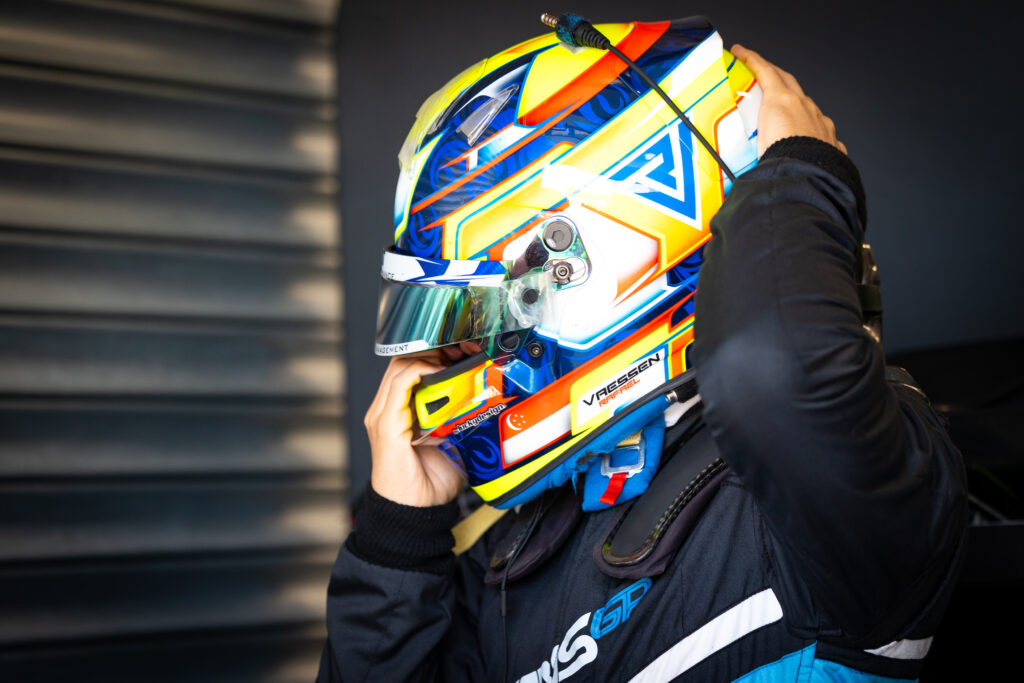
A first step that mattered more with time
Looking back, Vaessen recognises how important that first karting experience became. At the time, it required patience, encouragement, and a push from his father. With hindsight, however, that moment stands as one of the earliest turning points in his life.
“I’m definitely happy I got in that kart. Probably wouldn’t be here today.
His father’s own involvement in karting helped make that first step possible. While Vaessen needed time to overcome the fear, he eventually found the confidence to try — and that decision now carries far greater significance.
“So yeah, it took some convincing from my dad because my dad was also driving karts at the time. He was just racing Masters. So yeah, it took some time. But at the end, I did it.”
In many ways, that early hesitation makes Vaessen’s story more relatable. His path did not begin with instant fearlessness or certainty. Instead, it began with uncertainty, family support, and a decision to get into the kart anyway.
Looking back: The advice Vaessen would give his younger self
Vaessen’s time away from racing gives him a different perspective on his younger self. If he could speak to the child who first stepped into a kart, his message would be simple: stay with it.
“I would say to myself, “never ever stop karting. I would just stay in that kart and keep going, because you’ll find it eventually.”
At the same time, Vaessen does not frame the break only as a mistake. While he still questions why he stopped, he also recognises that the pause shaped other parts of his life. His national service, for example, could have become more complicated had he continued climbing the racing ladder without interruption.
“Going back, thinking about it like, ‘why did I stop?’ But then you think about it in a way like, if that happened, you don’t know where I would be nowadays. I believe that everything happens for a reason. I served my national service already, so that could have been affected if I continued karting, and I was doing Formula 3, etc.
That balance between regret and acceptance runs through his reflections. He would still urge his younger self not to step away from the sport, but he also understands that his journey developed in its own way.
“It’s definitely one thing I would have told myself, to not get out. Just keep going and keep racing.
Then, with a joking tone, Vaessen added one more piece of advice for the driver he used to be.
“And focus on the driving, because I was very bad when I was young.”
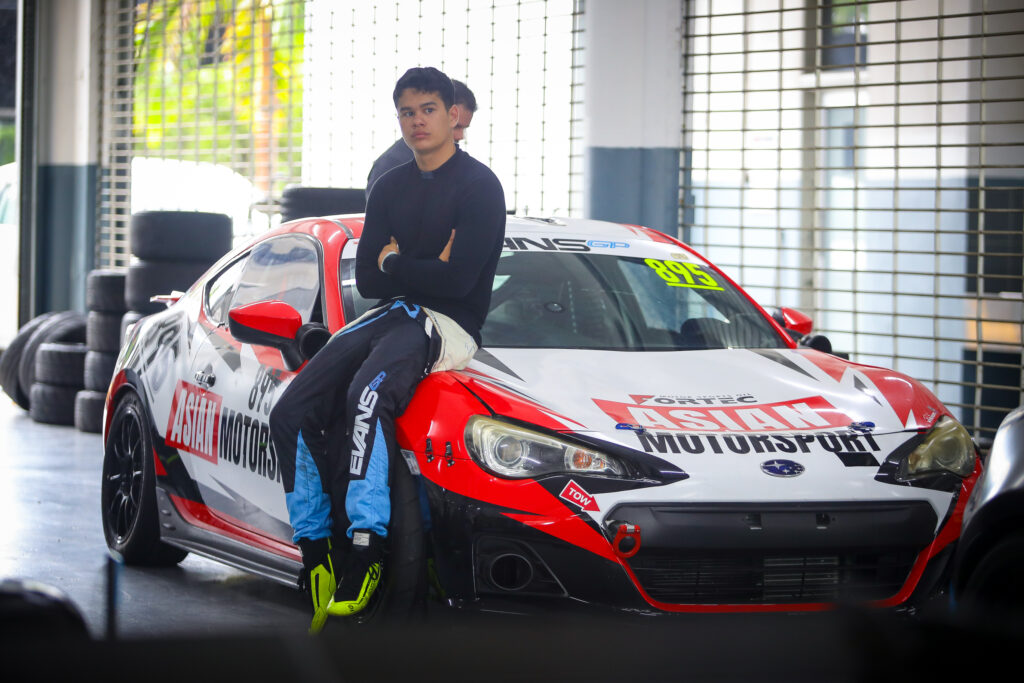
Rediscovering the feeling: Why racing stood apart
During his time away from motorsport, Vaessen did not stop competing altogether. Instead, he tried other sports, including tennis and football. Yet neither gave him the same feeling he had found in racing.
Looking back, Vaessen believes the younger version of himself would likely have been surprised by his eventual return to karting.
“He’d be surprised. Because I think the younger me would have thought, “That’s it, I’m not racing anymore.” Because I went to do tennis and football, actually. So completely different sports.
Tennis had a family connection through his mother, but it did not offer the same sensation as motorsport. For Vaessen, the difference came down to the adrenaline of speed, direct competition, and pushing himself in the car.
“But then I played tennis. My mom plays tennis, so she was very happy. But I just never got the adrenaline that I got from racing. Being in something that goes crazy speeds, and then fighting other drivers, and pushing it to the limit, it didn’t feel the same for me when I was playing tennis for a couple of years.
Football also helped him understand what he valued about racing. While Vaessen recognises motorsport as a team effort, he remains drawn to the responsibility the driver carries once the car leaves the garage.
“Same with football. Racing is a team sport, but I didn’t like football because I had to rely on my teammates. But when I’m in the car, I have to rely on my team, yes, but I do 95% of the driving. I have a team behind me to get me ready for the races and get me performing to my maximum capability.”
Through those comparisons, Vaessen came to understand racing’s appeal more clearly. Other sports offered competition, but they could not recreate the combination of speed, pressure, and personal responsibility that he found behind the wheel.
The way back: Alonso, COVID, and a casual spark
Vaessen’s return to motorsport came after a period shaped by COVID-19 restrictions in Singapore. During that time, racing was no longer part of his daily routine. Instead, life looked much like it did for many teenagers during lockdown: school, time at home, video games, and friends outside the paddock.
“Oh, that time away from the sport… honestly, it was COVID. So, COVID, and I lived in Singapore, so everything was locked down, couldn’t get out of the house. So honestly, I didn’t really do much. I was just in school. To be honest, I was playing video games as a normal teenager, just playing with my friends. Not who raced, obviously, just my school friends, not much.
The idea of returning came later, and it arrived almost casually. After finishing school, Vaessen saw a video of Fernando Alonso driving a shifter kart. That moment did not immediately create a career plan, but it did remind him of what karting could feel like.
“But after COVID, I finished school. I saw an Instagram video of Fernando Alonso, karting with a shifter. And I showed it to my dad and said, “We should go karting again sometime, just for fun.”
What began as a simple suggestion quickly became something more concrete. His father contacted Lester, the same figure who had remained connected to Vaessen’s karting for more than a decade, and the first steps of his comeback began to take shape.
“And then after that, my dad messaged Lester, who is the guy who still manages my karting from 12 years ago to now. He set up a kart. And basically, I went once every two weeks in 2024, just practising. And it took me like, like two sessions, like it’s two days to get back in the kart. Because it felt so natural.
A natural return: From practice to a serious second chapter
Once Vaessen got back behind the wheel, the feeling returned quickly. After years away from racing, he did not need long to reconnect with the rhythm of karting. That natural feeling soon led him back into competition. After several months of practice, Vaessen returned to racing and began rebuilding his place in the sport step by step.
“Then, after three months of practice, I joined the races again. I joined some national races, did some two senior races, finished in the mid-pack.
From there, his progress became more visible. Against drivers who had continued racing while he was away, Vaessen produced a strong first proper senior season and showed that his time out had not diminished his potential.
“And then last year I finished second in the national championship, behind the driver who was, didn’t stop basically with a lot of experience. So that was good. That was a good, good season, for my first proper senior season.”
For Vaessen, the comeback did more than restart a racing career. It confirmed that his connection to the sport had not disappeared. After years away, karting still felt familiar, and racing still gave him something he could not find elsewhere.
As he continues his move into cars, that return remains a defining part of his journey. Vaessen may have stepped away from racing, but the path back gave him renewed direction — and a clearer understanding of why he wanted to keep going.