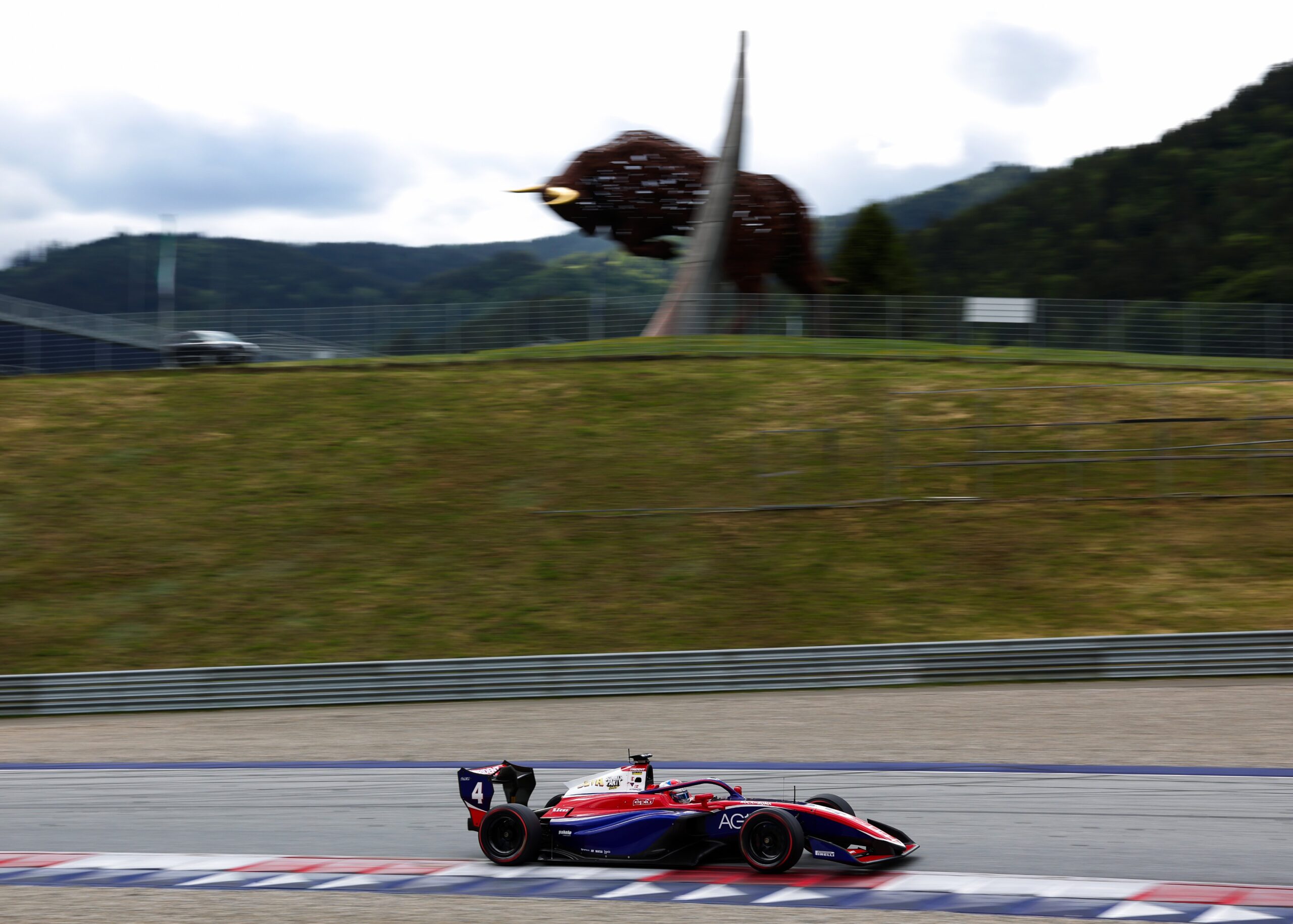
The FIA Formula 3 (F3) Championship continues its European campaign this weekend as the paddock heads from Barcelona to the Red Bull Ring for Round 4 of the 2026 season.
After the first permanent circuit of the year in Spain, teams now arrive in Austria for the second time this year. While many drivers completed in-season testing at Spielberg just a few months ago, race conditions are expected to differ, meaning teams will need to quickly adapt their setups to maximise performance.
Despite being one of the shortest circuits on the calendar, the Red Bull Ring consistently delivers close Qualifying sessions, strategic DRS battles and little room for error. Track position, slipstream and staying within the white lines are all expected to play decisive roles throughout the weekend.
What to expect across the 2026 F3 weekend in Spielberg
Spielberg hosts the fourth round of the 2026 FIA Formula 3 Championship and presents a very different challenge to Barcelona.
Free Practice gets the weekend underway on Friday morning at 09:55 local time before drivers return later that afternoon for the all-important Qualifying session at 15:00.
As with every standard Formula 3 weekend, Friday’s Qualifying session will determine the grids for both races, making it arguably the most important session of the weekend. Around such a short circuit, the margins between drivers are expected to be incredibly small, meaning every lap will count.
The Sprint Race takes place on Saturday morning before Sunday’s Feature Race brings the Austrian weekend to a close at 08:40 local time.
Weekend schedule
All times are local time in Spielberg (UTC+2)
- Free Practice: Friday, 09:55 local time
- Qualifying: Friday, 15:00 local time
- Sprint Race: Saturday, 10:05 local time
- Feature Race: Sunday, 08:40 local time
Fine margins expected in Qualifying
Qualifying could once again define the weekend at the Red Bull Ring.
As one of the shortest laps on the Formula 3 calendar, even the smallest mistakes can make the difference between starting near the front or finding yourself in the midfield. Slipstream will also become a major factor, with drivers looking to gain valuable tenths by picking up a tow along the circuit’s long straights.
However, finding the perfect balance will not be easy. While a slipstream can improve lap time, following another car too closely through the final sector may leave drivers battling dirty air and increasing the risk of exceeding track limits.
Traffic management is also expected to become a major talking point, with every team likely to send their cars onto the circuit at similar times in search of the best track conditions. That could create congestion both on preparation laps and during flying laps, leaving little margin for error.
Track limits could prove decisive
Although the Red Bull Ring appears relatively straightforward on paper, remaining within track limits has regularly proven one of the circuit’s biggest challenges.
The exits of Turns 1, 4, 6, 7, 9 and 10 have all caught drivers out in previous seasons, particularly during Qualifying where a single excursion beyond the white lines can result in a lap deletion.
The final corner remains one of the biggest danger zones. Drivers naturally carry as much speed as possible onto the start-finish straight, but running too wide can instantly erase what may have been a pole-contending lap.
With gravel traps and barriers waiting beyond the kerbs, precision will be just as important as outright pace throughout the weekend.
DRS expected to shape both races
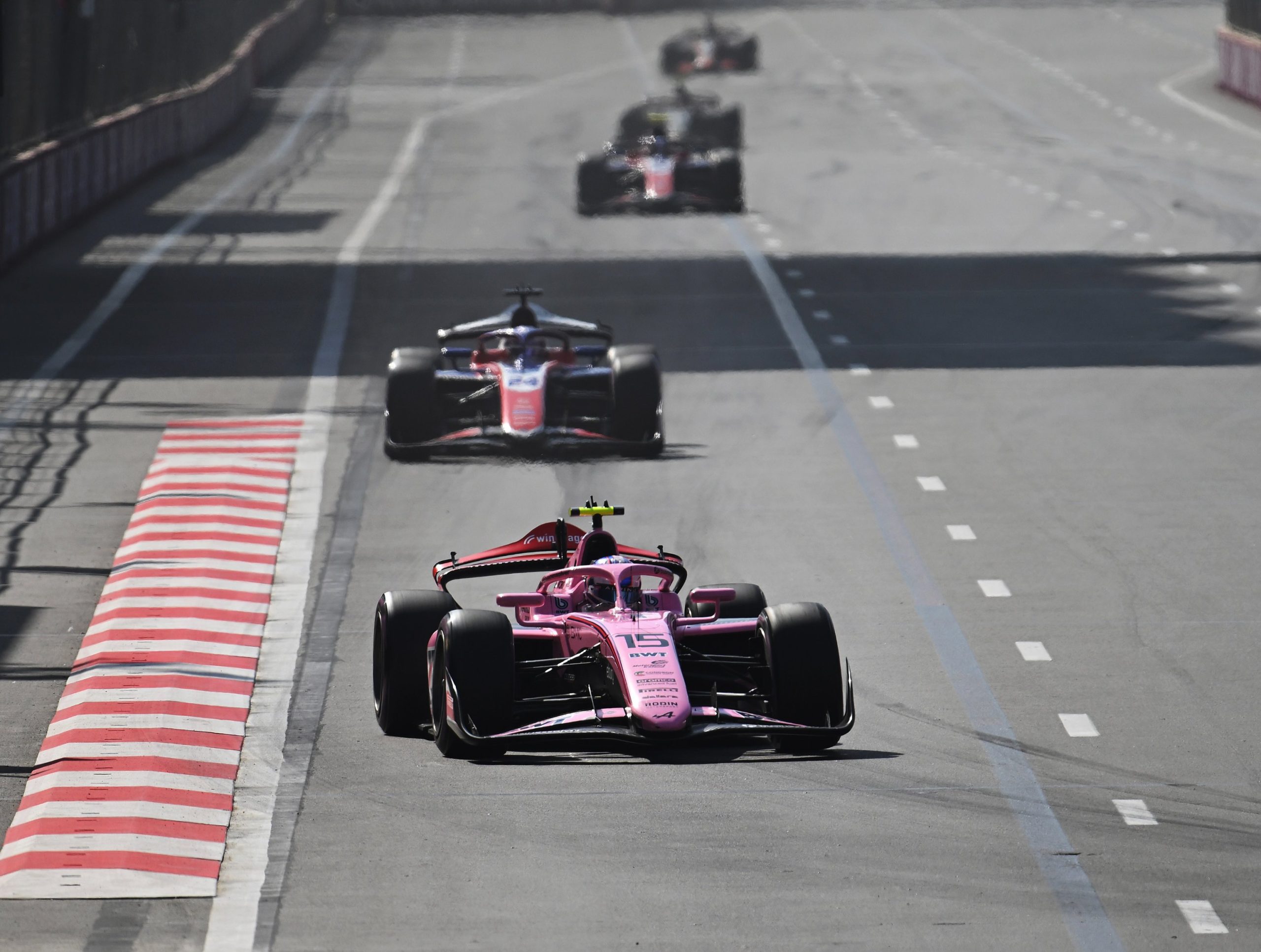
The Red Bull Ring is renowned for producing close racing, largely thanks to its three DRS zones.
Drivers who remain within one second of the car ahead through each detection point will have multiple opportunities to attack into Turns 1, 3 and 4, creating the potential for constant position changes throughout both races.
The first DRS zone begins after Turn 1 and runs uphill towards Turn 3 before a second activation zone immediately follows on the run to Turn 4. A third detection point after Turn 9 provides one final opportunity to launch an attack into Turn 1 at the start of the next lap.
As a result, racecraft and positioning may prove just as important as outright pace, with drivers often sacrificing one corner to maximise overtaking opportunities later in the lap.
Key numbers ahead of Round 4 of the 2026 F3 Championship in Spielberg
Spielberg hosts Round 4 of the 2026 FIA Formula 3 Championship.
The Red Bull Ring features three DRS zones, creating multiple overtaking opportunities each lap.
Qualifying takes place over one of the shortest laps on the Formula 3 calendar, meaning gaps are expected to be extremely close.
Campos Racing arrives in Austria leading both the Drivers’ and Teams’ Championships through Ugo Ugochukwu and Théophile Nael.
Technical preview for the 2026 Spielberg F3 Round
The Red Bull Ring combines long straights with heavy braking zones and a flowing final sector, creating a compromise between straight-line speed and aerodynamic grip.
Teams will need to find a setup that allows drivers to remain competitive on the long uphill straights without sacrificing stability through the medium and high-speed corners that complete the lap.
Slipstream is expected to play a significant role in both Qualifying and the races, while braking performance into Turns 3 and 4 could prove decisive when overtaking opportunities arise.
With little time available to recover from mistakes around such a short lap, precision and consistency will remain key throughout the weekend.
FIA Formula 3 Technical Director Pierre-Alain Michot expects there to plenty of overtaking opportunities and drivers to be hit with track limits across the weekend.
“With the three DRS zones around the lap, there are plenty of overtaking opportunities for drivers. Slipstream and staying in the one-second window to the driver ahead is a crucial factor this weekend.
“Overall, the Red Bull Ring is a demanding track on tyres in the numerous traction zones that follow the heaviest braking phases around the lap.
“Top end speed is important, but the final sector is comparatively twisty, and track limits are never far away around the Red Bull Ring.”
Overtaking and race management
The three DRS zones should ensure overtaking remains a constant feature of both races, but drivers will also need to think strategically about when to attack.
Passing too early could leave a driver vulnerable to an immediate counterattack further around the lap, while remaining inside the crucial one-second window will be essential for maintaining pressure throughout the race.
Managing tyre performance over race distance will also remain important, particularly as drivers battle within long DRS trains where small mistakes can quickly cost multiple positions.
Consequently, Sunday’s Feature Race may reward those who balance aggression with patience, choosing the right moment to make decisive overtakes.
How to follow the 2026 F3 weekend in Spielberg
Every Formula 3 session from Spielberg will be available live on F1 TV where available, with Practice and Qualifying taking place on Friday, the Sprint Race on Saturday and the Feature Race on Sunday. F1 TV Pro and Premium remain available only in selected regions.
Fans can also follow the action through local broadcasters, live timing, the official FIA Formula 3 website and the championship’s social media channels throughout the weekend.
Spielberg set to reward precision and racecraft
Round 4 promises to present another unique challenge despite teams already having valuable testing data from the Red Bull Ring.
Qualifying is expected to come down to fine margins, with slipstream, traffic and track limits all likely to influence the final grid. Across both races, the circuit’s three DRS zones should create plenty of overtaking opportunities, while strategic positioning could prove just as important as outright speed.
Campos Racing heads to Austria as the team to beat, but with the championship still in its early stages and margins expected to remain incredibly close, Spielberg has all the ingredients for another fascinating weekend of FIA Formula 3 action.