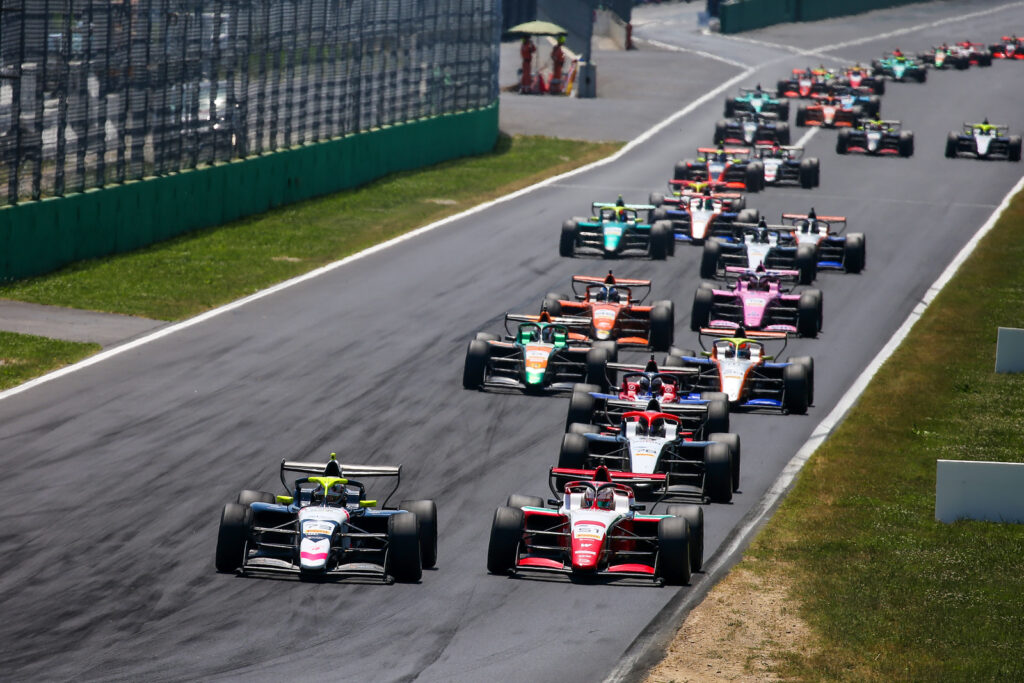
The first half of the 2026 FREC season has created a tight title fight, several breakthrough winners and a deep field of drivers capable of changing the championship picture in one weekend.
However, five drivers stand out most clearly after the opening four rounds: MP Motorsport’s Sebastian Wheldon, R-ace GP’s Rashid Al Dhaheri, PREMA Racing’s Kean Nakamura-Berta, R-ace GP’s Emanuele Olivieri and CL Motorsport’s Reno Francot.
1. Sebastian Wheldon: the 2026 FREC Drivers’ Championship leader at mid-season
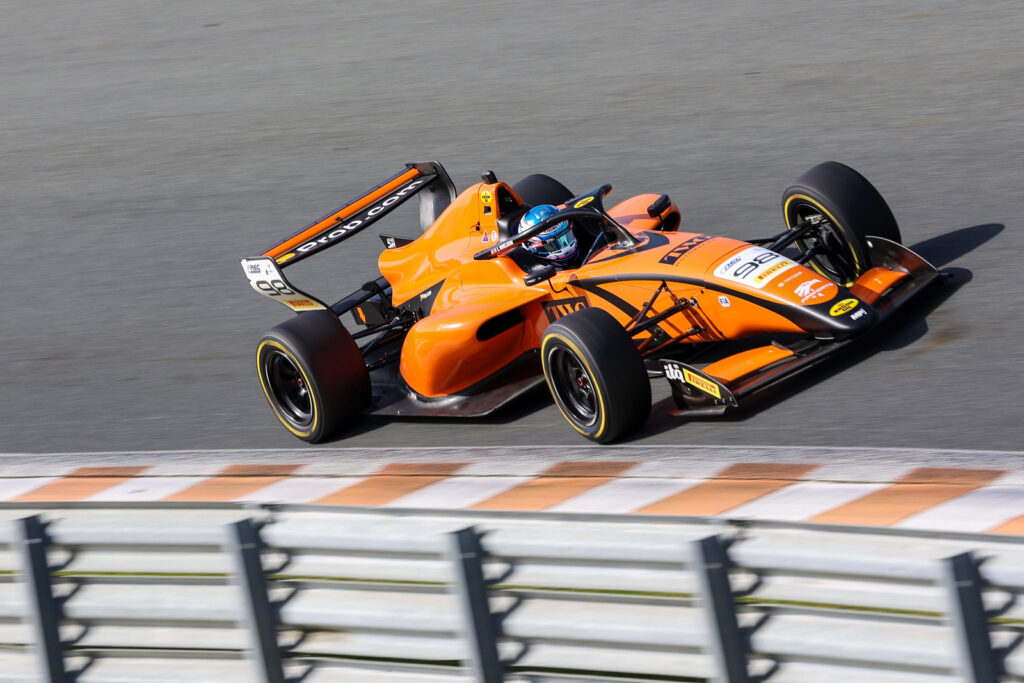
MP Motorsport’s Sebastian Wheldon earns top spot because he has combined race-winning pace, consistency and recovery better than anyone else. He leads the Drivers’ Championship after Round 4 with 121 points, seven clear of Nakamura-Berta and 15 ahead of Al Dhaheri. That advantage remains narrow, but it reflects his ability to collect points even when weekends do not run smoothly.
Wheldon’s defining weekend came at Zandvoort. He arrived fourth in the standings, claimed pole for Race 1, converted it into his first FREC win, and then added another victory in Race 2 after a close fight with Nakamura-Berta. That double win moved him to the top of the championship and gave MP Motorsport a major boost in its home round.
However, his first half has not looked flawless. Spa-Francorchamps exposed some vulnerability, as he finished fifth in Race 1 and 10th in Race 3 while Al Dhaheri took the championship lead. Monza also brought a costly Race 2, where penalties dropped him from second on the road to 20th.
Yet Wheldon responded when it mattered. His charge from seventh to second in Monza Race 3 restored the championship lead and showed why he sits first on this list. He still needs cleaner weekends, but his ability to recover has made him the strongest all-round performer so far.
2. Rashid Al Dhaheri
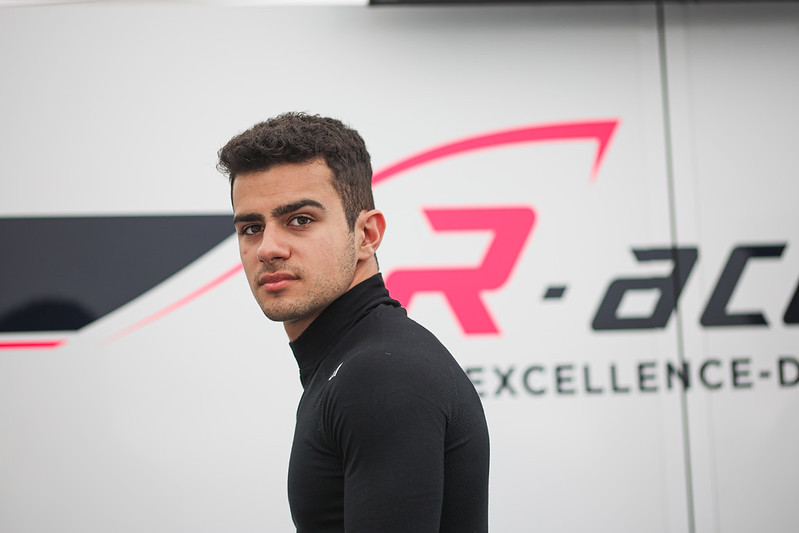
R-ace GP’s Rashid Al Dhaheri ranks second because he has used consistency and sharp race execution to remain firmly in the title fight. After four rounds, he sits third with 106 points and trails Wheldon by only 15. He has also claimed two wins, matching Wheldon and Nakamura-Berta on victory count.
Al Dhaheri started strongly at Spielberg. He inherited Race 2 victory after Dion Gowda’s penalty and added a podium in Race 1, leaving the opening round second in the standings with 38 points. From there, he kept scoring and avoided the kind of major early slump that damaged several rivals’ campaigns.
His best championship swing came at Spa-Francorchamps. He finished second in Race 1, then added third and fastest lap in Race 3. That bonus point moved him one point ahead of Wheldon and gave him the championship lead after Round 3.
Still, Al Dhaheri has not maximised every opportunity. At Monza, contact in Race 1 left him outside the points, and a difficult Qualifying 2 forced him to recover from 13th in Race 3. Nevertheless, his Race 2 win at Monza kept him within striking distance. He has not dominated, but he has built one of the most complete title campaigns.
3. Kean Nakamura-Berta
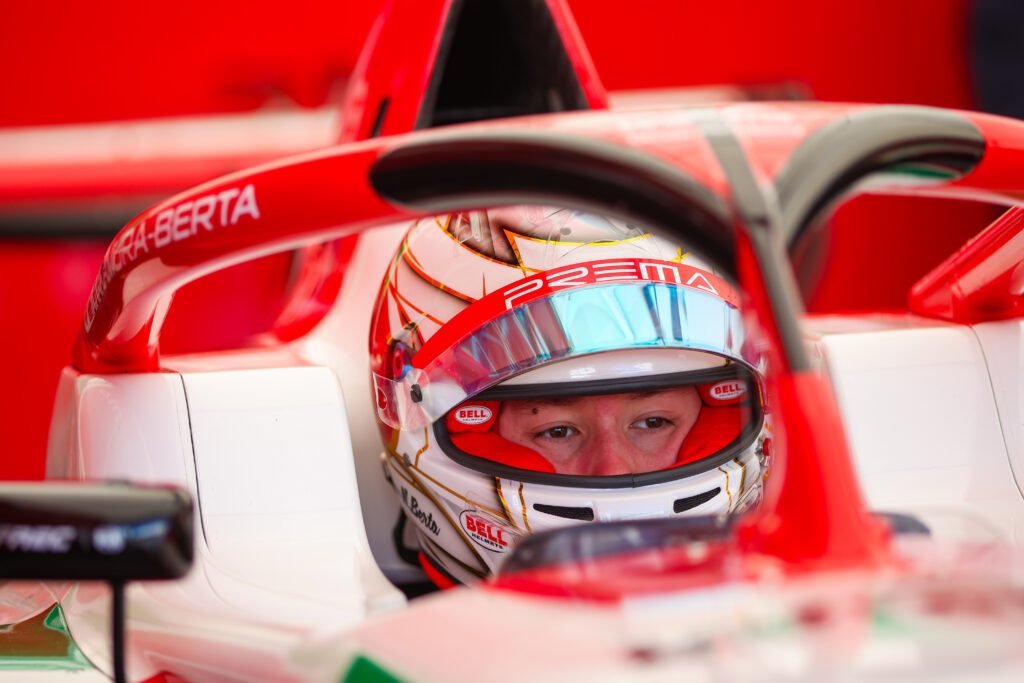
PREMA Racing’s Kean Nakamura-Berta deserves third because he has often looked like the fastest driver of the 2026 FREC field over one lap. He claimed both pole positions at Spielberg, won Race 1 from pole, and immediately established himself as a leading title contender. His Qualifying speed has repeatedly placed him in position to control races.
That raw pace continued across the first half. At Zandvoort, he took Qualifying 2 pole and fought Wheldon for victory in Race 2. Then, at Monza, he secured his fourth pole of the season and won Race 1 from the front, briefly moving into the championship lead.
However, Nakamura-Berta does not top this list because the first half also carried costly mistakes and missed points. Zandvoort Race 1 hurt his weekend after a grid drop and a later penalty. At Monza, contact with Olivieri during Race 3 ended his race and allowed Wheldon to retake the championship lead.
Even so, Nakamura-Berta remains second in the standings, only seven points behind Wheldon. That position says plenty about his level. If he turns more of his Qualifying advantage into clean race weekends, he could become the driver to beat in the second half.
4. Emanuele Olivieri
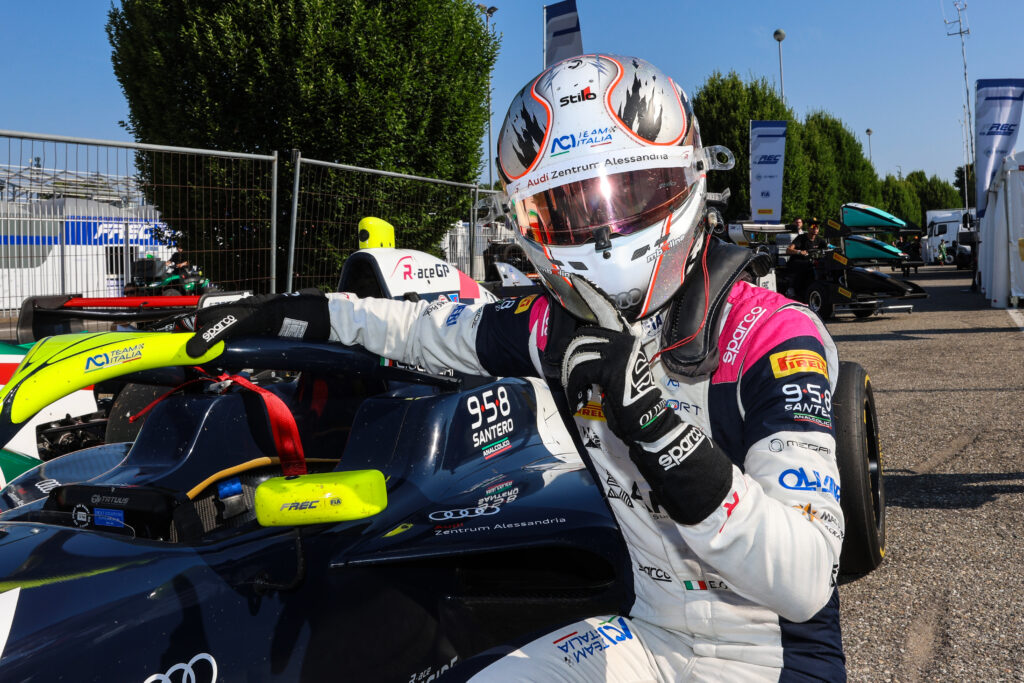
R-ace GP’s Emanuele Olivieri has produced the clearest upward trajectory of the first half. He started quietly at Spielberg with only four points, but he then built momentum at Zandvoort with third in Race 1 and sixth in Race 2. Those results made him a serious rookie force before his outright breakthrough arrived.
Spa-Francorchamps showed more of his pace, even though it did not deliver a headline result. However, Monza changed his season. Olivieri finished second in Race 1, took his maiden pole position in Qualifying 2, and then converted it into his first FREC victory in Race 3. He also controlled several Safety Car restarts, which made the win more convincing than a simple lights-to-flag summary suggests.
That performance moved him from sixth to fourth in the standings after a 45-point weekend. He now sits on 85 points, 36 behind Wheldon, but he has built a clear gap over Francot in fifth.
The main limitation remains his early-season deficit. Olivieri still needs more weekends like Monza to become a true title contender. However, his first half has already shown strong pace, composure and growth. He has moved from promising rookie to race winner, and that progression deserves a place in the top five.
5. Reno Francot
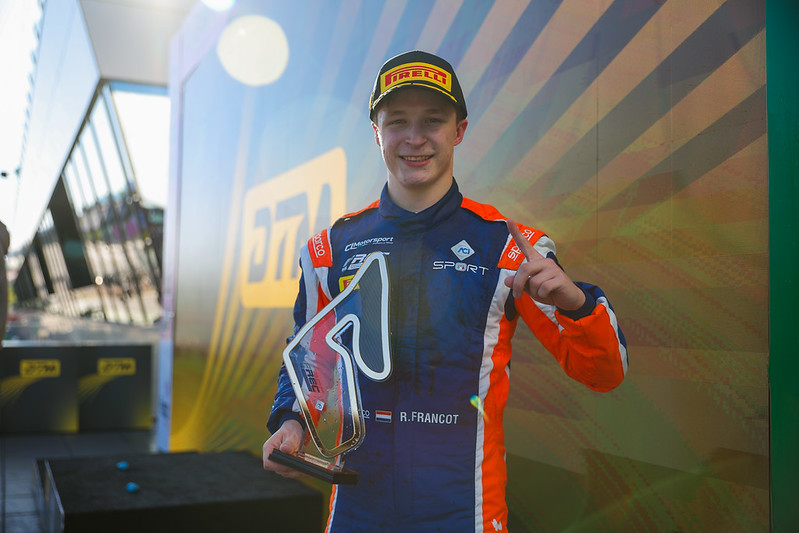
CL Motorsport’s Reno Francot completes the top five because his opening two rounds showed excellent execution, even if his momentum has faded since then. He left Spielberg as the championship leader with 43 points after combining consistency with a composed Race 3 victory. In that race, he managed repeated Safety Car restarts and avoided the chaos that hurt several rivals.
He then backed that up at Zandvoort. Although Wheldon took the championship lead, Francot finished fourth in Race 1 and third in Race 2. Those results kept him second in the standings on 70 points and confirmed that his Spielberg form had not come from one isolated result.
However, Spa and Monza weakened his case. He left Spa still fourth in the standings, but the weekend did not match the level of his opening rounds. Then, at Monza, he scored only four points and dropped further away from the leading three. He now sits fifth on 74 points, 47 behind Wheldon.
Francot remains a standout because he led the championship and delivered one of the strongest pressure drives of the opening round. However, he needs a response in the second half. His first half started brilliantly, but the title fight has moved away from him.
Notable mentions — more 2026 FREC names knocking on the door
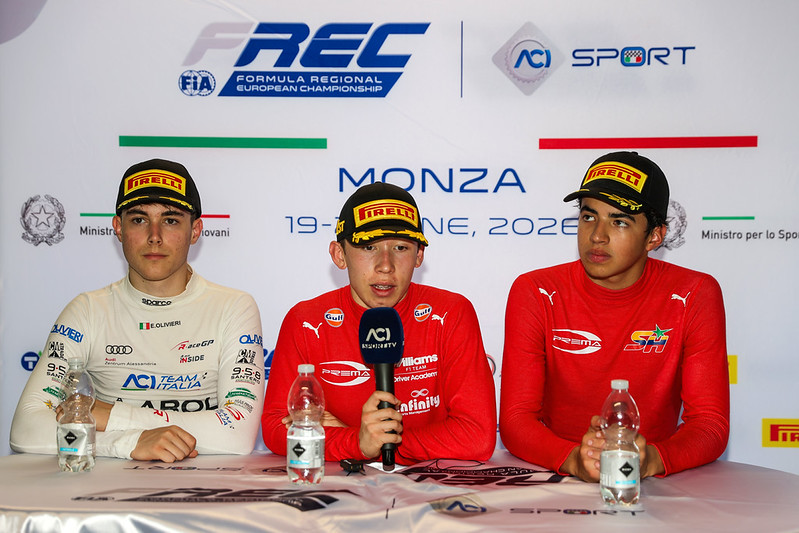
PREMA Racing’s Salim Hanna deserves mention after one of the strongest upward moves at Monza. He scored a podium in Race 1, inherited second in Race 2 after Wheldon’s penalties and climbed to sixth in the standings. That weekend gave PREMA another reliable points scorer behind Nakamura-Berta.
ART Grand Prix’s Alexandre Muñoz and Trident Motorsport’s Maksimilian Popov both produced standout Spa-Francorchamps performances. Muñoz took pole and won Race 1, while Popov claimed pole and victory in Race 3. Their peaks rank among the best individual performances of the season, but they need more consistent scoring to move higher in a first-half ranking.
MP Motorsport’s Zhenrui Chi also merits recognition for steady scoring, particularly during MP Motorsport’s strong Zandvoort weekend. Meanwhile, Rodin Motorsport’s Alex Ninovic showed early promise with his Spielberg podiums, and R-ace GP’s Yuki Sano delivered a major Monza highlight by charging from 14th to third in Race 3.
Conclusion: 2026 FREC first half rewards more than raw pace
The first half of the 2026 FREC season has shown that one-lap speed alone will not decide the title. Nakamura-Berta has set the Qualifying standard, but Wheldon leads because he has combined wins with recovery drives and damage limitation. Meanwhile, Al Dhaheri has kept himself close through consistency and decisive race execution.
Olivieri’s Monza breakthrough adds another dangerous contender, while Francot’s early lead proves how quickly momentum can change. As a result, the second half should reward the drivers who turn strong Qualifying into clean race weekends and avoid the costly errors that have already shaped the championship.