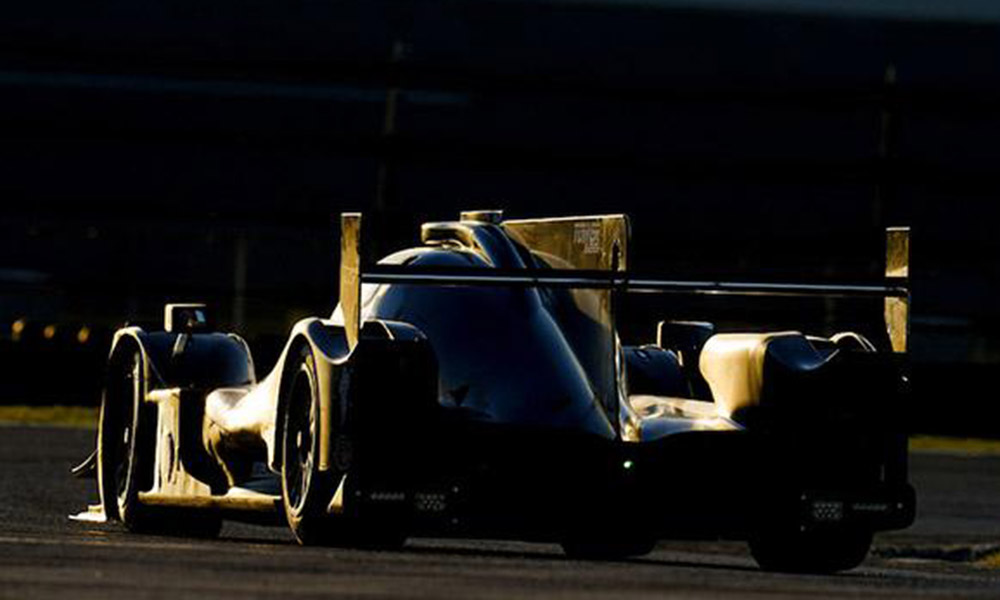
ORECA aims to begin track testing its new Oreca 09 LMP2 car during the second quarter of 2027 as preparations intensify for the category’s next regulatory cycle.
The French constructor has already progressed deep into the design phase, with its engineers currently focusing heavily on the new monocoque. However, the governing bodies have yet to finalise every aspect of the technical regulations.
ORECA and Ligier Automotive hold the two licences to build cars for the next-generation category. Gibson Technology will supply a new 3.4-litre twin-turbo engine, while the Oreca 09 will make its competitive debut during the opening round of the 2028 European Le Mans Series season.
ORECA targets second-quarter testing programme
The Oreca 09 represents a completely new project rather than a further evolution of the successful Oreca 07. Therefore, ORECA must complete the design, development, validation and production processes in time to supply customer teams before the end of 2027.
Technical director Rémi Taffin confirmed that the company hopes to place the car on track during the second quarter of next year.
“The LMP2 is coming to race in 2028, so we’re obviously in design [stage] at the time,” Taffin told Sportscar365. “There’s big work on the monocoque. I hope we’re going to test the car next year, somewhere in Q2.
“Everyone should remember that it’s a new car. It’s a new everything. That will be something we’ll need to deliver because the car will need to be delivered at the end of next year.”
The proposed schedule would give ORECA several months to develop the car before customer deliveries begin. It would also allow teams to prepare for the Oreca 09’s first season through testing and familiarisation programmes.
New LMP2 car will begin global rollout in 2028
The next-generation LMP2 formula will first appear in the European Le Mans Series in 2028. The car can also contest that year’s 24 Hours of Le Mans before the Asian Le Mans Series introduces the new machinery during its subsequent winter campaign. IMSA will then adopt the regulations for the WeatherTech SportsCar Championship in 2029.
This phased introduction will require ORECA to support customers across several championships and regions. Furthermore, the constructor expects to manufacture approximately 30 cars to meet demand across the different grids.
Unlike a factory Hypercar programme, which may involve only a handful of chassis, the LMP2 project requires ORECA to manage large-scale production alongside ongoing development and customer support.
LMP2 work overlaps with growing Hypercar commitments
ORECA will face a particularly demanding period as it develops the Oreca 09 alongside several other programmes.
The company will continue supporting Genesis and Ford as they prepare their respective top-class prototypes. It will also contribute to at least two manufacturer programmes under the converged Hypercar regulations planned for 2030.
Meanwhile, ORECA continues to build and support the Ferrari 296 GT3 Evo and the Toyota-based V6 engine used throughout the LMP3 category.
Taffin expects the Oreca 09 design work to dominate the end of 2026 and the beginning of 2027 before the company shifts more resources towards future Hypercar projects.
“It will be a kind of overlap with any Hypercar program we have for 2030,” said Taffin. “We should not forget that we’re also getting Genesis and Ford into the next three years, so there will still be some work there.
“I have to say that will be the big work at the end of this year, and the beginning of next year, in terms of designing the LMP2. Then we will switch on to any [2030] Hypercar that we have to get on for a year-and-a-half or two.
“In the meantime, there will be production that’s flat out making the LMP2 cars, which is a different scenario to Hypercar because you make 30 cars or so, to fill up the grids. When we get to Hypercar, it’s one, two, three, four cars, which are different.
“In the end, what we try to do is that any new car we make is a new try for us to be better. Whether you talk about GT3, or LMP2 or Hypercar, as soon as you’ve got a chance to make it new, that’s for us the good side of it.”
The overlap will test ORECA’s engineering and production capacity. However, the company can also apply lessons across its different programmes as it develops new cars for several levels of endurance racing.
Unfinished regulations create additional design challenge
ORECA has started designing the Oreca 09 despite the absence of a finalised technical rulebook.
The company already has enough information to begin work on key areas. Nevertheless, engineers will eventually need firm decisions on the remaining regulatory details before they can complete the design and move into later development stages.
Taffin acknowledged that the uncertainty complicates the process, although he remains confident that ORECA can manage it.
“I’m not saying we don’t have anything we can work from. But you need to close some doors at some point so you can go forward and to the next [level]. Sometimes it’s a bit difficult but we will make it work.”
The timing of the final regulations will prove important. Late changes could force ORECA to revise established design work, while early confirmation would allow engineers to commit resources with greater confidence.
ORECA refuses to assume continued LMP2 dominance
The Oreca 07 has become the dominant car under the current LMP2 regulations, which began in 2017.
Although four constructors originally held licences, most customer teams eventually selected the Oreca because of its performance and competitiveness. That trend transformed many leading championships into near single-make contests.
However, Taffin stressed that ORECA cannot assume teams will automatically select the Oreca 09.
“There is nothing secure in LMP2,” he said. “Everybody thinks that this is a single-make series. But it’s not. The only reason it has become that is because the Oreca is the quickest car.
“When you’re trying to balance this, at the end of the day, you don’t actually sell your product to the customer. You sell the product the customer wants to the customer. If you make a car that they don’t like, they won’t buy it. I have to say in our sport, you can even give it for free, but if it doesn’t get you to the objective, which is winning, why?
“For us it’s very demanding because also have to respect what we’ve done up until now. Sometimes [people say] we need to make a better car. I would say we need to make an equivalent car. Things are changing but we’re still trying to make the most out of it.”
ORECA must therefore deliver a car that matches the competitiveness, usability and customer appeal of its predecessor under a different technical framework.
Ligier competition raises pressure on Oreca 09 project
Ligier will provide ORECA’s direct competition under the new regulations. Both companies will use the same Gibson engine, which places greater importance on chassis design, aerodynamics, mechanical performance, reliability and customer support.
ORECA enters the new era with a strong record, but the regulatory reset gives Ligier an opportunity to challenge its rival from the beginning. Customer teams will ultimately decide which car best supports their objectives. As Taffin noted, teams will prioritise their chances of winning rather than a constructor’s previous reputation.
Oreca 09 development enters decisive period
ORECA must now complete the Oreca 09’s design while preparing for the proposed Q2 2027 rollout. Once testing begins, the company will need to validate the car’s performance and reliability before starting production for customer teams. It must complete that work while supporting major GT3, LMP3 and Hypercar programmes.
The Oreca 07 established a formidable benchmark during the current regulatory era. However, ORECA views the Oreca 09 as a fresh challenge rather than guaranteed continuation of that success.
The coming months will determine whether the constructor can translate its current design work into another competitive LMP2 package before the new generation begins racing in 2028.