Aston Martin entered 2026, Formula 1’s (F1) new regulatory era, carrying expectations that few teams could match. Adrian Newey had taken a leading role in the technical project, Honda had returned as a works power unit partner and the Silverstone operation finally had the facilities, personnel and investment required to present itself as a future championship contender.
Instead, the opening half of 2026 exposed the considerable distance between ambition and execution. Aston Martin reached the summer break tenth in the Constructors’ Championship with only one point. Fernando Alonso occupies 19th in the Drivers’ Championship, while Lance Stroll remains without a point in 20th.
The late improvement at the Hungarian GP offered hope, but it could not disguise the scale of the team’s early-season failure.
Aston Martin Mid-Season Rating: 3/10
Aston Martin’s problems did not arrive without warning. Newey acknowledged before the 2026 F1 season that Aston Martin had started its aerodynamic work later than its rivals, with the AMR26 entering the wind tunnel after many competing projects.
That compressed development schedule left Aston Martin trying to create a sound long-term concept while also preparing a competitive car for the opening round. The team had the resources and expertise to recover eventually, but it did not have enough time to arrive with a refined package.
The result was a car with possible development potential buried beneath serious performance and reliability weaknesses. Aston Martin had spoken confidently about its new works partnership with Honda and the benefits of its upgraded facilities, but the first version of the AMR26 looked unfinished.
Testing confirmed the scale of the problem
Pre-season testing turned concern into alarm. Battery and power unit issues repeatedly interrupted Aston Martin’s programme in Bahrain, following an already limited Barcelona 2026 F1 shakedown. The lost mileage prevented race simulations, systems checks and detailed set-up work normally required before the opening round. Alonso and Stroll therefore began the season without a reliable understanding of the car.
Stroll’s suggestion that Aston Martin needed to find several seconds sounded dramatic at the time, but the opening races quickly supported his assessment. Testing lap times rarely tell the full story, yet the lack of mileage, poor balance and weak pace all carried into the competitive season. Aston Martin did not merely begin behind its expected rivals. It started with one of the least prepared packages on the grid.
Australia exposed a serious reliability crisis
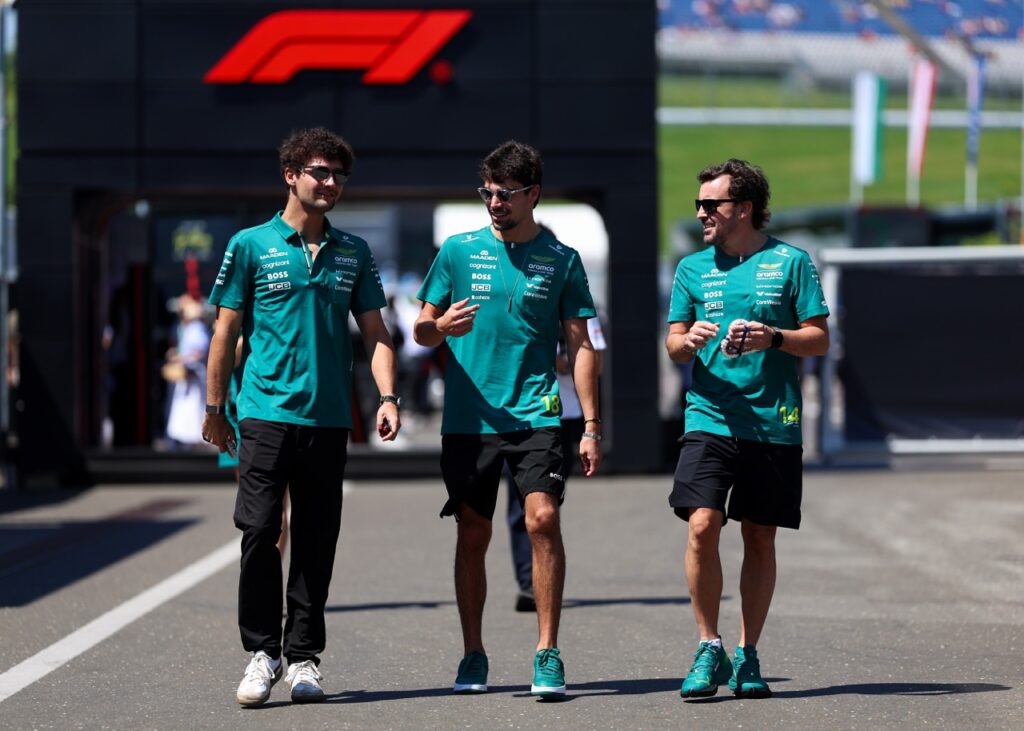
The opening rounds became an exercise in survival rather than competition. Honda’s power unit generated vibrations that travelled through the chassis, affected components and caused physical problems for the drivers.
In Australia, the 2026 F1 season opener, Aston Martin had to limit the length of its runs because Alonso and Stroll experienced numbness and discomfort. The problem raised concerns that extended driving could affect their nerves, turning a reliability issue into a potential safety matter.
Alonso retired, while Stroll spent much of the event moving in and out of the pits. Aston Martin could not use strategy, racecraft or opportunism to compensate because the cars struggled to complete sustained running. For a new works partnership, the weekend represented a damaging introduction. Honda and Aston Martin had expected difficulties under the new regulations, but the severity of the vibrations showed that the project had arrived at the opening round without sufficient validation.
China offered no relief
China continued the same pattern. Alonso initially made progress and reached the lower points positions, but Aston Martin could not maintain that pace once energy deployment became increasingly important. The vibrations again became intolerable. Alonso began losing feeling in his hands and feet, forcing Aston Martin to retire the car. Stroll also stopped after suffering battery trouble.
At that point, Aston Martin had produced more than a slow car, it had produced a package that could not reliably or comfortably complete a 2026 F1 Grand Prix distance. The team’s position looked particularly concerning because it had entered 2026 as a works operation with major technical investment. A difficult first race could have been dismissed as an isolated setback. Two consecutive weekends affected by the same fundamental problems instead suggested that Aston Martin faced a much deeper crisis.
Finishing races revealed the performance deficit
Honda gradually reduced the vibration problem, and Alonso finally completed a race in Japan. However, he finished towards the back, while Stroll retired with a suspected water pressure issue. Miami then delivered Aston Martin’s first double finish of the season. That represented progress from a reliability perspective, but it also exposed the car’s lack of performance. Once both cars could complete a race, they still lacked the pace to challenge the established midfield consistently.
Further concerns surrounding the gearbox, drivability and energy deployment replaced some of the earlier vibration problems. Aston Martin appeared to solve one issue only to discover another during the first half of the 2026 F1 season. The team could gather more useful data, but it remained unable to convert that learning into immediate results. Its weekends had become extended test sessions, with the drivers focusing on understanding the car rather than fighting for points.
Aston Martin chose one major development gamble
After Miami, Aston Martin made a deliberate development choice. Rather than spend its budget on a sequence of modest upgrades, the team concentrated its resources on one larger package planned for later in the season. The decision made sense in principle. A car sitting far from the midfield needed a conceptual correction rather than cosmetic changes worth only a few hundredths of a second. Stroll had also argued that Aston Martin required a substantial package instead of minor improvements.
However, the strategy carried a major cost. While rival teams continued developing throughout the opening months, Alonso and Stroll had to endure several more uncompetitive weekends with limited hope of improvement. Aston Martin effectively accepted that part of its season would serve as preparation for a later recovery. That approach placed enormous pressure on the Hungary upgrade to produce an immediate and meaningful gain.
Monaco produced the only point for Aston Martin in the first half of the F1 2026 season
Monaco supplied Aston Martin’s sole statistical reward before the summer break of the 2026 F1 season. Alonso started from the back but remained close enough to benefit from the interruptions, retirements and penalties that reshaped the order.
A post-race promotion placed him tenth and gave the team its first point of 2026. The result rewarded Alonso’s persistence and awareness, but it did not reflect the AMR26’s underlying competitiveness. On a conventional weekend, Aston Martin still lacked the pace to threaten the points. Monaco’s unusual race dynamics allowed Alonso to take advantage of circumstances that were unlikely to repeat regularly.
Even so, the point could prove important. With Aston Martin fighting near the bottom of the Constructors’ Championship, one opportunistic result may eventually separate it from a rival. The team had failed to create a competitive car, but Alonso at least ensured that its efforts did not produce a completely empty first half.
Canada and Barcelona deepened the disappointment
The next races underlined how little progress Aston Martin had made. In Canada, Stroll finished outside the points while Alonso retired because his seating position caused severe back pain. Barcelona delivered another low. Both cars qualified on the final row and neither reached the chequered flag. Stroll reported a gearbox problem, while Alonso stopped later in the race.
The home support Alonso received offered one of the few positive aspects of the weekend, but Aston Martin gave those fans little to celebrate on track. The car lacked pace in every major area and remained vulnerable to further reliability problems.
By this stage, the project’s struggles had begun weighing heavily on the organisation. Expectations surrounding Newey, Honda and the team’s infrastructure had made every poor weekend more visible. Aston Martin had promised the foundations of a leading operation, yet it remained unable to compete with the midfield.
Austria brought more technical trouble
Austria reduced both drivers to gathering data at the rear of the field. Aston Martin lacked the pace to compete with its direct rivals, leaving Alonso and Stroll with little more than an opportunity to collect information. Alonso finished several laps behind the leaders after spending the race near the back. Stroll appeared capable of challenging his teammate before an ERS issue brought his afternoon to an early end.
The weekend demonstrated the limitations of Aston Martin’s existing package. Even when the car operated without the severe vibration problems seen at the beginning of the year, it still lacked the aerodynamic performance and energy management required to challenge the midfield. Instead of measuring progress through points or positions, Aston Martin continued judging weekends through the amount of data it collected.
Silverstone became a home embarrassment
Silverstone should have provided Aston Martin with an opportunity to generate optimism in front of its home supporters, instead, it brought another public embarrassment during the 2026 F1 season.
Stroll fought severe understeer and unpredictable aerodynamic behaviour throughout the British GP. The AMR26 looked extremely difficult to place, particularly through faster corners where the drivers needed confidence in the car’s balance. Stroll also collected multiple track limit penalties, compounding the problems created by the machinery. Although the car’s handling clearly contributed to his difficulties, the penalties made an already poor result even worse.
Alonso also endured a frustrating race and criticised the energy management demands created by the 2026 regulations. Aston Martin once again left a Grand Prix without points and with few signs of immediate progress.
Belgium extended the difficult run
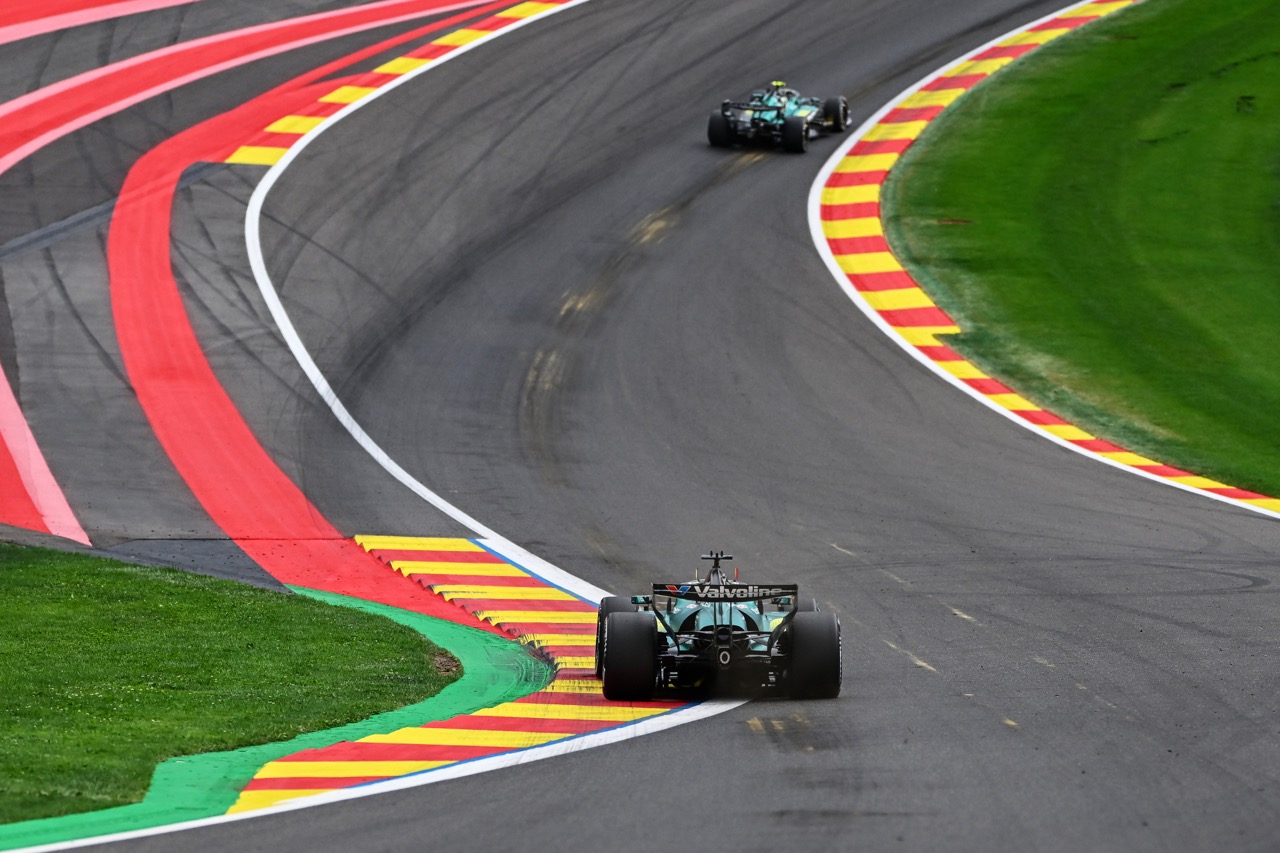
Belgium proved equally bleak. Both drivers qualified near the rear of the field before power unit penalties added further complications to their weekends. Stroll retired with energy and gearbox trouble, continuing the run of technical failures that had repeatedly interrupted his season. Alonso reached the finish but remained far from the competitive order and ended the race multiple laps behind the winner.
By then, Aston Martin had stopped suggesting that clean execution could overcome the car’s limitations. Strategy and driver performance could only achieve so much when the basic package remained slow, unreliable and difficult to control. The team’s attention had already turned towards Hungary, where its long-awaited upgrade would finally arrive. After sacrificing several races to focus on one major package, Aston Martin needed that development to work immediately.
Hungary finally delivered visible progress
Hungary changed the tone of Aston Martin’s first half of the F1 2026 season. The team introduced a substantial package featuring changes to the front wing, nose, floor body and rear wing. Alonso reached Q2 for the first time in 2026, while both cars showed more credible race pace. Stroll and Alonso finished 13th and 14th and beat several established midfield competitors on merit.
Those positions did not produce points, but they represented Aston Martin’s first weekend as a genuine midfield participant. The car responded more predictably, allowed the drivers to compete and appeared to match the development direction identified by the engineers. The result also justified the decision to pursue one substantial package. Aston Martin had sacrificed several races while preparing it, so anything less than a clear step would have represented another major failure.
Hungary did not solve every weakness, but it finally provided evidence that the team could move forward.
Team verdict
The Hungary upgrade prevents Aston Martin from receiving an even lower score. The package correlated with expectations, created a stronger baseline and suggested that the AMR26 may contain genuine development potential.
However, one encouraging weekend cannot erase the previous rounds. Aston Martin arrived late, completed too little testing, exposed its drivers to severe vibrations and spent most of the first half several steps behind the midfield. For a project built around works status, elite facilities and one of Formula 1’s most celebrated designers, the return has been unacceptable. The team deserves credit for avoiding ineffective short-term fixes, but it also deserves strong criticism for entering a landmark regulation change so poorly prepared.
A rating of 3/10 reflects both realities. Aston Martin may finally have found the beginning of a recovery, but its first half still ranks among the season’s greatest disappointments.
Fernando Alonso Mid-Season Rating: 6/10
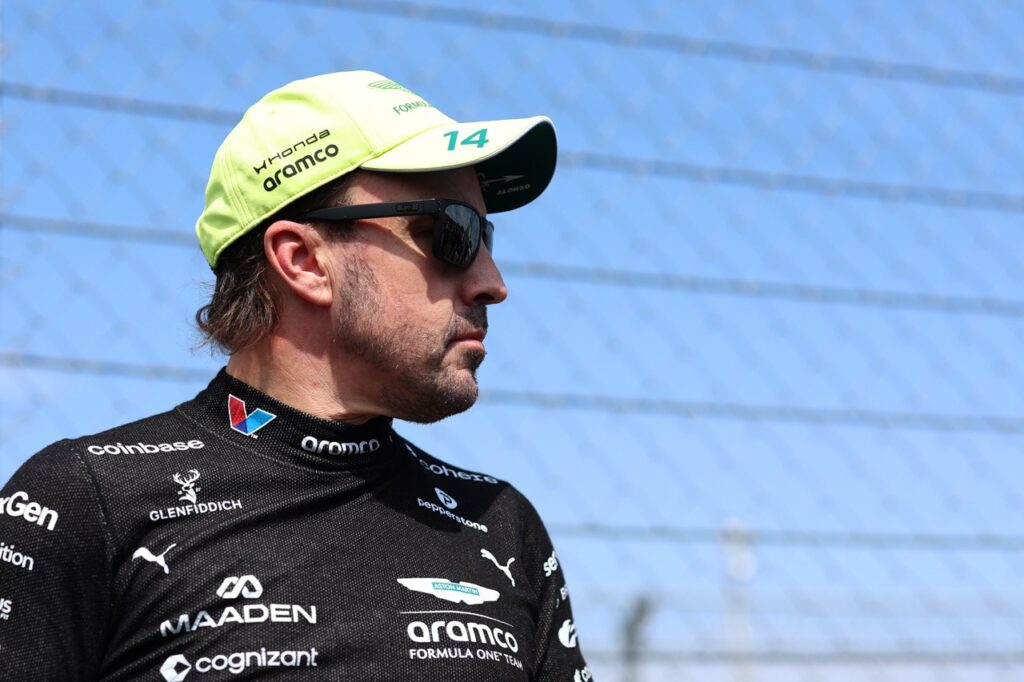
Fernando Alonso has spent most of 2026 driving a car without a realistic route to the points. Even so, he has remained Aston Martin’s clearest performance reference. The Spaniard has generally held the advantage over Stroll in qualifying and has regularly extracted more from the AMR26 over a single lap. That matters because both drivers have operated near the back, where small differences can decide whether a car progresses from Q1.
Alonso has also identified the car’s weaknesses clearly and continued gathering useful data when the result had already disappeared. In Australia and China, vibrations physically restricted him. In Canada, a seating issue forced another retirement. Those incidents were not failures of racecraft or concentration. They were examples of Aston Martin’s machinery preventing its most experienced driver from completing his work.
Monaco rewarded Alonso’s persistence
Monaco provided Alonso’s strongest contribution. Aston Martin lacked the pace to reach the points through conventional means, so he remained alert to the opportunities created by a disrupted race. His eventual promotion to tenth gave the team the only point of its first half. The result did not require a spectacular charge through the field, but it represented exactly what Aston Martin needed from a senior driver.
Alonso kept the car in contention, avoided unnecessary mistakes and placed himself in a position to benefit when penalties changed the classification. In a season where outright pace offered almost nothing, that opportunism carried real value. The point may also prove decisive in Aston Martin’s battle near the bottom of the Constructors’ Championship. Alonso could not transform the team’s season, but he ensured that its difficult opening months produced at least one tangible reward.
Frustration has not erased his contribution
Alonso has not delivered a flawless campaign. A pit lane speeding infringement in Austria added an avoidable penalty to an already miserable weekend, while his frustration with the new energy management demands has sometimes dominated discussion around his races. However, those moments have not materially damaged Aston Martin’s position. The car’s pace, reliability and drivability have dictated the outcome far more often than Alonso’s decisions.
Hungary offered the clearest evidence that he still has the speed and motivation to lead the project. He converted the upgraded car into Aston Martin’s first Q2 appearance of the year and established an immediate benchmark for the revised package. Although Stroll finished one position ahead on Sunday, Alonso’s qualifying performance provided the strongest measurement of the upgrade’s initial effect.
Alonso verdict
A rating of 6/10 may appear generous for a driver with only one point, but championship totals cannot separate the driver from the machinery. Alonso has led the internal comparison, secured Aston Martin’s only point and supplied a consistent technical benchmark throughout a chaotic campaign. He has also endured several retirements caused by issues outside his control.
He has not produced a miracle at every race, and some of his public frustration has reflected a driver who increasingly questions the direction of modern Formula 1. Nevertheless, Aston Martin has rarely given him the equipment required to achieve more. His first half has not been outstanding by his own standards, but it has been professional, committed and clearly stronger than the results suggest.
Lance Stroll Mid-Season Rating: 4/10
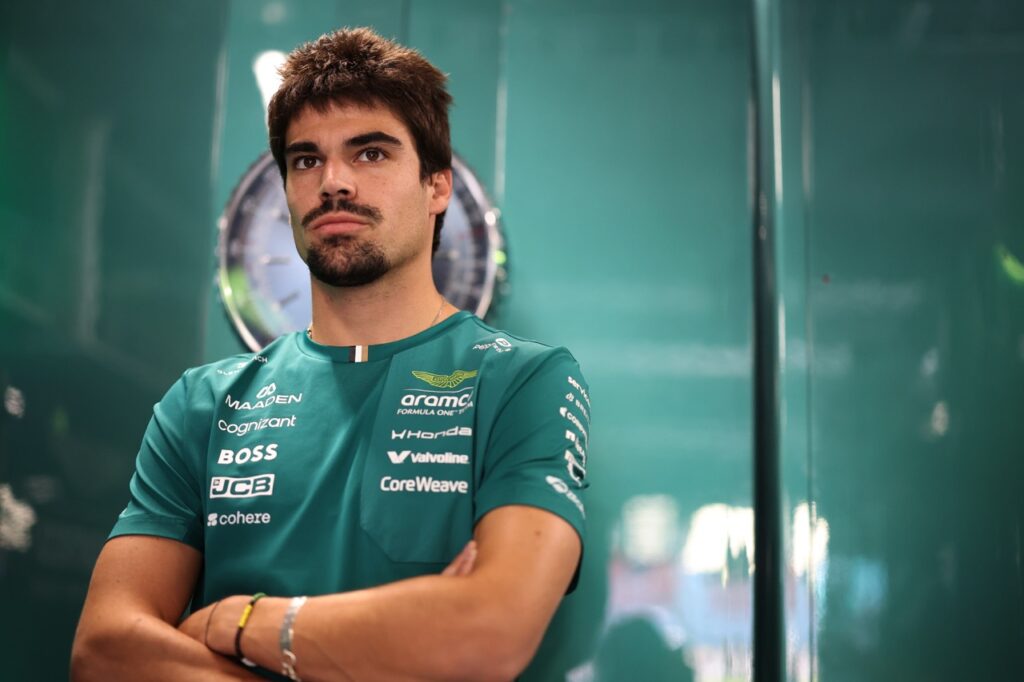
Lance Stroll deserves sympathy for the mechanical problems that have affected his season. He faced the same painful vibrations as Alonso, retired in Japan with a water pressure concern and stopped in Austria with a suspected ERS issue. Energy and gearbox problems also affected his Belgian GP, while a suspension failure cost him valuable practice time in Hungary. These setbacks repeatedly reduced his opportunity to build confidence and understand the AMR26.
Stroll also contributed useful feedback during the team’s most difficult period. He recognised the scale of the deficit during testing and argued that Aston Martin needed a major package rather than a sequence of small upgrades. That assessment proved accurate. The Hungary changes finally gave the team a noticeable step, supporting Stroll’s view that the original car required substantial revision.
The gap to Alonso remains too large
Reliability does not explain the full difference between Aston Martin’s drivers. Stroll has generally trailed Alonso in qualifying and has too often started from positions that limited his already small chance of scoring. Alonso has operated with the same difficult car and many of the same technical restrictions, yet he has more regularly extracted the stronger single-lap performance. For a driver in his eighth season with the team, Stroll should provide a closer benchmark.
There have been occasions when he matched or beat Alonso in race trim. He ran competitively relative to his teammate in Austria before retiring and finished ahead of him in Hungary. However, those moments have appeared too infrequently. Stroll’s lack of points does not tell the complete story, but his performance deficit across the first half remains difficult to ignore.
Silverstone exposed further weaknesses
Silverstone represented Stroll’s weakest weekend. The AMR26’s severe understeer and inconsistent balance clearly made the car difficult to control, but multiple track limit penalties still compounded the team’s problems. A driver cannot create grip that the car does not possess, and Stroll’s description of the AMR26 as broken reflected the extent of its handling problems. However, he still needed to adapt more effectively to the limitations.
The repeated penalties damaged any chance he had of achieving a slightly better result. While Stroll’s machinery provided an explanation for the difficult race, it did not completely excuse his inability to remain within the track limits. The weekend highlighted the challenge in assessing his season. Aston Martin has given Stroll an exceptionally difficult car, but he has sometimes made bad situations worse.
Hungary showed greater promise
Hungary offered a more balanced example of Stroll’s performance. A suspension failure removed important practice running and left him with less time to understand the upgraded package. He then abandoned his final qualifying lap and started last, adding a driver elated setback to the technical disruption. However, his recovery to 13th demonstrated respectable race pace and produced Aston Martin’s best finishing position of the season.
The result showed that Stroll could use the improved package effectively once the car became more predictable. He remained ahead of Alonso at the finish and helped confirm that the team had taken a genuine step.
Stroll verdict
A 4/10 rating recognises the difficult machinery, repeated reliability failures and Stroll’s contribution to the development process. He has completed challenging races to collect data, supported the push for a larger upgrade and occasionally shown competitive race pace. Hungary demonstrated that he can deliver a respectable result when the AMR26 gives him a more stable platform.
Still, the qualifying gap to Alonso remains too large. Stroll has failed to maximise too many sessions, and his mistakes have sometimes added to problems created by the car. Aston Martin has not given either driver a fair opportunity to shine, but Alonso has extracted more from the same limitations. Stroll must reduce that difference during the second half.
Has Aston Martin finally started its season?
Aston Martin cannot rescue the first half of the 2026 F1 season. The team entered the season underprepared, completed too little testing and spent much of the opening schedule fighting failures instead of rivals. Its only point came through Alonso’s persistence and post-race circumstances rather than sustained performance. That remains an inadequate return for an organisation with Aston Martin’s investment and stated ambitions.
The more important question now concerns Hungary. Should the upgrade establish the team as a regular midfield contender, the opening half may eventually look like the painful cost of a delayed but coherent technical reset. Should the improvement prove circuit-specific, Hungary will instead become one brief escape from the back of the grid.
The second half demands more than optimism
Aston Martin now needs to convert encouraging data into results. The team must deliver clean weekends, reliable power unit operation and stronger qualifying performances from both drivers. It also needs points scored on merit. Finishing close to the midfield represented progress in Hungary, but Aston Martin cannot judge success by beating a handful of cars outside the top ten.
The revised AMR26 has given the team a more credible starting point. Further development and planned Honda PU improvements may help close the gap, but the first half has left Aston Martin with little margin for further mistakes. Hungary showed that the car can move forward. The races after the summer break will reveal whether Aston Martin has finally started its season or merely delayed another disappointment.