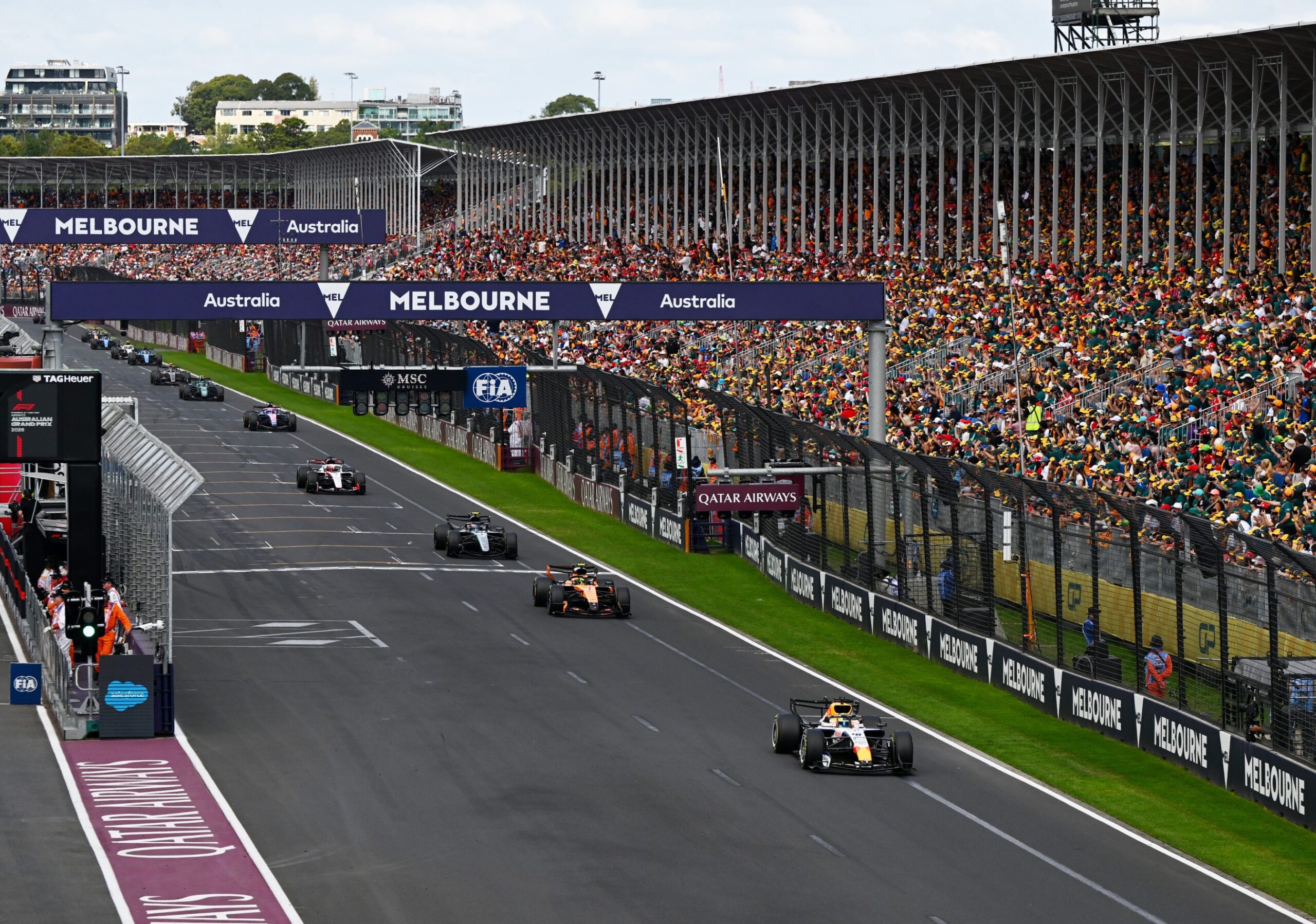
Nikolas Tombazis, Single Seater Director at the FIA, has opened up about why F1’s supreme governing body couldn’t intervene and change the new technical regulations in the years leading up to 2026.
The introduction of the new engines and chassis has undoubtedly produced more on-track action than in the past few seasons. However, the first half of the campaign also exposed F1 to major headaches concerning safety, the quintessence of qualifying, the artificial nature of racing, and the diminished input of drivers.
The new power units, featuring a near 50-50 split between the internal combustion engine and electrical energy, have a noticeable impact on driving styles over a single lap and race distance.
The energy management now required on a flying lap is inherently antithetical to the traditional flat-out approach. With the machine seemingly superseding driver skill, the complex deployment algorithms often punish drivers for pushing in the medium- and high-speed corners, leaving them with suboptimal energy to deploy on the subsequent straight.
The new ruleset sees drivers lift and coast and even experience super clipping over a single lap. Furthermore, the cars are so sensitive to the power unit quirks that even adjusting the throttle in one section of the track can make the hybrid system go haywire, drain the battery at an inconvenient moment, and compromise a lap.
Despite the FIA introducing targeted adjustments ahead of the 2026 Miami GP, the new regulation cycle continues to generate more debates both on and off the track.
The FIA already expected pushback from drivers over 2026 F1 regulations
While F1 CEO Stefano Domenicali keeps insisting that general fans are content with the on-track action and have reacted positively to the new ruleset, drivers have been far more vocal in their critique.
Max Verstappen labelled the 2026 F1 regulations as “Formula E on steroids” during pre-season testing in Bahrain. Ferrari’s Charles Leclerc lamented during the Chinese GP weekend how the current rules discourage drivers from taking risks during qualifying since slower yet consistent driving leads to faster lap times. Recently, it was Oscar Piastri who stated after Sunday’s race at Spa-Francorchamps that the qualifying grid being “decided by computers behaving or misbehaving” is a “pretty crap way of going racing”.
Asked whether the criticism from drivers over the past few months regarding energy management, super clipping, and algorithms was sharper than anticipated, Nikolas Tombazis clarified during a media call on Monday that the FIA had already expected the pushback over the 2026 F1 regulations. At the same time, he revealed that the existing governance structure had made it impossible to introduce any consequential changes ahead of the season.
“I think drivers are, by definition, quite demanding clients. I don’t think we expected them to have a sugar coat or to not speak their minds. So, to say that it’s been more than expected, no, I wouldn’t say so.
“I mean, we did anticipate a lot of these things that they have complained about in the two years before the launch of the season. We did try to make some adjustments, but we failed with the governance that was in place.
“So, I think it was realistically only to be expected.”
Whether changes could’ve arrived earlier
On June 10, the FIA announced that F1 and its key stakeholders have agreed to a gradual increase in power from the ICE to mitigate energy management concerns across the next two seasons, with the sport committing to a 60-40 split in 2028.
Nikolas Tombazis suggested that the amendments to the 2026 F1 regulations that have now been agreed for 2027 and 2028 would’ve been introduced much earlier by the FIA if the decision was solely at his discretion.
“I think it’s a bit of a shame that we had to wait until we discussed things in May and get to a package for 2027 and for 2028. I think we could have ideally done that a couple of years before and then there wouldn’t have been all of this discussion.”
The agreements in place since 2022
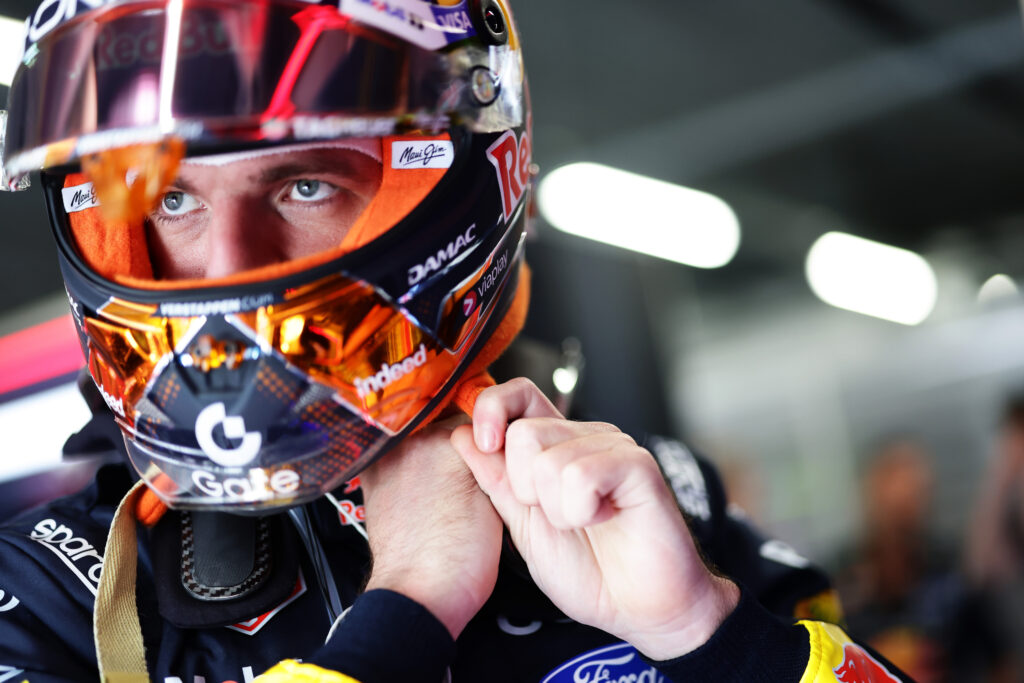
Although several drivers expressed their doubts about the new rules last year, Verstappen has been the staunchest critic since the 2023 Austrian GP, where he had expressed serious concerns after poring over early simulator data.
Despite the impression that the FIA turned a blind eye when the F1 drivers voiced their apprehensions about the current technical regulations in the years leading up to 2026, Nikolas Tombazis maintained that the reality was different.
The 58-year-old reiterated that the convoluted governance framework and the decision-making process involving the FIA, FOM, the OEMs, the power unit manufacturers, and the F1 teams meant that they couldn’t step in and unilaterally enforce any meaningful revisions.
“When OEMs decide to participate as PU manufacturers, they sign a governance agreement that is binding towards all parties, so the FIA, FOM and the PU manufacturers. It’s similar to what the Concorde Agreement does for the team side of things.
“And there was a separate governance agreement signed in 2022 in order to basically outline the requirements for the PU manufacturers during the years of 2023, 2024, and 2025. That is before the championship started because there’s such things like financial regulations for the first time.”
How the governance structure tied the FIA’s hands regarding the 2026 F1 regulations
Nikolas Tombazis disclosed that the governance agreement that came into effect in 2022 not only prevented the new entrants from spending unlimited amounts of money to develop their 2026 power units but also kept them bound to the regulations. As such, intervention became impossible, even with new manufacturers such as Audi joining the grid.
“If a PU manufacturer who was not participating in Formula 1, let’s say Audi, they still had to be bound by regulations and not come to us and say, well, we’re not participating, hence we can spend five times the money. That would be unfair.
“So, that’s why there was a governance agreement that on the one hand forced them to be bound by the regulations, including the financial and operational rules and all of that.”
Additionally, Tombazis emphasised how the aforementioned agreement made it considerably more challenging for the FIA to reopen the regulations in the past few seasons prior to 2026 without securing a supermajority from the F1 power unit manufacturers. He also mentioned that four of them—without naming names—were in disagreement when it came to discussing any potential changes in the lead-up to the current season.
“On the other hand, it put limitations as to how much we could change things unilaterally as the FIA. And therefore, any change had to be approved by a significant number of the PU manufacturers.
“So, for the sort of changes we did [in May], we needed at least four of them to agree. And quite simply, four of them did not agree during the years when we discussed some adjustments.”
Why F1 veered towards more electrification
With regard to the factors that shaped the 2026 F1 regulations, Nikolas Tombazis reflected on what the primary trend in the automotive industry has been in recent years, which saw a much greater emphasis on electrification.
The Greek engineer explained that the near 50-50 split made the power units more road-relevant and thus instrumental in retaining existing Original Equipment Manufacturers (OEM) and attracting new ones. Nonetheless, he was quick to point out how this very incentive is the root of multiple problems they are currently facing.
“Overall, it was always a challenging target to have a close to 50-50 power split between the two units.
“But that was a very important position for the OEMs participating, and frankly having to decide whether they want to be in Formula 1 or not. Don’t forget that if we didn’t have them in, we would have just two power units in Formula 1, which I think would have been a bit of an issue.
“So, that requirement to have a much stronger electrical part did create these difficulties.”
The FIA aware of potential issues since 2022 but happy with the racing in 2026
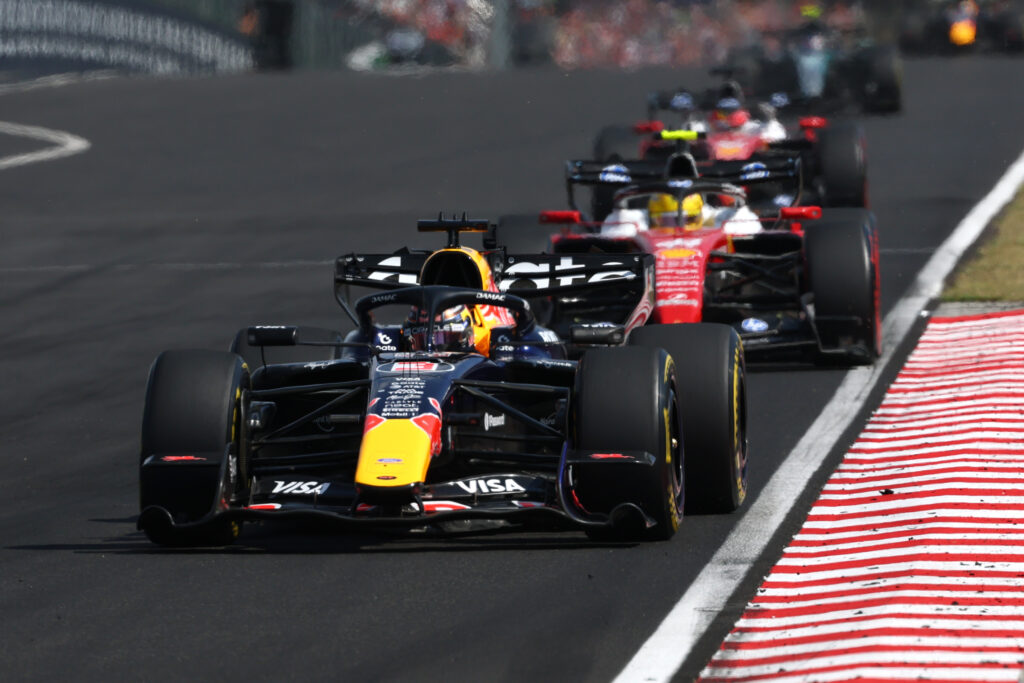
Nikolas Tombazis further elaborated on how the FIA had already become aware of the challenges the 2026 F1 power units would pose from early simulations in 2022, a year before Verstappen made his thoughts known about the new regulation set. However, he admitted that they had lost the opportunity to radically alter the guidelines by then.
“As simulations came in back in 2022 or so, we knew there were these issues, but we were a bit too far down the line there to change things and some people had committed too much resource.
“So, that left us slightly on the back foot at the start of the season, discussing that.”
Nevertheless, the FIA’s Single Seater Director took positives from the first half of the 2026 F1 season and highlighted how multiple races have produced a generous number of overtakes and competitive racing despite Mercedes holding a clear advantage over the rest of the grid.
“Now with that said, I think most races have been pretty exciting, I would say. There’s been quite a lot of fighting.
“And I would even say that currently we still have, I don’t know if I would go quite as far as to call it domination, but we do have a clear advantage for one manufacturer. And in the past when we’ve had that at the early start of the regulations, races have been very processional.
“Now I think, even despite the fact that Mercedes have been doing most of the winning, I think the races have nonetheless been quite exciting with quite a lot of changes and so on.”