Matt Campbell believes Ford Racing has made an encouraging start to its Hypercar development programme as the American manufacturer prepares to return to the FIA World Endurance Championship (WEC) in 2027, with an overall victory at the 24 Hours of Le Mans firmly among its ambitions.
The Australian, who joined Ford’s six-driver factory line-up earlier this year, has played an important role in developing the manufacturer’s new LMDh prototype. Following successful tests at Paul Ricard, Portimão and Silverstone, Campbell has praised the car’s early performance while identifying hybrid systems, software integration and operational consistency as major priorities before its competitive debut.
Ford will return to the top category of international endurance racing nearly six decades after its historic run of four consecutive overall Le Mans victories between 1966 and 1969. The manufacturer has assembled an experienced driver roster and developed a new 5.4-litre naturally aspirated V8-powered prototype, aiming to challenge established Hypercar competitors and renew its famous rivalry with Ferrari.
However, Campbell acknowledges that Ford still faces a demanding development programme before it can consistently challenge for victories. Speaking to the official 24 Hours of Le Mans website, the 31-year-old outlined his early impressions of the car, the importance of driver feedback and the manufacturer’s long-term ambitions.
Campbell praises successful opening Hypercar test
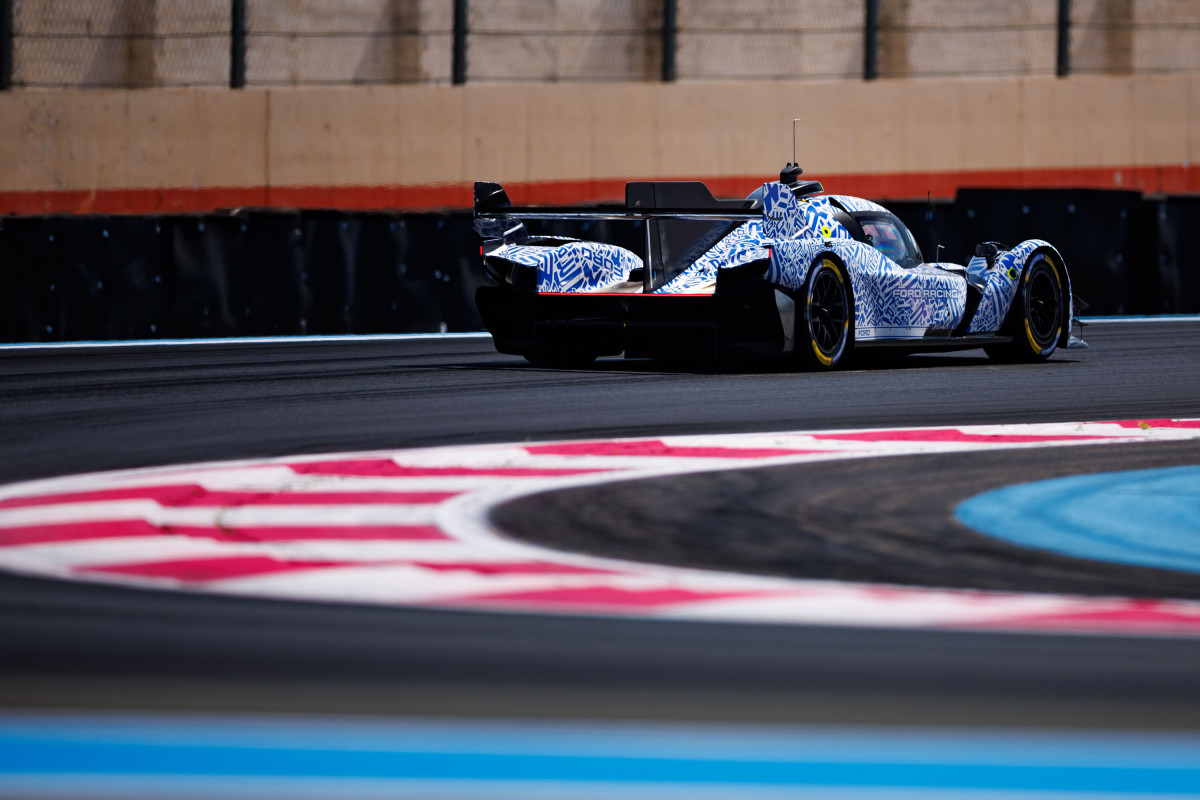
Ford began on-track development of its new Hypercar at Circuit Paul Ricard in August, marking a significant milestone after months of simulator work, engine testing and chassis preparation.
The manufacturer completed a shakedown before undertaking three days of running at the French circuit, accumulating more than 1,000 kilometres with its ORECA-developed prototype. Campbell joined Logan Sargeant, Tom Blomqvist and Mike Rockenfeller behind the wheel, while Sebastian Priaulx and Nick Yelloly also participated in the programme’s preparations.
The successful opening test provided Ford with an opportunity to validate the work completed in the simulator and on the dynamometer while gathering its first substantial data from the complete car.
Campbell, in an interview with the 24 Hours of Le Mans, admitted that the initial running exceeded expectations, particularly given the complexity of introducing a new prototype.
“The first test went amazing and better than expected I think for everyone to be honest. It went extremely smooth, we got lots of decent running done and for a first test I don’t think we could have asked for anything more.”
The encouraging start allowed Ford to introduce improvements during subsequent tests, building on the information collected at Paul Ricard. Rather than spending its early running addressing major problems, the manufacturer began refining the car’s behaviour and identifying areas where further development could improve performance.
Ford subsequently completed additional tests at Portimão and Silverstone, continuing to accumulate mileage as it prepares for its first WEC campaign.
Naturally aspirated V8 makes strong impression
Beyond the promising reliability, Campbell has praised the design and character of Ford’s new Hypercar, particularly its aggressive appearance and naturally aspirated V8 engine.
Ford has based its 2027 challenger on an ORECA-developed LMDh chassis, combining the standardised hybrid components required by the regulations with a 5.4-litre V8 derived from its Coyote engine architecture.
The manufacturer developed the engine in-house with support from Red Bull Ford Powertrains, retaining a connection to the naturally aspirated V8s used throughout its Mustang racing programmes. Its distinctive sound forms an important part of Ford’s identity as the brand prepares to return to the highest level of endurance racing.
For Campbell, that combination of design and sound has already become one of the car’s defining characteristics.
“For me, it’s definitely the looks of the car. It’s very, very aggressive and a combination of that with the noise of the V8, it’s phenomenal. I’m really enjoying that sides of things.”
Nevertheless, Campbell recognises that the team still needs to improve the car’s handling characteristics. Early testing has focused heavily on validating the fundamental systems, leaving considerable scope for engineers and drivers to optimise the prototype’s performance before its debut.
The Australian remains encouraged by the car’s potential, but he understands that its striking design and promising early running represent only the beginning of a much longer development process.
Hybrid systems present major development challenge
Campbell believes the complexity of modern LMDh machinery will present one of Ford’s greatest challenges as the team works towards the opening round of the 2027 season.
Although the manufacturer has made substantial progress during its initial tests, Campbell expects engineers to spend considerable time refining the car’s electronic systems, software and hybrid integration.
The LMDh regulations require manufacturers to incorporate standardised hybrid components into their prototypes, creating an intricate relationship between the combustion engine, electrical systems, braking performance and vehicle controls.
Developing those systems involves more than ensuring that each component functions correctly. Drivers must also feel confident in the car’s behaviour across different conditions, particularly during braking, acceleration and longer race stints.
Campbell therefore expects the development process to continue well beyond Ford’s first competitive appearance.
“Obviously we still have a lot of testing and development still to come. But, for sure the systems and everything around this car will take a long time and even through until the end of next year before we really start to fully understand and get to a position where we’re extremely happy.”
His comments reflect the experience he gained while competing with Porsche’s 963 LMDh prototype. Although Ford can benefit from the lessons manufacturers have learned since the regulations entered competition in 2023, it must still develop systems that suit its own engine, chassis and drivers.
Campbell considers that work essential to ensuring the car remains predictable and reliable throughout the demanding conditions of WEC competition.
Porsche experience helps Campbell guide Ford development
Campbell’s previous experience with Porsche Penske Motorsport has given him valuable knowledge of modern hybrid prototypes, allowing him to contribute to Ford’s programme from its earliest stages.
The Australian spent approximately a decade racing Porsche machinery and achieved considerable success across GT and prototype competition. His record includes an overall victory at the 2024 Rolex 24 at Daytona and the 2025 IMSA WeatherTech SportsCar Championship GTP Drivers’ title alongside Mathieu Jaminet.
Those achievements have provided experience with the same LMDh regulatory framework that Ford will use in 2027, particularly in areas involving hybrid systems, braking controls and software development.
Campbell began contributing to Ford’s programme through simulator work in February 2026, several months before the new prototype completed its first laps.
“Having the experience of an LMDh-based platform car I think has been a huge help for this stage of the development phase being involved from the very beginning, even from the simulation side of things from February of this year.”
He believes the experience of fellow recruits Blomqvist and Yelloly will also help Ford accelerate its development, particularly because all three have previously competed with LMDh machinery.
Their familiarity with the regulations allows them to identify opportunities for improvement and communicate technical requirements to engineers, potentially reducing the time needed to develop reliable systems.
However, Campbell acknowledges that Ford must still establish its own approach, with each manufacturer adopting different solutions to achieve competitive performance.
Driver feedback remains critical despite extensive data
While modern Hypercars feature sophisticated data acquisition systems, Campbell believes drivers still play a fundamental role in shaping the development of a new prototype.
Ford can collect extensive information through sensors and telemetry, allowing engineers to monitor the performance of individual components and assess how the car responds to different conditions.
However, Campbell argues that those measurements cannot always reproduce the sensations experienced behind the wheel, particularly when evaluating braking confidence, handling balance and the consistency of electronic systems.
Consequently, engineers must combine objective data with driver feedback to determine which changes will deliver meaningful improvements.
“The driver at this stage of development is definitely the most critical. You know, always the computer is the telling the engineers what’s happening, but obviously the feeling inside the car can be very, very different at time, so making sure we’re being as productive as possible with direction from the very beginning to make sure we’re not losing any time down the road.”
Ford’s approach has therefore placed considerable emphasis on involving its drivers throughout the testing programme rather than waiting until the car reaches its final specification.
Campbell believes establishing an effective relationship between drivers and engineers will prove particularly important during these early stages, when development decisions can influence the car’s characteristics for the remainder of its competitive life.
Ford prepares to accelerate testing with two Hypercars
Ford will take another significant step towards its 2027 debut when it begins operating two examples of its Hypercar during a scheduled test at Monza from 27–30 October.
The manufacturer has previously concentrated its on-track programme on a single prototype, completing tests at Paul Ricard, Portimão and Silverstone. The addition of a second car will allow engineers to evaluate different areas simultaneously while increasing the amount of information gathered during each session.
Ford Hypercar Programme Manager Dan Sayers recently outlined the importance of that expansion, explaining that the team can separate control-system development from conventional chassis and mechanical setup work.
The planned two-car Monza test will precede further running at Imola and an extended endurance test at MotorLand Aragón in November. Ford also intends to continue testing in the United States, including at Circuit of The Americas and Sebring, before beginning its competitive programme.
Those sessions will help Ford evaluate its reliability over longer distances and prepare for the operational demands of competing with two cars throughout the WEC season.
The manufacturer has already confirmed its six-driver line-up, comprising Campbell, Blomqvist, Yelloly, Rockenfeller, Sargeant and Priaulx. However, it has not yet announced the combinations that will share its two Hypercars.
Campbell highlights importance of teammate consistency
With Ford preparing to divide six drivers between its two entries, Campbell believes teamwork and consistency will prove just as important as outright speed.
The Australian has considerable experience sharing cars during long-distance events, including seven appearances at the 24 Hours of Le Mans. His previous partnerships have taught him the importance of maintaining a consistent approach throughout a race, particularly when drivers must adapt to changing conditions and support one another across multiple stints.
For Campbell, a successful endurance crew must understand when to push for performance and when to exercise caution. Drivers must also communicate effectively and maintain a shared approach to race strategy.
“You know, it’s definitely consistency. Making no mistakes and being on the same page, and especially that last topic is the most important for me with endurance racing and teammates. You know, I’ve had some fantastic teammates in the past and making sure you’re both on the same page is one of the most important aspects, and being able to push and pull on each other is hugely important.”
Ford intends to evaluate those relationships during its remaining development tests before finalising its driver combinations.
The decision will involve more than individual lap times, with engineers also considering driver compatibility, cockpit ergonomics and how effectively each crew works together over longer runs.
Campbell’s experience should provide an important contribution to that process as the manufacturer prepares for the challenges of multi-driver endurance racing.
Overall Le Mans victory remains Ford’s ultimate ambition
Although Ford’s immediate priority remains developing a competitive and reliable Hypercar, Campbell has made clear that the manufacturer ultimately intends to challenge for overall victory at the 24 Hours of Le Mans.
The Australian will return to the French endurance classic in 2027 after missing the 2026 edition, beginning a new chapter with Ford following his long association with Porsche.
Campbell previously secured a class victory at Le Mans in 2018, but the opportunity to compete for overall honours with Ford carries particular significance because of the manufacturer’s history at the event.
“For me, next year will be the first time behind the wheel of a Ford obviously at Le Mans, but looking forward to being back. It’s going to be a huge test and challenge. Obviously that’s what we’re working for. That’s the reason why we’re back to try and get an overall victory.”
Ford has not competed for outright Le Mans honours with a factory prototype since the era of the GT40, when the American manufacturer secured four consecutive victories between 1966 and 1969.
Its return will therefore represent an ambitious attempt to reclaim the success that established Ford as one of the most recognisable names in endurance racing history.
However, Campbell understands that challenging established manufacturers during the programme’s debut season will not be straightforward.
“The first year is always going to be tough, but we’re going to give it everything at that point to try and get the best result possible for Ford.”
The manufacturer will face strong opposition from experienced Hypercar programmes, many of which have spent several seasons developing their machinery and racing operations.
Campbell hopes to renew historic Ford-Ferrari rivalry
Ford’s return to the highest level of endurance racing also raises the prospect of another major confrontation with Ferrari, reviving one of the sport’s most famous rivalries.
The manufacturers fought for supremacy at Le Mans during the 1960s, culminating in Ford’s breakthrough victory in 1966. The GT40 subsequently claimed three further consecutive overall wins, ending a period in which Ferrari had dominated the race.
Ferrari returned to the top category in 2023 with its 499P Hypercar and has since established itself among the leading manufacturers in modern endurance racing.
Ford’s arrival in 2027 will therefore create the opportunity for the two marques to compete for overall Le Mans honours once again, although both will face a considerably larger field of manufacturers than during their original rivalry.
Campbell acknowledged the historical significance of the potential contest and expressed his desire to contribute to another successful chapter for Ford.
“The remake of Ford vs. Ferrari since let’s say the story line from back in the 60s and the movie and so forth, yeah hopefully we can rewrite history once again and you know do something similar in this new regulation and bring Ford back to the top in Le Mans overall.”
The rivalry provides an additional storyline for Ford’s return, but Campbell’s broader ambition remains focused on helping the manufacturer develop a car capable of challenging for race victories.
Ford prepares for full Hypercar reveal in November
Ford has yet to announce the official name of its new prototype, although the manufacturer plans to reveal the car in full on 26 November 2026.
The presentation will represent another milestone in a programme that has progressed rapidly since Ford confirmed its intention to return to top-level endurance racing.
The manufacturer has already established its engineering structure, assembled an experienced driver line-up and completed several on-track tests. Its remaining development programme will focus on refining the car’s performance and reliability before it enters competition.
For Campbell, the move represents a significant personal change after spending approximately ten years associated with Porsche.
“I honestly can’t wait for the beginning of next year. Obviously it’s going be a big challenge. I know how tough it can be at the beginning of a project with a lot of learning to do, but so far I’ve been really enjoying working with the new people in the programme and only look forward to getting racing.”
The Australian also welcomed the prospect of joining a growing Hypercar category, where established manufacturers and fellow newcomers will compete for the championship’s leading honours.
Campbell briefly addressed the possibility of Max Verstappen entering endurance racing, expressing confidence that the four-time Formula 1 World Champion could make an immediate impression.
“Having a driver of his calibre in the car would be really interesting. I am certain he would be extremely fast, and we will have to wait and see what happens.”
For now, Campbell’s focus remains on Ford’s preparations. With several important tests still to complete, the manufacturer must turn its encouraging early progress into a car capable of performing consistently under race conditions.
Ford’s 2027 WEC debut will mark the beginning of that challenge, but its ultimate ambition is already clear: returning the Blue Oval to the top step of the overall podium at Le Mans.