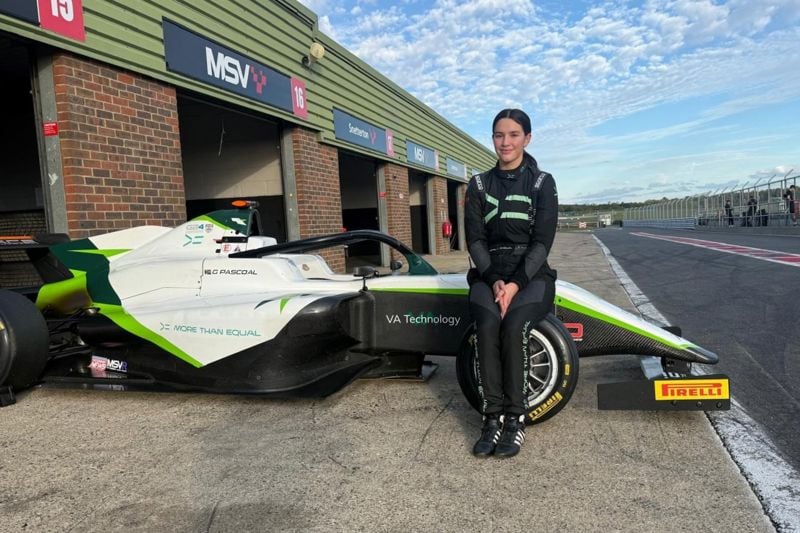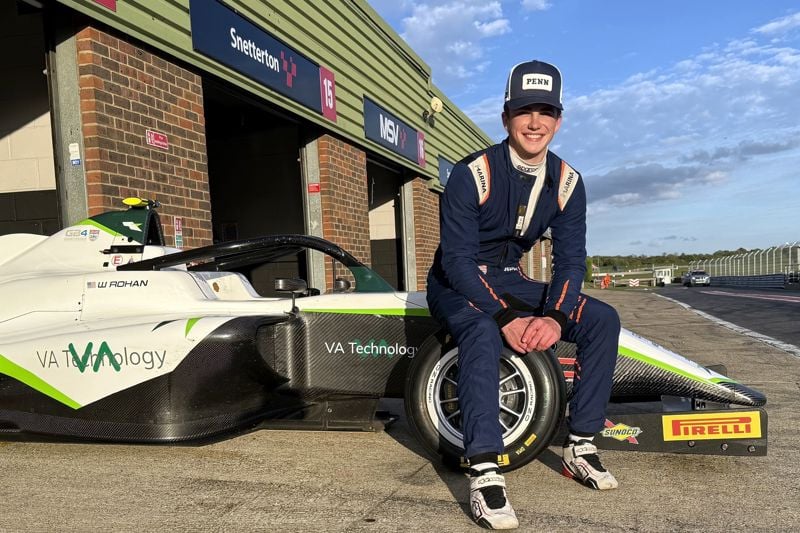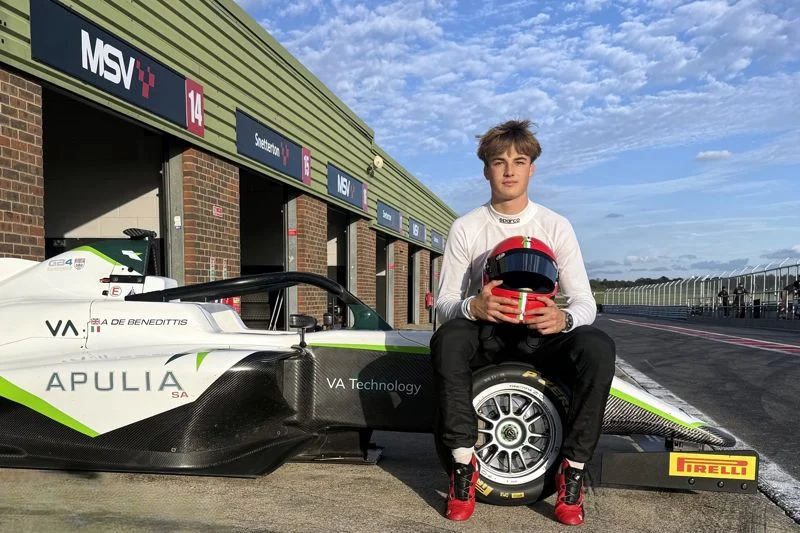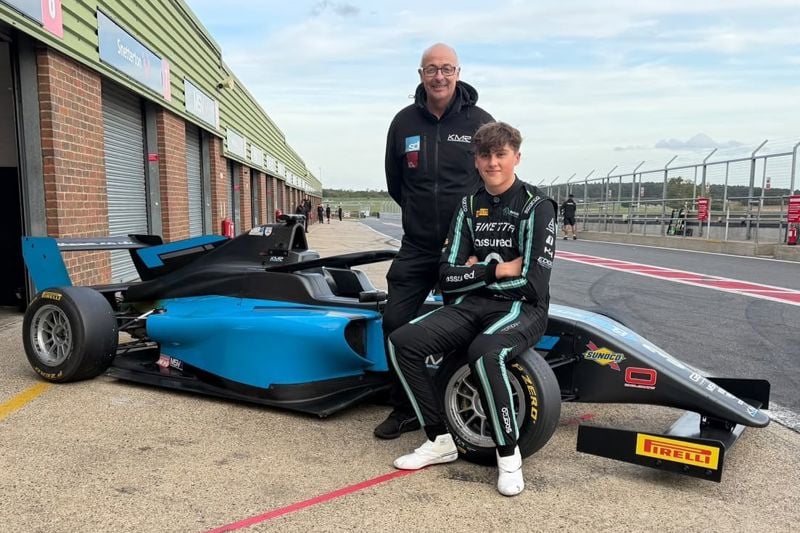
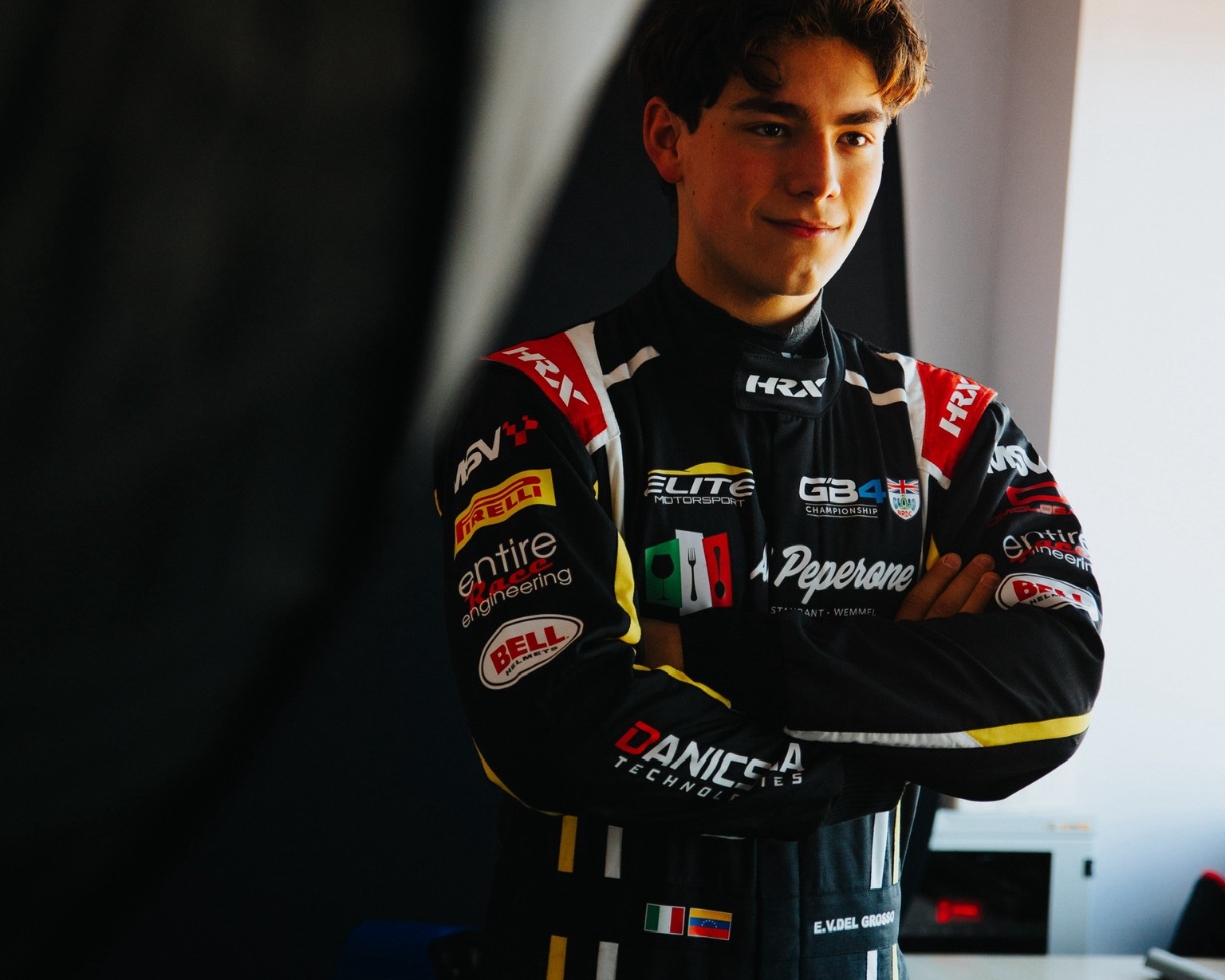
In an exclusive interview with Pit Debrief, Emmilio Valentino Del Grosso offered a detailed and reflective look into the experiences that have shaped his path in motorsport so far. At just 16 years old, his journey already reflects an uncommon level of maturity, shaped not only by time on track but also by the challenges he has faced away from it. From discovering karting at a young age to stepping away from the sport during formative years, and eventually returning with renewed clarity and determination, Del Grosso’s story is one of resilience and intentional growth.
Moreover, his progression highlights the realities of modern motorsport development, where success depends not only on talent but also on discipline, mental strength, and the ability to adapt quickly in demanding environments. His reflections reveal how pivotal moments—both planned and unexpected—can redefine direction and ambition. As he continues to build his career step by step, Del Grosso demonstrates a mindset focused not on immediate results, but on long-term performance, consistency, and self-improvement.
A spark ignited: Del Grosso on his early beginnings in motorsport
Del Grosso traced his passion for racing back to his earliest years, when a simple but meaningful introduction to karting first captured his attention. Although he now approaches motorsport with clear intent and professionalism, his initial experiences were rooted in curiosity and excitement rather than ambition. At that stage, the sport represented something enjoyable and new, rather than a defined path.
“So, when I realised that it was more than a hobby for me, it was… well, I started at the age of six, but unfortunately, I had to stop because of some family situations. So I grew a bit out of it, which is quite normal.”
While this early start introduced him to racing, it also marked the beginning of a pause that would shape his perspective in unexpected ways.
A lingering connection during time away
Even as he stepped away from karting, the connection to racing did not disappear entirely. Instead, it remained present in a quieter, more abstract form. Without regular exposure to the sport, his understanding stayed limited to the visible excitement of driving, rather than the deeper realities behind it.
“But yeah, I was forced to stop at six, but it always stayed in the back of my mind, you know. I was always thinking about driving, but I didn’t really see the backstage of driving and the lifestyle to it.
He continued, “I always saw just the pure driving. I was like, “Okay, this is a go-kart? Wow, I love it”, you know?
At the same time, this period away from competition contributed to his personal development. As he grew older, he gained independence and maturity—qualities that would later prove essential when he returned to racing with greater purpose.
“So yeah, this period was also difficult, but it also made me more independent, which, well, I grew up basically. From six to thirteen, you grow up, so I grew up a lot.”
This combination of distance from the sport and personal growth created a foundation that would influence how he approached motorsport in the years to come.
Family influence and a defining first step
Looking back, Del Grosso recognised that his entry into racing was not part of a structured plan, but rather the result of a spontaneous decision. This moment, although seemingly small at the time, proved decisive in shaping his trajectory.
“So yeah, basically, I began at the age of six. What first drew me to racing was actually my dad. He had a friend, and he raced, and he said, “Oh, you have a son, can you maybe bring him to the go-kart track and I’ll show him how it’s done?” And that’s where my passion really began.”
Notably, his father’s influence came despite having no direct connection to motorsport. This makes the decision feel even more significant in hindsight, as it introduced Del Grosso to an entirely new world.
“And my dad always told me that something attracted him to bring me to the go-karting track, because my dad is not a driver. He was actually a professional football player. And basically, he said to me when I was older, “I don’t know what happened. I just had this thought of bringing you to the racing track, and wow, where did we end up?” You know? It was very special memories.”
These early experiences, shaped by both chance and support, planted the seed for what would later become a far more serious pursuit.
A hobby before a calling
However, despite these formative moments, Del Grosso did not immediately recognise motorsport as his future. At that age, his involvement remained instinctive and unstructured, without the pressure or awareness that typically comes with long-term ambition.
“When did I realise it was more than a hobby? Back then, I really didn’t know it was more than a hobby. I was still a bit too young. So yeah, there was a specific moment where I decided to pursue motorsport seriously, but that came at a later age when I started. So, in the time when I was six and 13, I was really having a normal life, like not knowing a lot about racing.”
In retrospect, this period of normalcy served an important purpose. It created a contrast that made his eventual return to motorsport more intentional and meaningful. As a result, when he did choose to pursue racing seriously, he approached it not as a passing interest, but as a clear and deliberate commitment.
The break that built perspective: How Del Grosso returned to motorsport with a renewed connection
Although Del Grosso stepped away from racing for several years, that period played a significant role in shaping his outlook and personal development. Rather than remaining fully immersed in motorsport, his connection became distant and occasional. Nevertheless, it never disappeared entirely, instead lingering quietly in the background of his everyday life.
“Well, it’s actually quite funny. I really never had the connection. I was always connected, but in a small amount. Like, it was nothing major. It was like seeing something on Instagram or being in class and talking about race cars.”
This limited exposure meant that, while he did not actively pursue racing, the interest remained just strong enough to be reignited later. In many ways, this subtle connection kept the door open, even during a period when motorsport was no longer a central focus.
A defining turning point
Everything changed when Del Grosso encountered motorsport from a completely different perspective. Rather than experiencing it firsthand on track, he began to understand the sport through storytelling, insight, and the broader context surrounding it. This shift allowed him to engage with racing on a deeper level.
“And it basically all came back to F1: Drive to Survive when it came out. It was 2019 when it came out, but I started watching it in 2022. That’s when I really got invested in the series. And that’s where it all suddenly switched.”
What followed was not a gradual return, but an immediate and decisive change in mindset. Almost overnight, his interest evolved into a clear ambition, driven by a stronger emotional connection to the sport.
“Like, one day from another, it all switched. Like, I wanted to become a racing driver. And it was more about the connection it made me. I know I can make myself seem delusional, but at that time I was 13, and I was enjoying it.”
Fascination with precision and fine margins that define modern motorsport
As his interest deepened, Del Grosso became increasingly drawn to the technical and competitive aspects of motorsport. In particular, he developed a fascination with the fine margins that separate drivers at the highest level—an element that continues to motivate him.
“I was so in love with it, that there are such small margins in the world of motorsport. Like, the F1 drivers are so talented, but they’re all in a small margin. Like, there’s half a tenth in one corner, half a tenth in that corner. And it’s all such a fine line, and that’s what really empowered me. That’s the thing I love most about it.”
This appreciation for precision reflects a broader shift in how he viewed racing—not just as an activity, but as a discipline defined by detail, consistency, and continuous improvement.
A moment that changed everything
Importantly, this rediscovery of motorsport did not feel incremental. Instead, it marked a clear and emotional turning point in his life. In a single moment, his perspective shifted from that of a typical teenager to someone with a defined goal and direction.
“But yeah, I mean, I just love Drive to Survive, and it really brought everything back—what attracted me about the world of motorsport. So that’s where I knew that I wanted to come back seriously. It’s crazy how it all can just switch. It’s amazing, because I was just a normal 13-year-old until that evening. And it really makes you emotional. What if I never had watched the series? How different my life would be right now?”
This moment not only reignited his passion but also gave it clarity. It transformed a passive interest into an active commitment, setting the stage for his return to competitive racing.
Reflection on chance and direction
Looking back, Del Grosso also recognised how small, seemingly insignificant factors contributed to this turning point. His reflections highlight an awareness of how timing, access, and circumstance can influence life paths in profound ways.
“So yeah, I’m just stunned how some things work out in life. I always say that you’re guided in a way to your destiny, but these little things, they make a big thing. What if I didn’t have Netflix? Or what if, at that time, I got distracted? It was all these little, little things that changed so much. And wow, yeah, it’s incredible.”
Ultimately, this period away from racing did more than interrupt his journey—it reshaped his perspective. As a result, when he returned to motorsport, he did so with greater intention, deeper understanding, and a renewed sense of purpose that continues to guide his progression.
Del Grosso on the lessons from his time away that continue to shape his approach to motorsport
Importantly, Del Grosso did not view his time away from motorsport as a setback. Instead, he reframed it as a necessary period of growth—one that allowed him to develop both personally and mentally before returning to the sport. While circumstances forced him to step back, he used that time to mature and gain perspective.
“Yeah, well, when I stepped away, it was more of—well, the personal issues from my life didn’t allow me to continue at that period. And I basically grew up from that period. But the thing which most taught me and shaped me as I am today… it just taught me that those little things, at the end, will mean a lot in the future.”
As a result, Del Grosso developed a mindset centred on patience, consistency, and long-term improvement. This approach continues to influence how he trains, competes, and evaluates his own performance.
“It’s just a mindset I got and I created myself: that every little step goes a long way. So yeah, that’s the main thing that shaped me.”
By internalising this philosophy early, he established a foundation that supports his progression in motorsport today. Each step forward, no matter how small, carries purpose—reinforcing a disciplined approach that aligns with the demands of high-level competition.
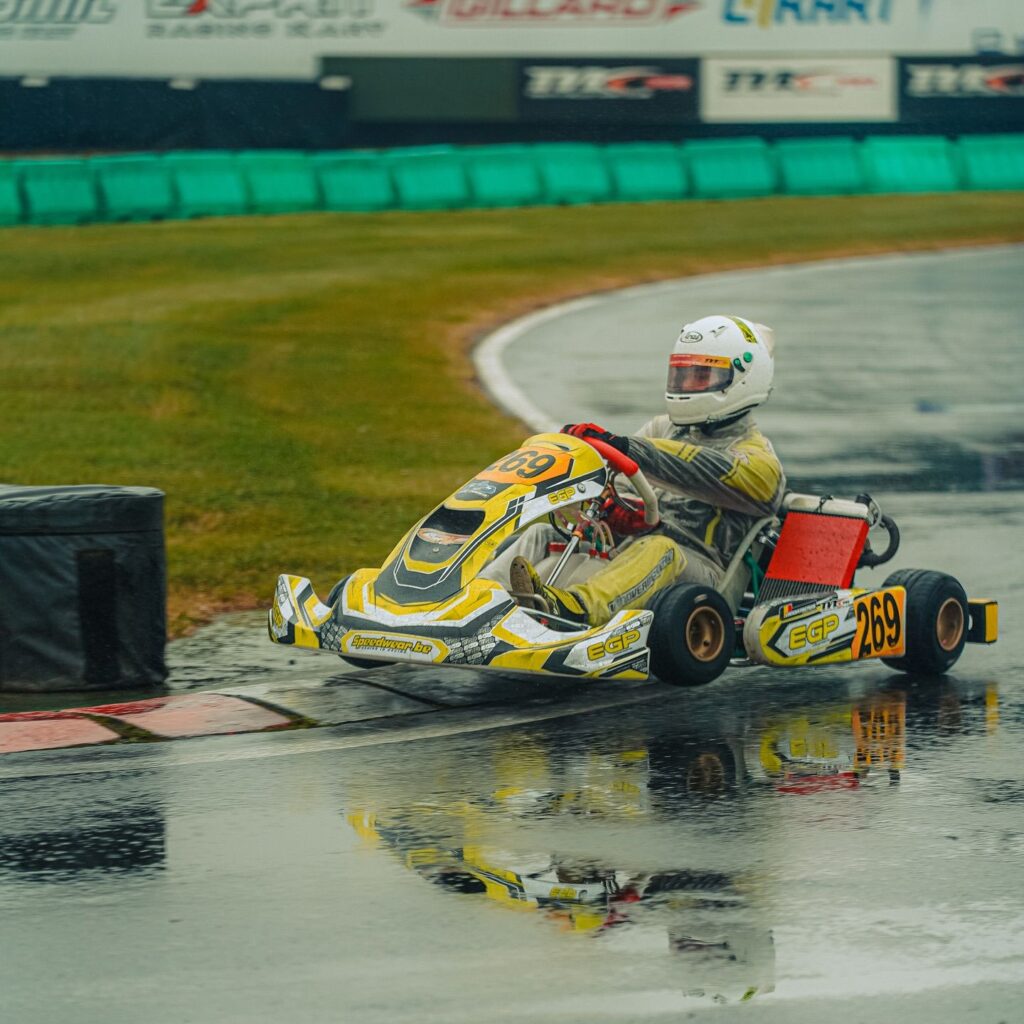
A demanding return to karting: Del Grosso on his return to racing and formal debut in competitive motorsport
When Del Grosso returned to racing at 13, he entered an environment that demanded far more than he initially anticipated. The transition was not gradual; instead, it required an immediate adjustment to the intensity and expectations of competitive karting. Reflecting on that period, he openly acknowledged how unprepared he felt at the outset.
“So when I came back, I wasn’t prepared at all. I’ll be really honest with you, I wasn’t prepared at all. I was spending full weekends at the track, you know, like helping, working, and driving. It was easily, for me, like 16 hours a day, just to get eight hours of driving.”
In addition to the competitive demands, Del Grosso also faced practical challenges that made his return even more complex. Without consistent support in terms of transport, he had to rely on external help, which added another layer of responsibility to his routine.
“Because of some situations in my personal life, my parents couldn’t really bring me to the go-karting track, and that was a big issue also when I was younger. So basically, I found a team that really helped me, picked me up from home, and took me to the track. But that meant waking up at five o’clock in the morning, packing the truck, going to the track, setting up the tent, setting up everything. So it was a lot for me, you know, especially as a 13-year-old, where it all switched overnight, like I said.”
This early phase highlighted the reality of motorsport beyond driving alone. It demanded time, effort, and a willingness to contribute in every aspect of the environment, reinforcing the level of commitment required to progress.
Adapting to a new lifestyle
As a result, his return required a complete shift in lifestyle. What began as a renewed interest quickly evolved into a full-time commitment, demanding both physical preparation and mental discipline. The intensity of this transition forced him to adapt rapidly in order to keep pace with the demands of the sport.
“At 13 years old, just from that little dream I got, I immediately went to a different life—not lifestyle—but I just switched day and night from my life. So it was easily 16 hours a day. So I had to really completely change my lifestyle. I had to literally train more, lose weight, and improve my fitness. But I also had to start learning data, which sometimes people underestimate in karting because it looks easy on the surface, but it’s actually essential for improvement. So there were these many things I had to get used to and learn. So yeah, that’s it… it was a lot at one time.”
Ultimately, this period marked a turning point in his development. It forced him to build the habits, discipline, and understanding necessary to compete seriously, laying the groundwork for his continued progression in motorsport.
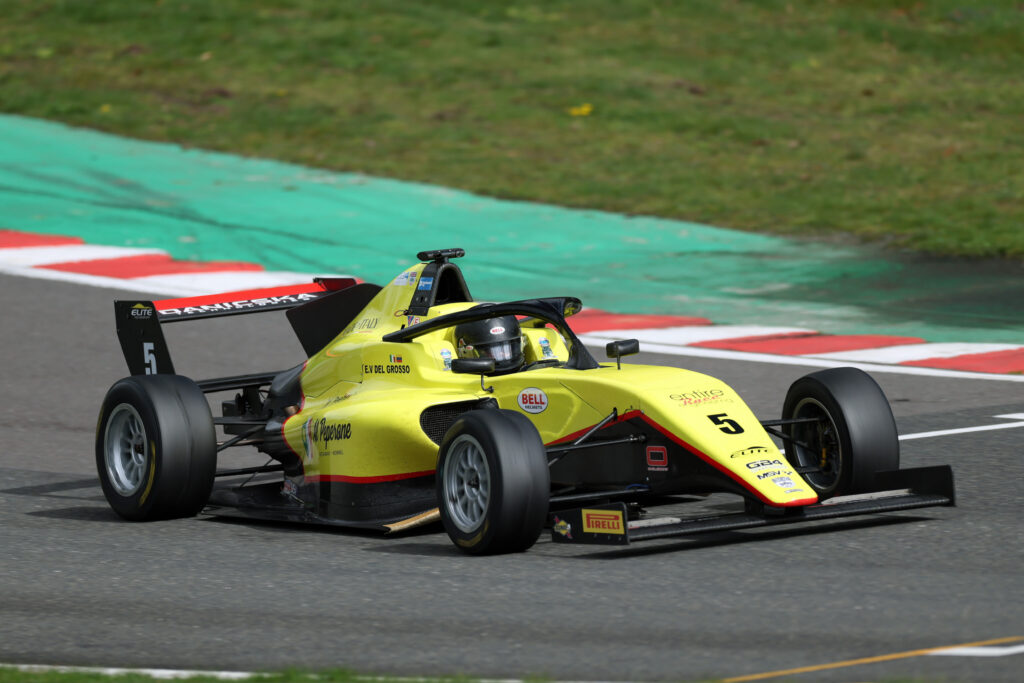
Del Grosso reflects on facing adversity on track and developing resilience
Despite his determination to succeed, Del Grosso quickly encountered the harsh realities of competitive karting. Returning to the sport later than many of his peers meant he had to compete against drivers with significantly more experience, which created immediate pressure to close the gap.
“So basically, I had to improve my fitness, and there were many challenges. One of the hardest things for me was racing against people that were younger than me and being slower at the beginning. Everyone sees that, and mentally it’s so tough.”
Rather than allowing these setbacks to discourage him, however, Del Grosso worked to reframe his situation. He recognised that his journey had started later, and he consciously adjusted his expectations to focus on long-term progression rather than immediate results.
“But inside, I had to tell myself: I am at the start of my career, while they were starting at seven years old. That period really taught me resilience and to trust the process, really. Because it’s so hard mentally too, because you know karting is a really attacking sport. Like, every driver gets every driver.”
Navigating social pressures and building strength through experience
In addition to the competitive challenges, Del Grosso also faced difficult social dynamics within the paddock. Entering an established environment as a newcomer brought its own set of obstacles, particularly when competing against drivers who had already built relationships and reputations.
“And I got bullied really hard in the beginning of my karting season, because all of these kids were already five years into the sport, and I just came in there, you know: “Oh, hey guys, how are you doing?” I was a rookie. And well, that was the most difficult part for me, really.”
Ultimately, Del Grosso emerged from this period stronger, both mentally and emotionally. By confronting these challenges directly, he developed a deeper sense of resilience and a clearer understanding of what it takes to progress in motorsport.
“And to overcome these things, it really taught me to trust the process and just be strong mentally. It really built me. I’m really proud of that, but I’m also happy that it happened, you know, because it really made me who I am today. And that’s the most important part for me, you know. And it’s incredible what journey I’ve done, and to only think that I started like three years ago, you know—it’s still like, you know, only three years ago.”
In retrospect, these challenges did not hinder his development; instead, they became essential building blocks, reinforcing the mindset and discipline that continue to define his approach today.
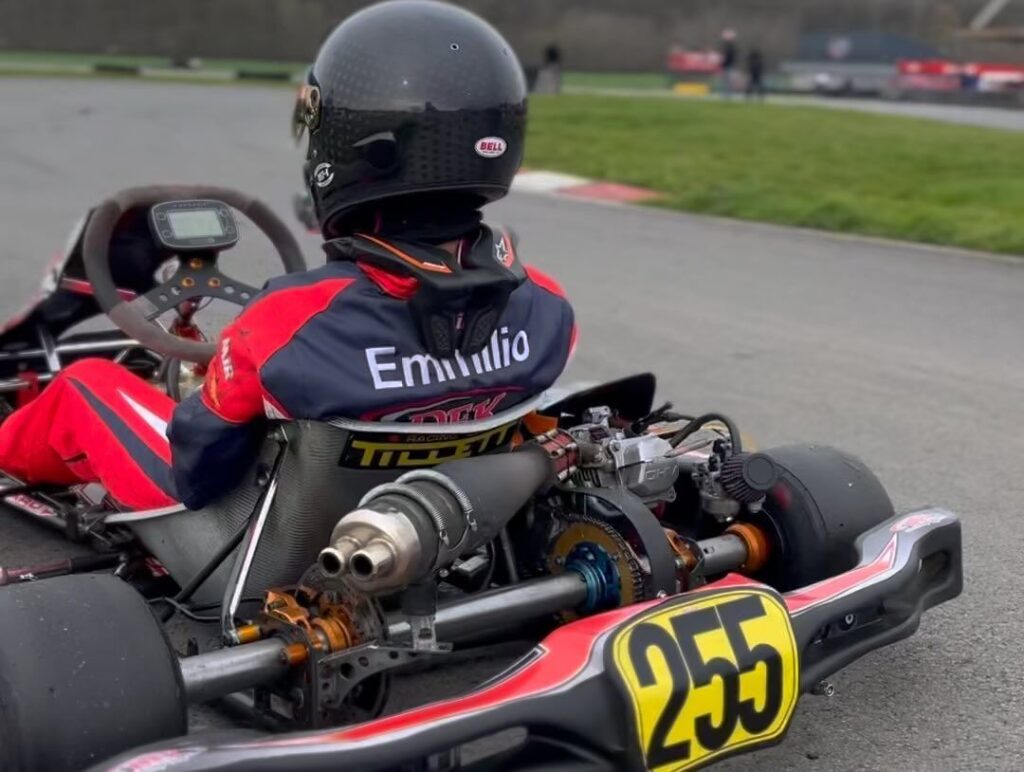
The importance of patience, balance and valuing incremental progress in motorsport: Del Grosso on the advice that he would give to his younger self
Reflecting on his journey, Del Grosso emphasised patience as one of the most important lessons he would share with his younger self. He acknowledged that progress in motorsport is rarely immediate, and every small step contributes to long-term success.
“Well, I would honestly tell my younger self to be patient. Look, progress in motorsport really doesn’t come overnight, and it comes in small steps, and you have to trust the process. Every little step I made was crucial, you know.”
While patience was central, Del Grosso also recognised his tendency to push forward too aggressively, sometimes expecting too much too soon. Over time, he learned that ambition must be balanced with realism to achieve sustainable growth.
“So I’m always like this, and I will tell you now and to this day: when I take a step forward, I immediately want to reach for the moon, but I have to be realistic with myself that that’s not possible.”
Equally important, he highlighted the value of celebrating incremental progress. Early in his career, he was highly self-critical, measuring success only by wins or standout moments. Learning to appreciate small improvements became a key part of his development.
“And so that really taught me to take the little steps and really enjoy them, you know—like, be proud of them. Because I can be sometimes harder on myself than many other people would be. But I was really hard on myself back then, because I wasn’t able to win, I wasn’t able to do this.”
The value of struggle in promoting growth
Ultimately, Del Grosso views the challenges of his early career as essential to shaping who he is today. The setbacks, struggles, and learning curves provided the foundation for both personal and professional growth.
“So it was a really tough process, of which I really, really, really, really am proud. Like, it taught me so much. Like I said, it was an important part for me to overcome.”
Through reflection, he recognises that adversity, patience, and perseverance are not obstacles but essential components of a successful journey in motorsport.
Emmilio Valentino Del Grosso turning setbacks into stepping stones on his way up the motorsport ladder
Emmilio Valentino Del Grosso’s journey reflects more than just a return to motorsport—it highlights the power of persistence, mindset, and incremental growth. From an early introduction to karting to a challenging comeback shaped by discipline and resilience, he continues to build a career grounded in process rather than shortcuts. As he progresses, his story stands as a compelling example of how setbacks, when approached with the right mentality, can become the foundation for long-term success.