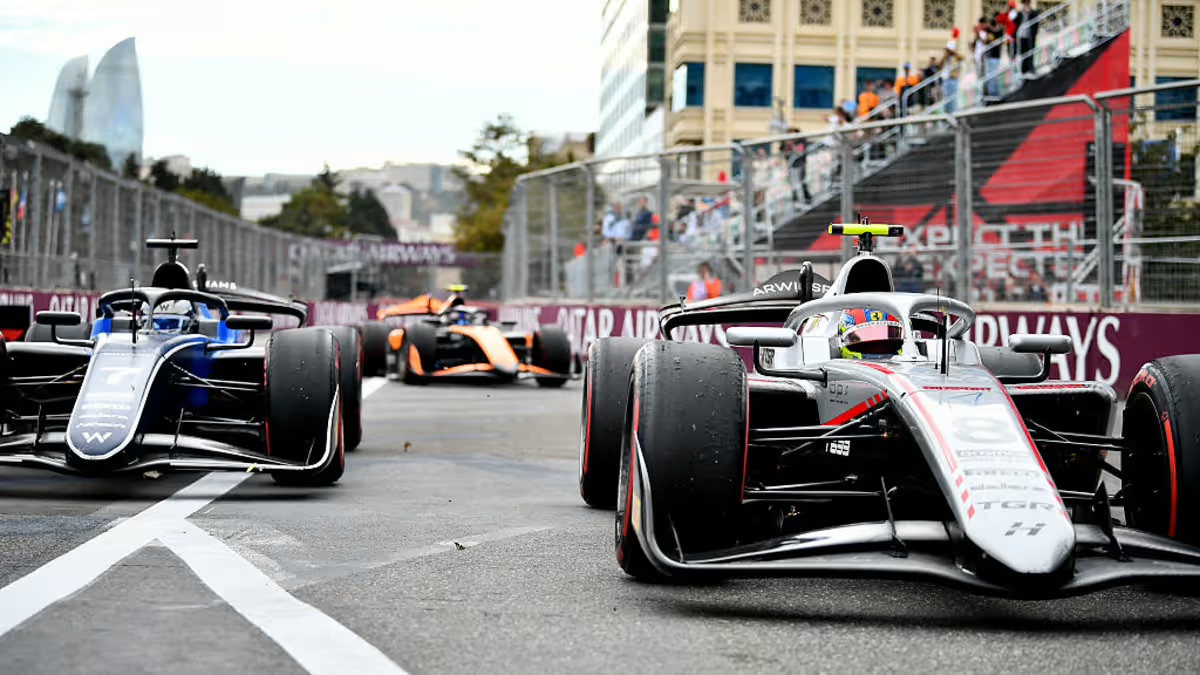
The FIA Formula 2 Championship reaches a significant milestone in 2026 as it celebrates its tenth season. Over the past decade, the series has established itself as the final step on the ladder to F1 and a central pillar of the FIA single-seater pyramid.
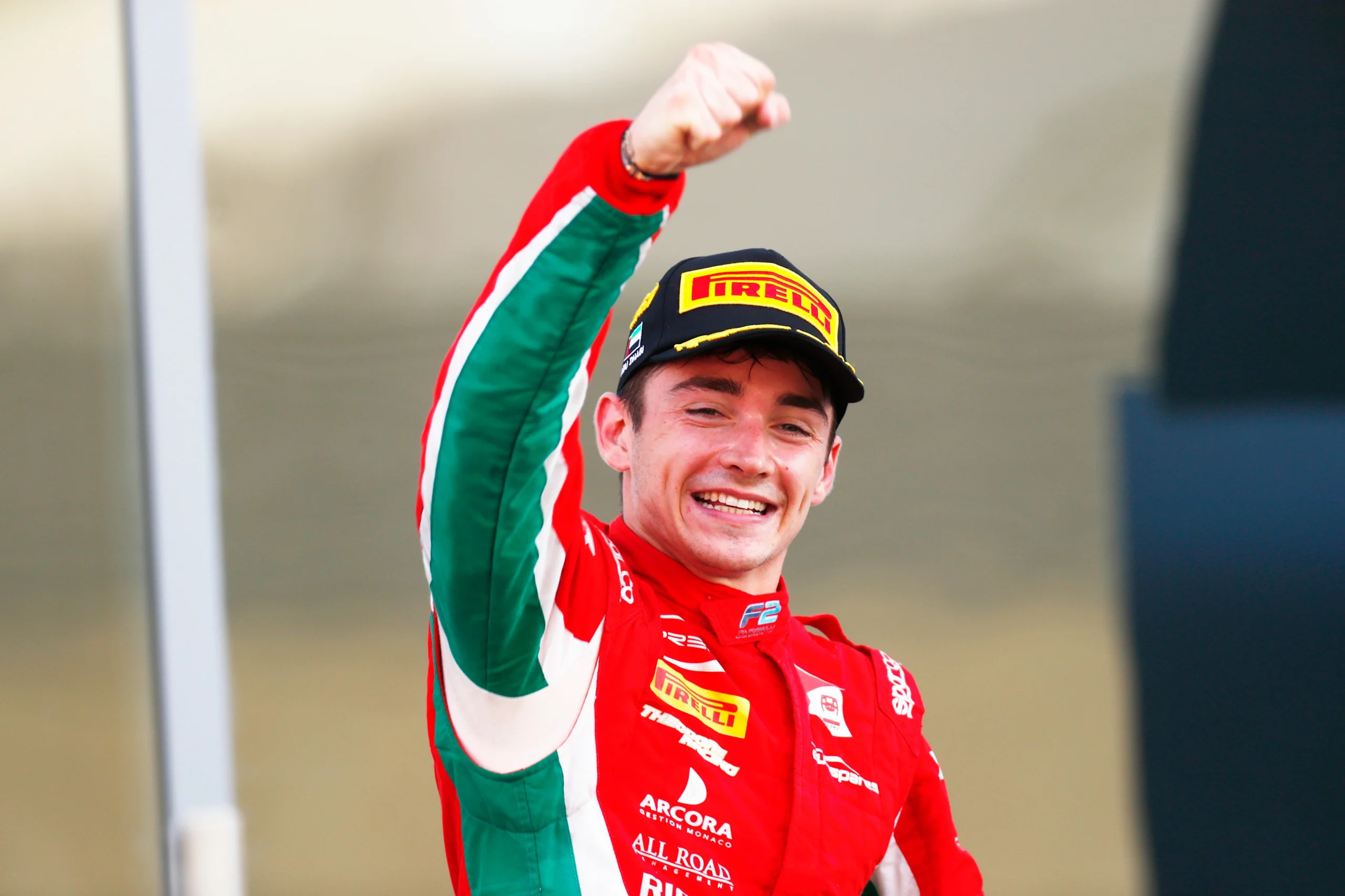
Since launching in 2017, F2 has focused on preparing young drivers for the demands of F1. Over the first nine seasons, twenty-two drivers have progressed directly from F2 to the F1 grid. Among them are inaugural champion Charles Leclerc, 2018 champion George Russell, and 2021 title winner Oscar Piastri.
Other graduates include Lando Norris, the 2025 F1 World Drivers’ Champion, as well as Alexander Albon, Liam Lawson, Isack Hadjar, Oliver Bearman, Andrea Kimi Antonelli, 2024 F2 champion Gabriel Bortoleto, Franco Colapinto, and 2026 debutant Arvid Lindblad.
In total, F2 graduates have achieved 33 Formula One Grand Prix victories, 150 podium finishes, one F1 World Championship and 5,728 points in the top tier. In 2026, twelve of the twenty-two drivers on the F1 grid come from F2, while seventeen current or former F2 drivers hold testing, development or reserve roles within F1 teams.
A Championship designed to prepare drivers for F1
F2 operates as a single-make championship designed to replicate many of the technical and sporting challenges drivers face in F1. The cars combine turbocharged engines with high levels of downforce, demanding precision and adaptability from drivers while encouraging close racing and overtaking.
Drivers must quickly adapt to F1 circuits, learn how to manage Pirelli tyres and operate systems such as DRS, the Virtual Safety Car and the sport’s marshalling procedures. With limited track time and intense competition, the series places a strong emphasis on driver skill. In F2, the driver makes the difference.
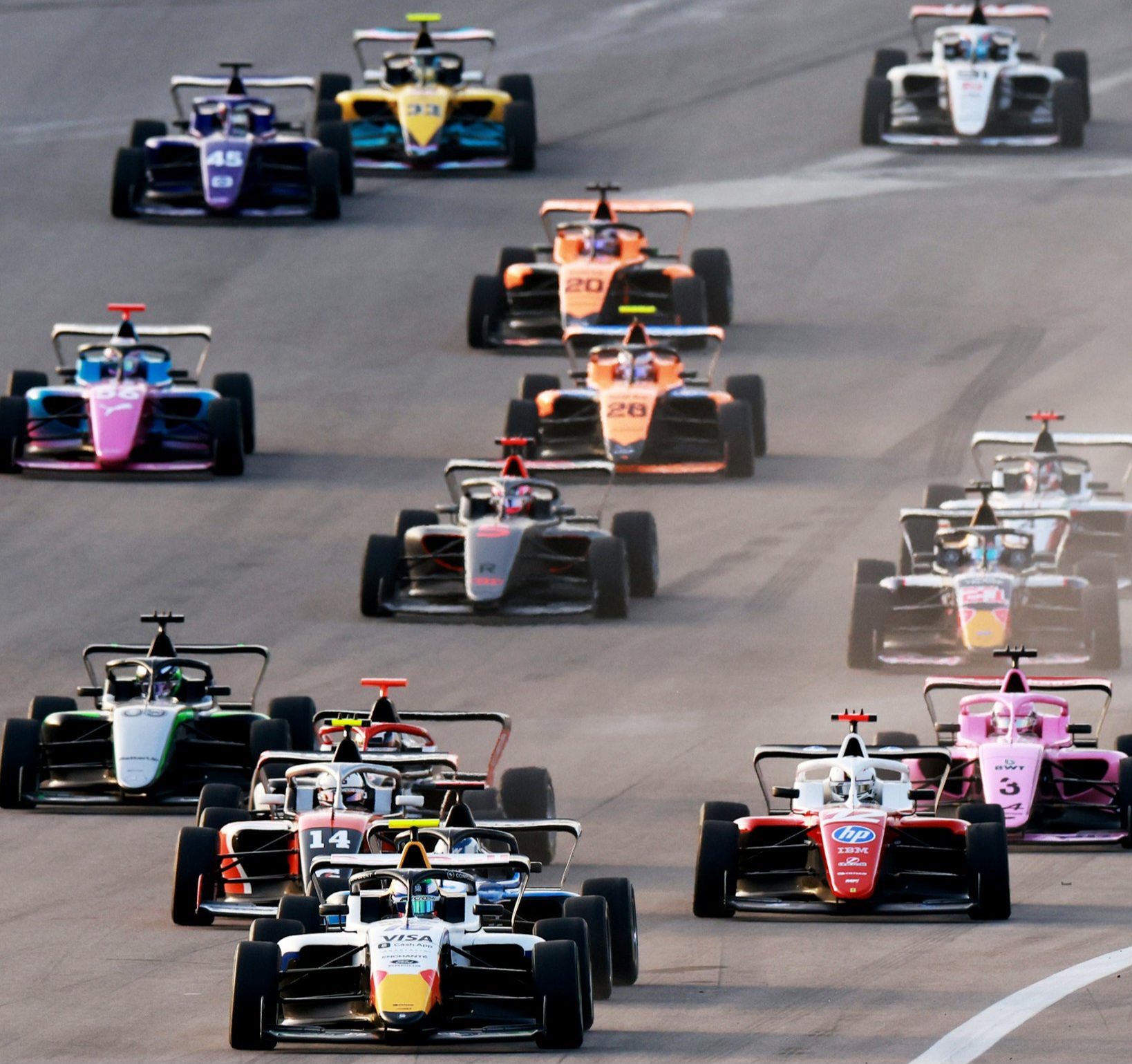
The race weekend format mirrors the F1 programme while offering its own competitive dynamics. Each event includes qualifying and two races. The Sprint Race on Saturday features a reverse grid that forces the quickest qualifiers to fight through the field, while Sunday’s Feature Race includes a mandatory pit stop and tyre strategy and awards a greater number of championship points.
This structure consistently produces competitive races while ensuring that the most prepared and consistent driver emerges as champion by the end of the season.
Innovation and technical development
Beyond driver development, F2 also contributes to the evolution of technology in motorsport. In 2020, the championship introduced 18-inch tyres supplied by Pirelli two years before they appeared in F1. More recently, advanced sustainable fuels developed with Aramco have been tested in F2 and F3 machinery since 2023 ahead of their introduction to F1.
Engineers and organisers have also worked to ensure the car suits a wide range of drivers. Adjustments have focused on steering effort, braking performance and steering wheel design, helping to maintain both safety and accessibility across the grid.
At the same time, strict cost control measures remain central to the championship’s structure. Centralised purchasing, limits on team personnel and testing, and a ban on independent development keep budgets manageable while preserving competitive balance. When modifications are introduced, organisers carefully assess their financial impact on the teams.
A global stage within the F1 weekend
The F2 calendar forms part of the official F1 Grand Prix weekend programme. In 2026, the championship will race at fourteen F1 circuits around the world, placing drivers directly in front of teams, engineers and decision-makers from the pinnacle of the sport.
Since the series began in 2017, F2 has staged 224 races across three continents and sixteen countries. Drivers from forty nationalities have competed in the championship, with 122 drivers entering at least one race before the start of the 2026 season. Half of those drivers have won at least one race, highlighting the competitiveness of the grid.
The championship has crowned nine champions representing eight different countries, with Brazil producing two title winners.
Expanding audience and global reach
F2’s sporting success has also translated into growing commercial and audience engagement. The championship now broadcasts to more than 170 territories worldwide, reaching nearly 60 million viewers annually through its integration with F1’s global broadcast platform.
Digital engagement has expanded significantly since 2017. The series now boasts around 3.5 million followers across social media platforms, with increasing engagement driven by behind-the-scenes content, storytelling and the intensity of on-track competition.
Reflections on a decade of F2
Reflecting on the championship’s milestone, Stefano Domenicali praised the role F2 has played in shaping modern motorsport.
“What an incredible decade it has been for Formula 2! This is truly a special moment for us to look back on all that has been achieved both on and off the track for a series that has been so fundamental to the development of the sport.”
“F2 gives drivers the opportunity to test themselves on the ultimate circuits as they push for their dreams in Formula 1 – the highest level of motorsport. It has delivered so much in just 10 years, producing 22 fantastic F1 stars and demonstrating the power of the pyramid. It is also the test bed of new technologies that go on to make real world changes in safety and sustainability.”
“I’d like to congratulate the many people who have built F2 into the success it is today, above all CEO Bruno Michel and his team for a decade of passion, expertise, and devotion, the FIA, the drivers and teams, and of course, the promoters, stewards and volunteers who we couldn’t do it without. This 10th anniversary year is a real milestone, and I can’t wait to see what’s to come in the next decade.“
“More than a support series”
Mohammed Ben Sulayem also emphasised the championship’s role in developing future stars.
“As we celebrate the 10th anniversary of FIA Formula 2, I feel a deep sense of pride in what this championship represents for our sport. In just a decade, it has firmly established itself as the definitive final step to Formula 1 and a cornerstone of the FIA single-seater pyramid. Since 2017, 22 drivers have graduated directly to the Formula 1 grid, and in 2026 more than half of the field are F2 alumni, a powerful testament to the strength and credibility of this pathway.”
“Formula 2 is more than a support series; it is where future stars are forged and where drivers learn to perform under intense pressure, mastering the technical, sporting and mental demands that define success at the highest level. It is also a platform for progress, helping to introduce innovations and playing a key role in the testing of advanced sustainable fuels now used in Formula 1.”
“FIA Formula 2 reflects our commitment to fairness, opportunity, and excellence. As it enters its second decade, I am confident it will continue to shape champions, inspire fans, and strengthen the future of global motorsport.”
The development of F2
FIA Formula 2 CEO Bruno Michel highlighted the collaborative effort behind the championship’s growth.
“I am really proud to celebrate the first decade of the FIA Formula 2 Championship. Looking at the number of drivers who have graduated from F2 to F1, it is an amazing achievement. Since Day 1, we have worked very closely with the FIA and the Formula One Group to give the drivers a powerful, challenging and safe car that helps showcase their talent, and to provide the fans with races that are very entertaining. F2 has become a key factor in the FIA pyramid and the Formula 1 Grand Prix package”.
“We made the conscious choice for F2 to be a single-make category from the very beginning, because we knew this would generate incredible races where the drivers’ skills can really make a difference. But it also allows for the costs to be kept as low as possible, which is absolutely key in ensuring that the championship stays healthy and strong.”
“Our success is also made possible thanks to the hard work of our partners Aramco, Pirelli, Dallara and Mecachrome, with whom we collaborate very closely. Their technical expertise is crucial to making the F2 Championship the ultimate breeding ground for young racing talent.”
“Throughout the years, F2 has also played an important pioneering role for F1, such as the introduction of the Pirelli 18’’ tyres or Aramco’s sustainable fuels and 100% advanced sustainable fuels.”
“Today, F2 is a fast-growing, competitive, highly regarded and healthy championship. 2026 concludes F2’s first decade, and together with the FIA, F1, our teams, our partners and our suppliers, we will ensure that this championship keeps on thriving for years to come.”