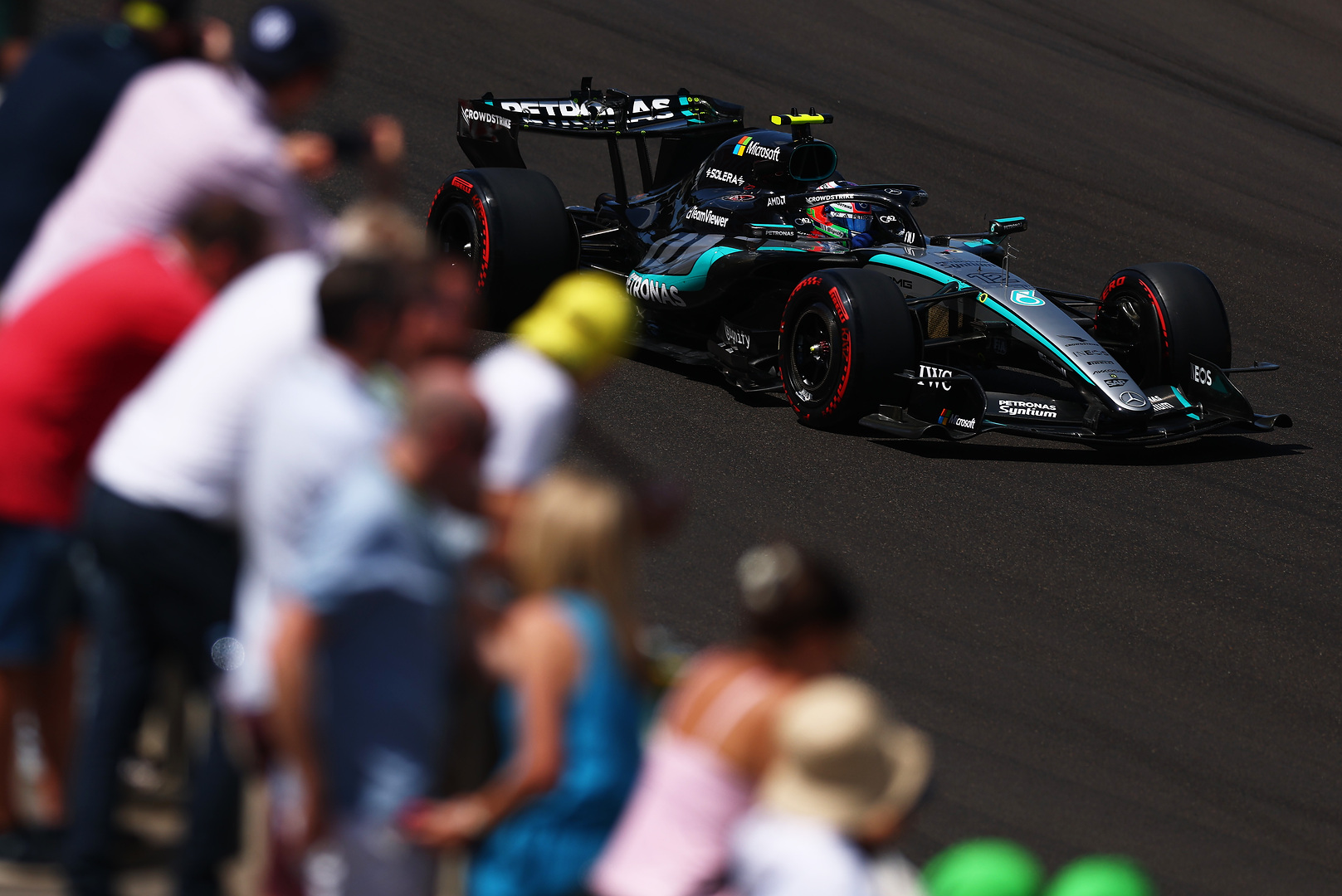
Mercedes head into the 2026 F1 Dutch GP knowing the second half of the season will demand sharper execution and stronger development after a more difficult run before the summer break.
The team started the year as the early benchmark of F1’s new regulatory era, winning the first six races of the season. However, the competitive picture tightened before the summer shutdown, with Ferrari and McLaren cutting into Mercedes’ advantage and exposing how quickly momentum can shift in a development race.
Zandvoort now starts a decisive final stretch. The F1 Dutch GP marks the first race back after the summer break, the final standalone round of the season, and the beginning of a 12-race run to the end of the championship. It also carries extra significance as F1’s final visit to Zandvoort in the modern era, giving Mercedes one last chance to win at a circuit where it has come close but never taken victory since the race returned to the calendar.
Wolff admits Mercedes left points on the table
Toto Wolff made clear that Mercedes cannot rely on its early-season advantage as F1 returns from the summer shutdown.
The team still remains firm favourites in the championship fight as they lead both title races, but its rivals have narrowed the gap. With more than 300 points still available across the final 12 rounds, Wolff pointed to execution and development as the factors that will decide whether Mercedes can stay ahead.
“We have left points on the table, our rivals have reduced the performance gap, and we know the second half of the year will demand more from us than the first. The championships will be decided by execution and the rate of development we can bring to the car across the next 12 races. Whilst we are slightly out of step with upgrades compared to our rivals, we have more performance to unlock and a clear development plan to do so.”
That assessment framed the 2026 F1 Dutch GP as more than just the first race back for Mercedes. The team has shown race-winning pace, but it has not always converted that pace into maximum results due to unreliability. With Ferrari already breaking its winning run earlier in the season and McLaren arriving at Zandvoort after victory in Hungary, the pressure on Mercedes has increased.
The Dutch GP will therefore offer an immediate test of whether the team can respond cleanly after the break.
Zandvoort starts a demanding second half
The timing of the weekend adds another layer to the challenge.
Zandvoort kicks off the second half of the 2026 F1 season after the summer shutdown, but it is also the final standalone race before the calendar becomes much more intense. After the Dutch GP, teams face a double-header at Monza and Madrid before three consecutive triple-headers close out the championship.
That gives Mercedes little margin to ease back into rhythm. Every missed opportunity will matter more as the schedule tightens, particularly with rivals bringing performance and trying to close the gap.
The weekend format also raises the pressure. Zandvoort hosts a Sprint weekend for the first time, leaving teams with just one practice session before competitive running begins. Around a track that punishes uncertainty and rewards confidence, Mercedes will need to get on top of the car quickly.
Final chance to win at Zandvoort
The 2026 Dutch GP also represents Mercedes’ final chance to win at Zandvoort in the circuit’s modern F1 era.
Since the race returned to the calendar, Mercedes has come close but never stood on the top step. Wolff acknowledged the challenge, but he also pointed to the atmosphere and character that have made the event one of the standout weekends of the season.
“Zandvoort has been a unique challenge since its return. It is a difficult track to master, the fans create an incredible atmosphere, and it has become a race that the teams and drivers look forward to. We have come close but never won there in the modern era. This is our final opportunity to change that, and that’s a challenge we would like to meet.”
That final opportunity comes at a demanding venue. Zandvoort combines high-speed corners, banking, undulations and limited margin for error. Weather can also influence the weekend, adding another variable for a team already trying to execute a clean return from the break.
For Mercedes, victory would carry more than symbolic value. It would also send an important message at the start of the second half, especially after rivals reduced the performance gap before the summer shutdown.
Vesti highlights Zandvoort’s risk and reward
Fred Vesti also pointed to Zandvoort’s old-school character as one of the features that makes the circuit so satisfying for drivers.
“Zandvoort has everything you want from a true driver’s track: grass and barriers close to the edge of the circuit, and very little margin for error. That sense of risk is part of what makes it such a rewarding place to drive.”
“The banking in Sector 1 is one of the standout features of the track and creates a real engineering challenge. You have to find the right set-up compromise to maximise performance there without sacrificing pace elsewhere around the lap. Zandvoort almost always produces an intense qualifying session, and the race can be really exciting too if you have the pace to move forward and create overtaking opportunities.
“It’s a high-downforce circuit with lots of grip and plenty of potential to push hard. The power unit also plays an important role, particularly on the run onto the main straight, so it should be exciting to see how everything comes together.
“It’s demanding, fast, unforgiving, and one of the most enjoyable circuits of the season to tackle from behind the wheel.”
That balance could prove especially important for Mercedes. Wolff admitted the team is slightly out of step with upgrades compared to its rivals, but also stressed that Mercedes still has performance to unlock. Zandvoort will give an early indication of whether that plan can translate into immediate progress.
Qualifying set to be crucial at the Dutch GP
Zandvoort has rarely offered easy overtaking, and the Sprint format will make track position even more important.
With only one practice session before the competitive sessions begin, Mercedes will need to find a workable set-up quickly. The circuit rewards precision and commitment, while mistakes can carry a heavy cost because the grass, gravel and barriers sit close to the racing line.
That makes qualifying a key part of the weekend. If Mercedes starts near the front, it can control its race more effectively around a circuit where overtaking opportunities can be limited. If it starts out of position, it may need strategy, tyre offset or Safety Car timing to recover.
For a team trying to protect its championship position, that leaves little room for error.
Mercedes face immediate pressure after the break
The F1 Dutch GP arrives at an important point in Mercedes’ season.
The team proved its strength early in the year, but the first half ended with its rivals closer and the development race becoming more intense. Wolff’s message was clear: Mercedes must execute better, bring performance quickly and avoid leaving more points behind.
Zandvoort gives Mercedes its final chance to win at the circuit in the modern era. More importantly, it gives the team its first chance after the summer break to show that it can respond to the pressure now building around the championship fight.