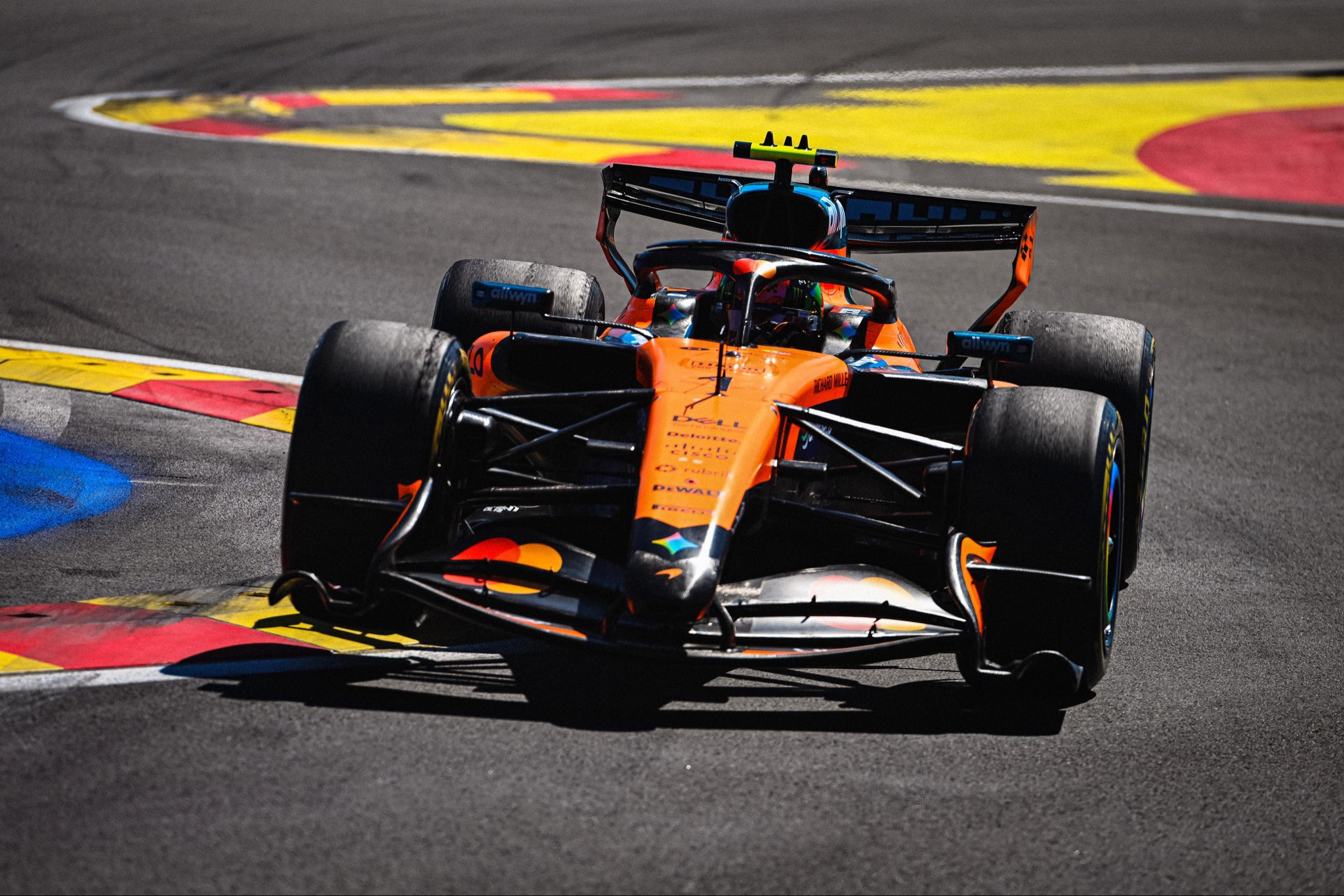
McLaren F1 arrived in Hungary with a raft of new-specification parts. By Sunday evening, the team was explaining a result that even its own engineers hadn’t fully predicted.
Reigning World Champion Lando Norris converted pole position into a commanding win. The pace advantage visible on Sunday told its own story about the direction the team had chosen with its upgrade programme. Teammate Oscar Piastri was set for 2nd until unreliability ended his day on lap 56.
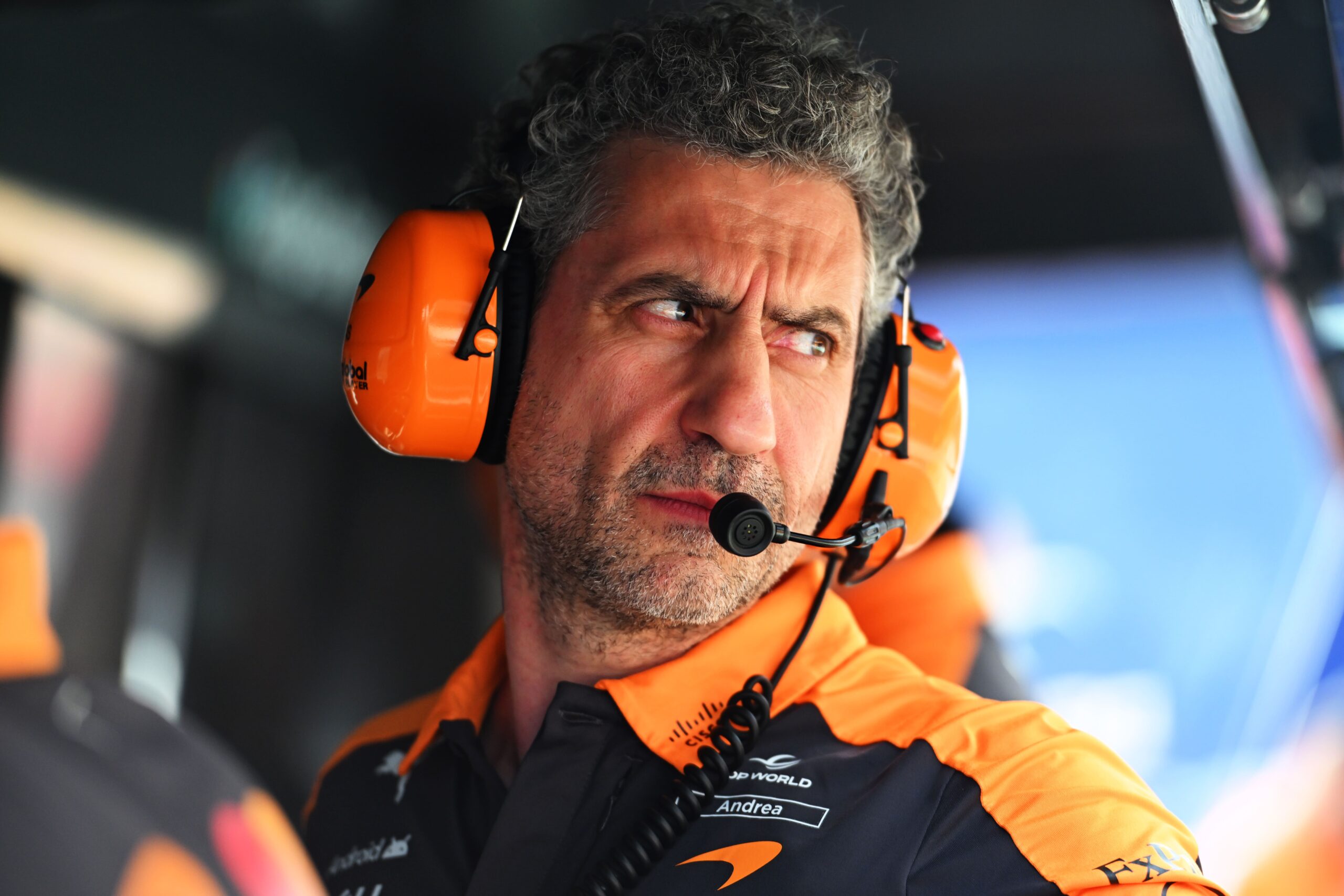
Speaking after the F1 Hungarian GP, McLaren Team Principal Andrea Stella was careful not to overstate what a single weekend proves.
“I think the improvement from a competitiveness point of view can be entirely ascribed to the upgrades that we took here.
“Definitely we would have not thought that there would be enough to have such a strong pace in the race,” he continued.
McLaren and its aims after the 2026 F1 Hungarian GP
For Stella, the story of McLaren’s Hungarian GP weekend began well before Sunday’s chequered flag. The conceptual corrections made in the wind tunnel after earlier rounds exposed where the MCL40 had fallen short.
Post-qualifying on Saturday, Stella had said, “However, my impression is that to stay consistently in this position, we will have to keep upgrading the car, and we will have to add probably another half a second to the car from now to the end of the season.”
He continued, “And this is our objective, honestly, because we don’t want to give up on this season. We are just midway.”
The Team Principal had explained that after launching the car, and studying the designs of quicker rivals, the team identified where its own thinking needed to change.
“We realised after we delivered the MCL40, and also to some extent looking at the concepts that were present in some cars that were faster than us, that we needed to correct the course,” Stella said.
He credited the aerodynamics department of reading the situation correctly.
“We know that when McLaren understands which direction to take, then I think we are in condition to develop quite effectively.”
Stella credits McLaren F1’s aero department turnaround
He extended that praise to the design, delivery, manufacturing and logistics departments. They worked against a punishing deadline to get the parts trackside. Some components, Stella revealed, arrived on Friday night. Piastri’s car received them on Saturday morning.
“It was a race against time,” he said. And I want to praise the team for having been successful in delivering all these upgrades.”
On whether the raw pace gain reflected in qualifying and the race told the same story, Stella urged caution. He was asked directly how much of the margin was down to the upgrade and how much was simply the characteristics of the Hungaroring. Stella declined to separate the two cleanly.
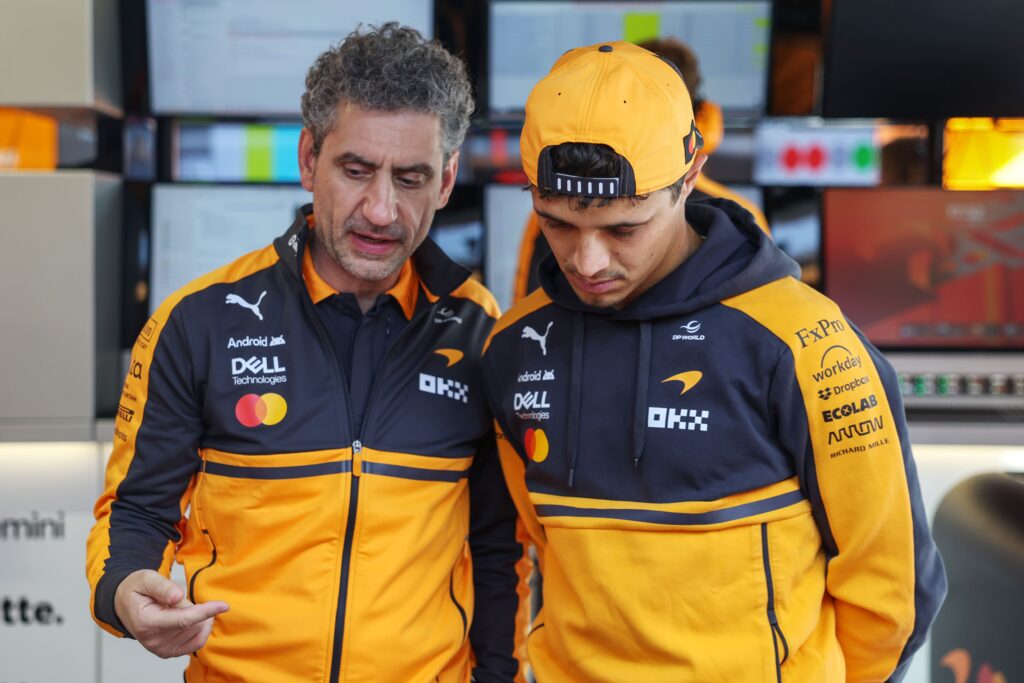
The race, Stella suggested, looked rather different once tyre age and compound choice were accounted for. It was really once Norris moved into the lead that the advantage became visible to everyone watching. “It looks like, if anything, in the race we had a little more advantage than we had in qualifying,” he said.
Stella noted that some of the upgrade work may have improved the car’s interaction with its tyres.
“Hopefully we are starting to see some of the improvements rewards us, even in terms of race pace. But I think there’s more to come in this pace.”
That caveat extended to conditions as much as compounds. Stella pointed to Canada, where a cold race left McLaren struggling and easily the slowest of the big four, as evidence that the tyre work is not yet finished.
“It’s all to be proven that we are also competitive when races will be on the cold side,” he said.
“There’s some more work to do on the interaction with the tyres, but it looks like some of the improvements were effective in hot conditions.”
Looking ahead for Stella and McLaren after 2026 F1 Hungarian GP
Whatever caveats apply, Stella framed McLaren’s F1 Hungarian GP pace advantage as the product of deliberate direction. It was not a one-off. He was clear that it will not be enough on its own.
However, he also made sure to point out that a single strong weekend changes nothing about the scale of the task still ahead of the team, no matter how encouraging.
“If we want to be in a position to fight for victories consistently in the future, we need to keep our focus on delivering more upgrades,” he said. “That is the plan. But, you know, we are not naive. We know that this will be the plan for all the teams.”
He described the rest of the season in those terms explicitly. Stella framed it as a season-long contest that every front-running team is now locked into. It was not something McLaren could afford to treat as settled.
Stella estimated that the fastest car on the grid could still gain as much as half a second across the remaining races. He called it “a race of upgrades” that McLaren is now back in.
Team Principal Stella added that there is “a lot of work ahead of everyone, not only McLaren” after the F1 Hungarian GP.