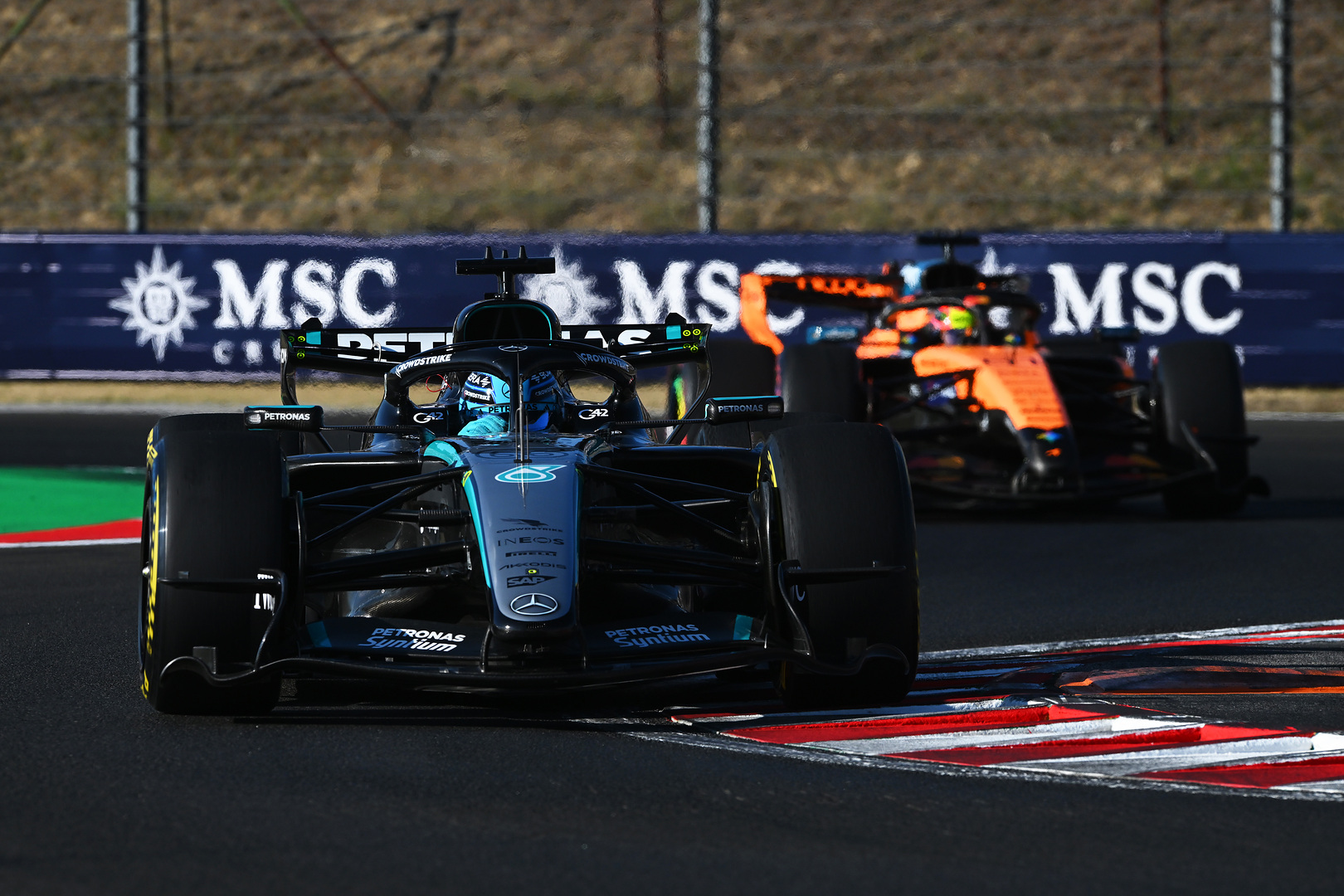
Toto Wolff addressed the shifting development picture in F1 following the 2026 Hungarian GP, acknowledging McLaren’s progress while outlining Mercedes’ own plans for the second half of the season. Kimi Antonelli finished third and George Russell seventh after a difficult afternoon that saw Russell drop to P21 off the line following an anti-stall at the start. Speaking after the race, the Wolff was cautious about drawing too many conclusions from a single weekend.
Wolff assesses rival McLaren’s progress at the F1 Hungarian GP
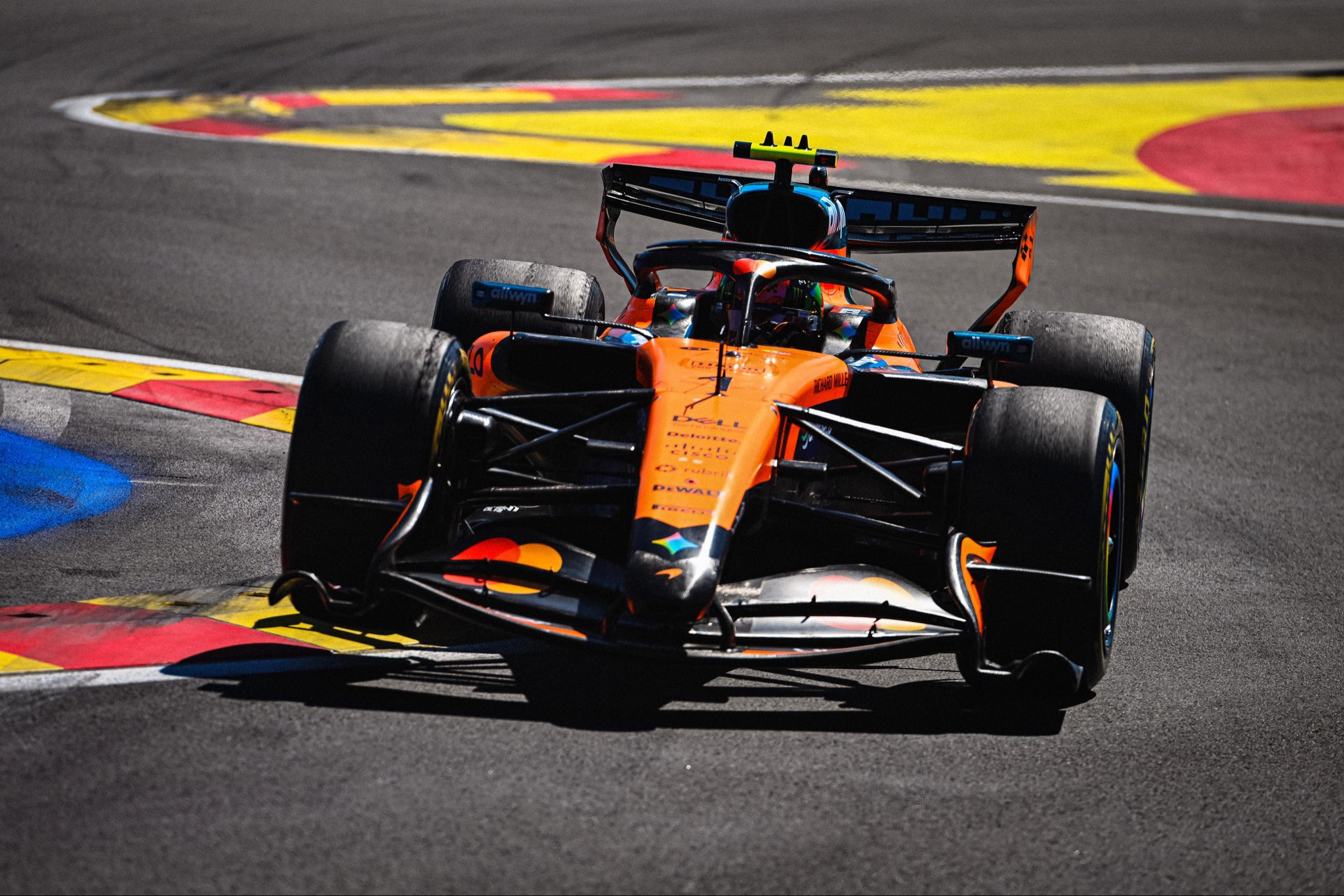
Budapest has historically suited McLaren in recent years, and Wolff was careful not to overreact in either direction when assessing their performance at the Hungarian GP. He acknowledged their improvement while urging caution about reading too much into performance at one circuit.
“When you ask the Artificial Intelligence who are the favourite in Budapest. The Artificial Intelligence is going to say McLaren, because they were the dominant team here in the last few years. I think it was 1 and 2 and something like this last year. So definitely one of the good tracks for them. Not very good for us,” Wolff stated.
Wolff was clear that the broader development fight remains fluid, with no team able to claim a definitive advantage for long.
“So we need to be careful not to swing from everyone is suddenly competitive to a team is suddenly not competitive. So I think they have definitely done a step, they are in the fight. We haven’t brought an upgrade for some time. And you can see that this is going to be a development fight also going forward.”
Wolff outlines Mercedes’ second-half upgrade strategy after 2026 F1 Hungarian GP
Mercedes have been measured in their approach to upgrades so far this year, and Wolff explained the thinking behind that strategy after the 2026 F1 Hungarian GP. Rather than deploying updates at every round, the team is being deliberate about timing to maximise the impact of each package.
“I hope so. We need to be really just being strategic about when to bring the upgrades. When do we think they will have the biggest impact on performance. Rather than just throwing it in at every Grand Prix like in the past. You cannot do this, so you will have to eventually put an upgrade in. And probably you leapfrog a little bit the others, and then it kind of flattens out, and the others are stronger.”
Wolff confirmed Mercedes are in a healthy position within the cost cap and have deliberately loaded more of their development work into the second half of the season.
“So yeah, we’re bringing upgrades. We’re closely monitoring how much we can bring. At the moment, post-cap wise, we’re in a good spot. We’ve tried to have it a little bit more second half of the season weighted. And we’ll see if that is enough,” he stated.
Wolff on the complexity of planning around the expanded calendar
The addition of Malaysia to the calendar adds further complexity to Mercedes’ planning, with the final two races carrying uncertainty around both budget and the number of rounds in the season. Wolff acknowledged the challenge of building a coherent upgrade plan around that uncertainty.
“It all has an influence. Obviously going to Malaysia is fantastic. But we have to still monitor the cost that we have as a team. It’s not related to Malaysia. It’s more about when can we bring the upgrades,” Wolff concluded.
Mercedes left the 2026 F1 Hungarian GP firmly in control of the season. Whether the team’s second-half weighted strategy delivers the gains they need over the remaining rounds remains to be seen.