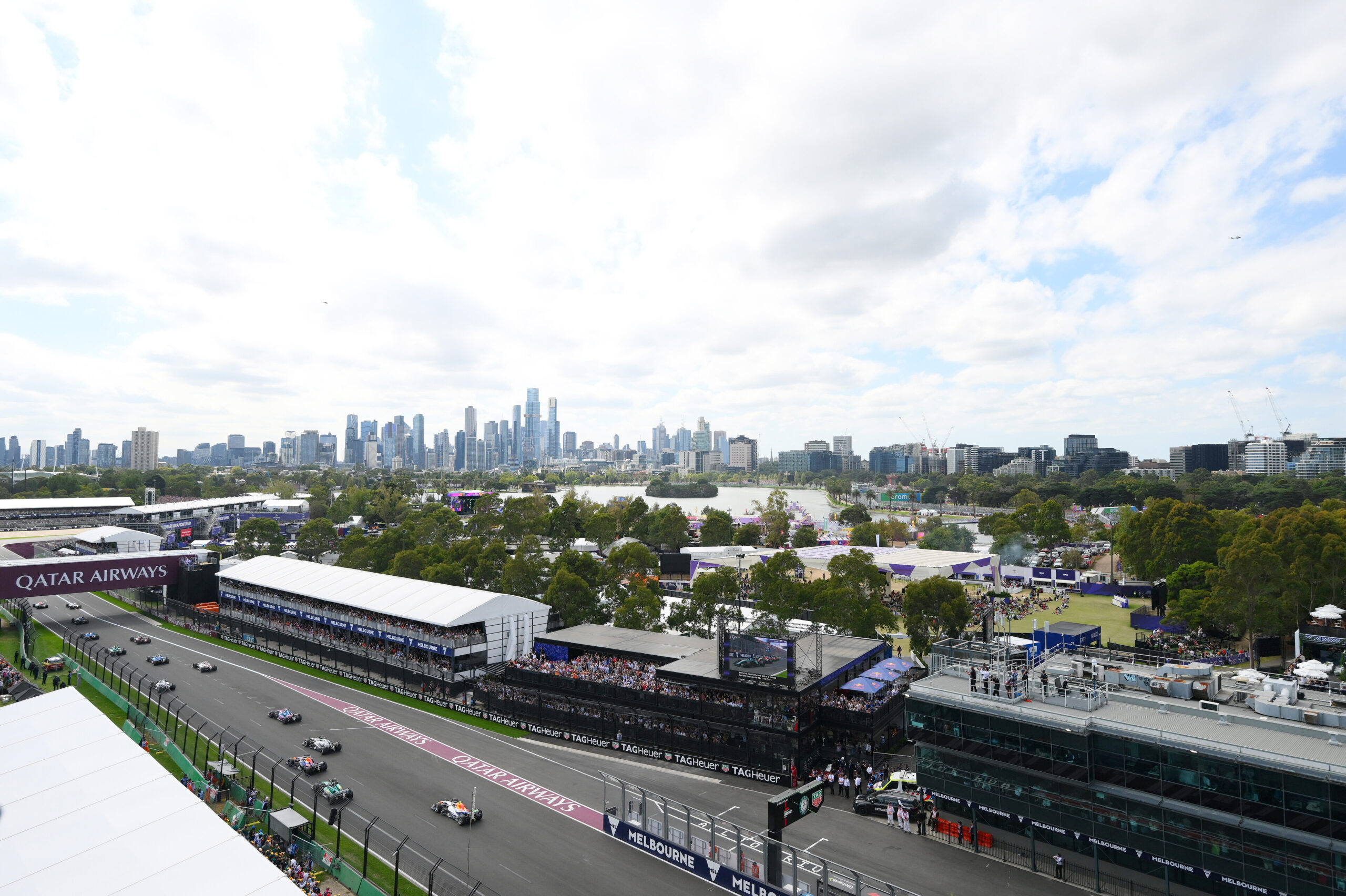
FIA single-seater director Nikolas Tombazis has shed more light on the new start procedure test in Miami and the possibility of F1 teams abusing this safety mechanism to gain an unfair sporting advantage.
Following a series of talks on the contentious 2026 regulations, the FIA, FOM, the OEMs, the power unit manufacturers, and the F1 teams convened for a follow-up technical meeting on April 20 and arrived at a consensus on the initial changes they would implement at the Miami GP.
The maximum permitted energy recharge per lap has been decreased, and the peak super clip power output has been raised to allow more flat-out performance and reduce the amount the drivers are required to lift and coast.
The FIA has introduced similar measures for the races as well—capping the boost power and limiting full motor deployment in certain areas of the tracks to reduce the risks that massive speed differentials between cars currently pose.
In light of the problems several drivers have had with their race starts in the first three rounds of the 2026 season, the FIA will also try out a new low-power start detection system at the Miami International Autodrome this weekend.
If the software detects that a driver has accelerated abnormally slowly off the line and is near stationary on the grid, emergency protocols will kick in to prevent them from becoming a hazard to incoming traffic. This will trigger an automatic MGU-K deployment to help get the car up to speed. Simultaneously, the activation of flashing lights on the rear and sides of the affected vehicle will warn the drivers behind.
Boost will only assist certain cars
In a select media call on Monday, Nikolas Tombazis addressed the upcoming trial for the safety mechanism that will provide an extra power boost to drivers who fail to get a reasonable launch off the line.
Highlighting the difference between a somewhat sluggish getaway and drivers getting stuck or stalling on the grid from the previous rounds, the FIA’s single-seater director explained that automatic MGU-K assistance won’t be a regular occurrence under the new start procedure in F1 since a car’s acceleration speed has to reach a particular threshold to trigger the boost.
“Basically, there’s a detection of how well the car is accelerating a small amount of time after the start. And if that is below a certain threshold, then it kicks in.
“Just to give you reference points, I think it would have intervened this year on two or three occasions total. I don’t think it would have intervened, for example, with Verstappen’s bad start [in China].
“But it would have certainly intervened in Liam Lawson’s start in Australia, no doubt about that. I think the Verstappen start in China would not have been in that threshold of intervention.”
Why the FIA is optimistic that F1 teams won’t abuse the new start procedure
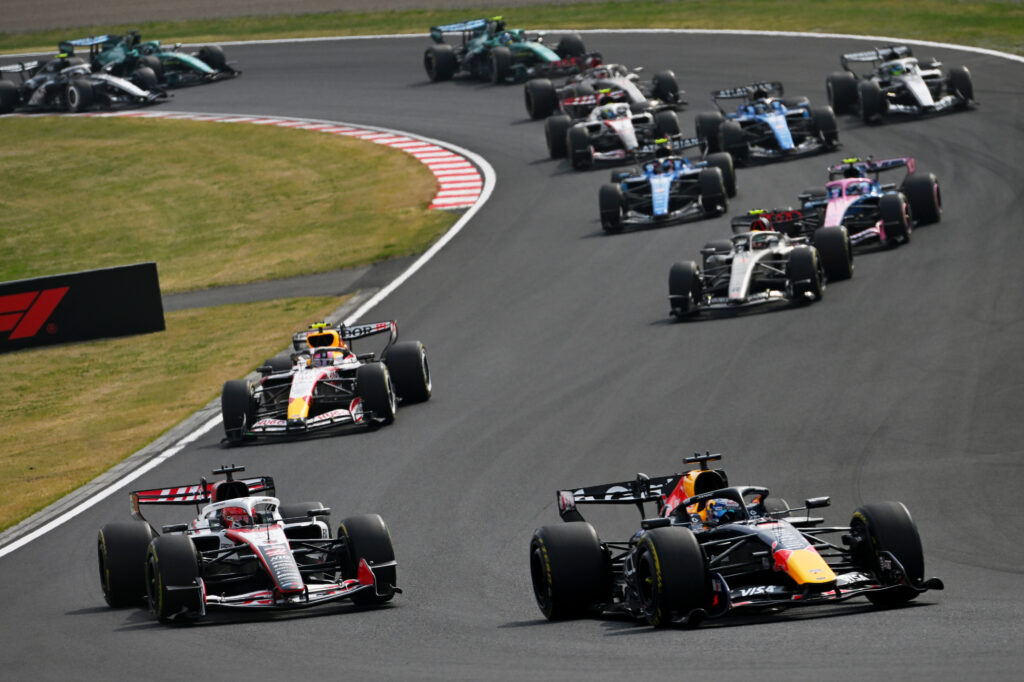
The provision to allow drivers who get away poorly to receive an additional boost from the MGU-K has understandably kindled apprehensions about teams potentially finding avenues to rig the system and make better starts.
However, Nikolas Tombazis maintained that the drivers won’t gain any consequential “sporting advantage” and that the detection system, if activated, would prevent high-speed rear-end collisions and mitigate the impact of disastrous race starts to some extent in 2026.
Furthermore, the Greek engineer offered assurances that the FIA is willing to impose mandatory drive-through penalties if the F1 teams exploit the planned start safety procedure for competitive gains.
“Well, we made it clear that that first of all, this is not supposed to be a mechanism whereby people would be, let’s say, even tempted to do it on purpose, if you know what I mean, to come up better off.
“So, what this would convert is a disastrous start to a bad one. It would not convert a bad one to a good one.
“And indeed, when we first discussed this option with the teams, we proposed that if this mechanism kicked in for any car, they would have to do a drivethrough at the end of lap one, in order to completely discourage any funny games.
“The universal position of all the teams was that when they are in that scenario, they’re already out of their control and definitely in a bad place, and therefore that would not be necessary. And we accepted that.
“But if we see that for whatever reason we’ve missed something, and people started using it for advantage, then we would, of course, intervene. But we don’t think that’s the case.”
Why the FIA won’t implement the new system immediately
While F1’s new start procedure will undergo its first test during the 90-minute practice session this Friday, Nikolas Tombazis revealed that the FIA won’t enable it for the Sprint or Sunday’s race at the 2026 Miami GP.
Stating that the system is still subject to proof testing, the FIA’s single-seater director added that they will monitor the actual race starts in more detail and do more trial runs before officially implementing this new safety protocol later in the season.
“We’ll be monitoring the real starts and see what would have happened, but there will be some starts in the free practice in these races.
“Much as we’ve decided to do that, we want to do a few more trial runs before we introduce it at the start of the race. So, it will not be available in Miami at the start of the race.”