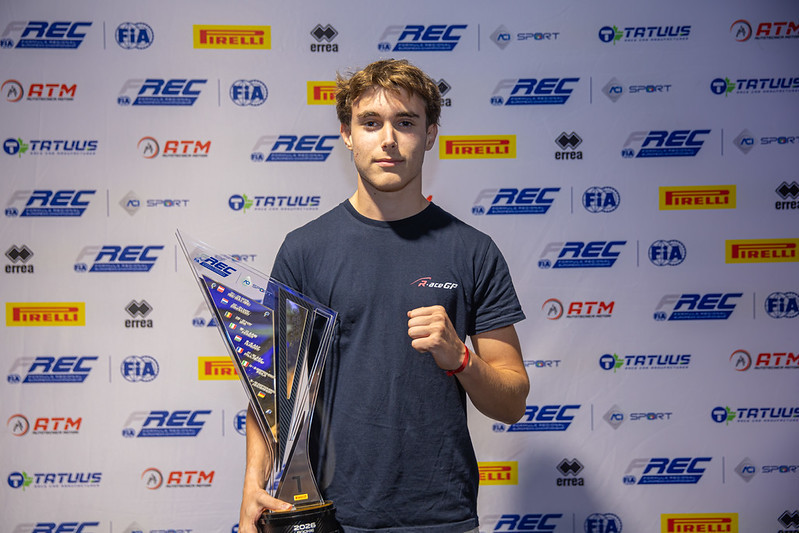
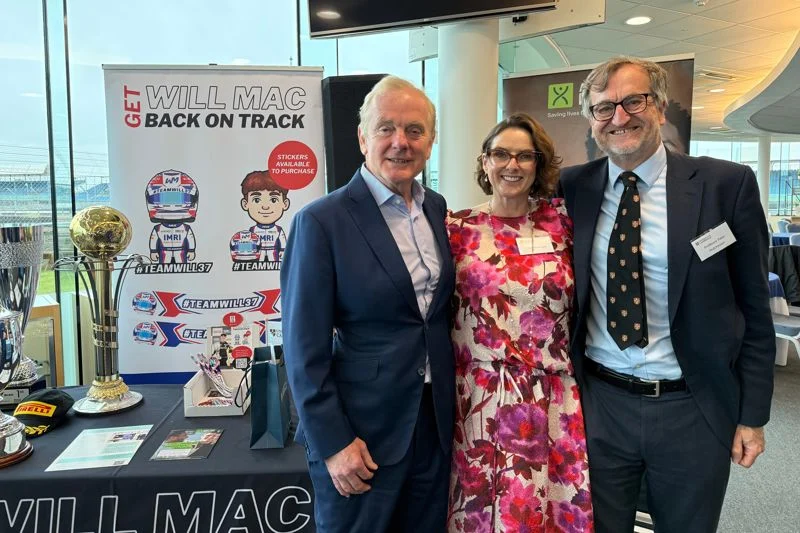
The motorsport community has rallied behind GB3 race winner Will Macintyre after the 18-year-old and his family launched a £6 million fundraising campaign to help establish a groundbreaking Intraoperative Magnetic Resonance Imaging (iMRI) facility at Addenbrooke’s Hospital.
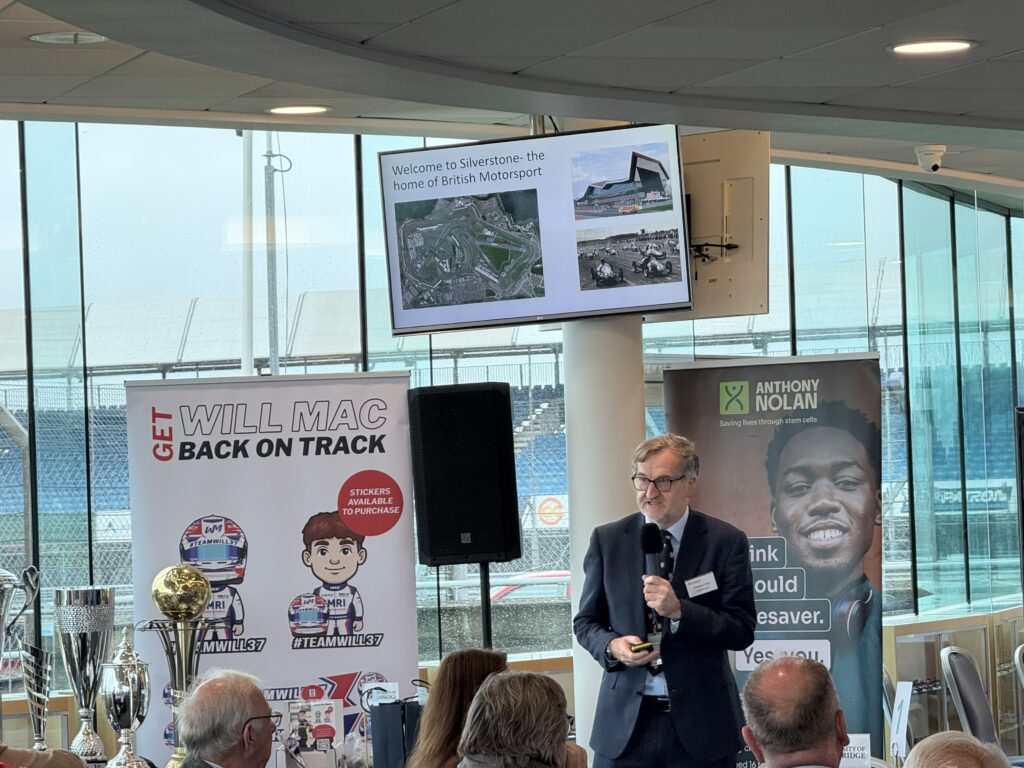
The initiative was unveiled during an event at the British Racing Drivers’ Club clubhouse at Silverstone, but the significance of the campaign extends far beyond the race circuit. For Macintyre, it is deeply personal.
The 18-year-old challenged for the GB3 Championship during his rookie campaign in 2024, where he finished fifth in the final GB3 standings, which was only his second full single-seater campaign. He had three wins plus three podium finishes for Hitech Pulse-Eight.
Then, in 2025, he competed in GB3 again, winning two races and appearing on the podium several times for Elite Motorsport. But his season was cut short following an initial cancer diagnosis in September.
This marked the beginning of a months-long medical battle filled with uncertainty. Endless scans, biopsies and tests followed, but doctors struggled to determine exactly what was wrong. As Macintyre’s condition worsened, repeated investigations produced inconclusive results, delaying vital treatment while he remained in hospital.
What is iMRI?
Intraoperative magnetic resonance imaging (iMRI) is a procedure that creates images of the brain during surgery, which Neurosurgeons rely on to guide them in removing brain tumors and treating other brain related conditions.
The key difference between an MRI and an iMRI lies in when the scan takes place. A traditional MRI is typically used before or after a procedure to assist with diagnosis, treatment planning, or post-operative assessment. An iMRI, however, is performed during surgery, providing surgeons with real-time imaging throughout the procedure.
This real-time capability is crucial in neurosurgery, as it allows surgeons to identify changes if the brain shifts during an operation, distinguish tumour tissue from healthy brain tissue, and protect critical structures. By providing up-to-date images during surgery, iMRI technology can help improve surgical precision and patient outcomes.
The breakthrough in December
A breakthrough eventually came after MotorSport Vision Chief Executive Jonathan Palmer connected Macintyre with Professor Peter Hutchinson, the Chief Medical Officer of the British Grand Prix and Professor of Neurosurgery at the University of Cambridge.
After being admitted to Addenbrooke’s Hospital in December and undergoing multiple brain and lung biopsies alongside further testing, Macintyre was diagnosed with X-linked lymphoproliferative syndrome (XLP1), an exceptionally rare disorder with only 15 known sufferers worldwide.
His fight is far from over. The next phase of treatment will require a stem cell transplant, with a matching donor still needed.
The iMRI facility
Now, while continuing his recovery, Macintyre is determined to help ensure future patients do not have to endure the same lengthy and difficult journey.
The proposed iMRI facility, which would form part of the new Cambridge Neurological Advanced Therapies Treatment Centre, would allow patients to undergo high-resolution MRI scans while still in surgery. Doctors would be able to access real-time imaging, accelerating diagnoses, reducing the need for repeat procedures and improving treatment outcomes.
For someone who has spent the better part of a year moving between hospital wards, operating theatres and scanning rooms, the impact of such technology is impossible for Macintyre to ignore.
“Had it been available to me, the iMRI would have reduced the need for endless cycles of scans and surgeries,” Macintyre said from Addenbrooke’s Hospital, as he was unable to attend the Silverstone event in person. “I’ve experienced multiple MRI scans already, and it’s a lot of effort for all people to receive.
“With an iMRI it would have been done much more quickly. Results would have been quicker and we would have been able to figure out exactly what was wrong with me. Forming a national research centre will deliver the next era of treatments, including for cases like mine, which are difficult to diagnose and to treat.”
Introducing new technology and equipment to help save lives
For Professor Hutchinson, Macintyre’s case has left a lasting impression. “Meeting Will, who is one of the most determined and amazing people that I’ve ever met, has been incredible in terms of what I’ve learned from him and what we need to do next,” Hutchinson said.
“What Will has is a very rare condition, but through a number of processes including scans and some brain operations and biopsies, we’ve been able to establish what is wrong, and hopefully we will be able to implement the best treatment to get him back to where he was before. That would mean the world to us.
“Part of our involvement with Will has been trying to introduce some new technology and equipment in a really special operating theatre, where we combine a magnetic resonance scanner with an operating theatre. This will revolutionise the treatment of conditions that Will has, and [for] others, and we’re currently trying to raise £6 million through the University of Cambridge fundraising to try and help us reach that goal.”
While doctors worked tirelessly to find answers, Macintyre’s family watched him endure months of procedures, uncertainty and treatment. The fundraising campaign created by the Macintyre family aims to accelerate the development of the proposed facility, which would form part of the new Cambridge Neurological Advanced Therapies Treatment Centre.
Macintyre’s family endorses iMRI project
At the event, Macintyre’s mother, Sian, spoke about the reality of the past eight months.
“Since September 2025, Will has spent eight months in hospital with countless appointments, pre-ops, scans, post-op scans, and more MRIs. All of which could have been streamlined into one simple process using iMRI technology” she said.
“Through Will’s unique rapport with Jonathan Palmer, we were connected with Professor Peter Hutchinson. Or as Will calls him, ‘my lifesaver’.
“Blood tests, doctors, consultants, European renowned lymphoma vasculitis specialists have all tested Will. He has had genetic sequencing, triangulation genetic testing and six cycles of chemotherapy. Motorsport is built on courage, precision and teamwork, and those same qualities drive progress and success in science and medicine.
“By telling you Will’s story, we are giving the platform for Professor Peter Hutchinson and the iMRI project a new track, new fans and amazingly, pledges for this project have already been made.”
Through the fundraising campaign, the Macintyre family hopes to raise awareness not only of Will’s condition but also of the life-changing potential of iMRI technology for future patients.
An extremely rare condition
MSV Chief Executive Jonathan Palmer has watched Macintyre’s journey unfold from the beginning and praised the teenager’s remarkable attitude: “Will has been incredibly stoic and positive throughout his ordeal, which is quite amazing.
“The rarity and obscurity of his condition has made accurate diagnosis itself an enormous challenge for his outstanding medical team, led by Peter Hutchinson, but at least now there is an identified direction for treatment with a stem cell transplant. It’s a long road ahead, but we all admire Will’s determination so much.”
That determination has inspired support from across the motorsport world.
#TeamWill37
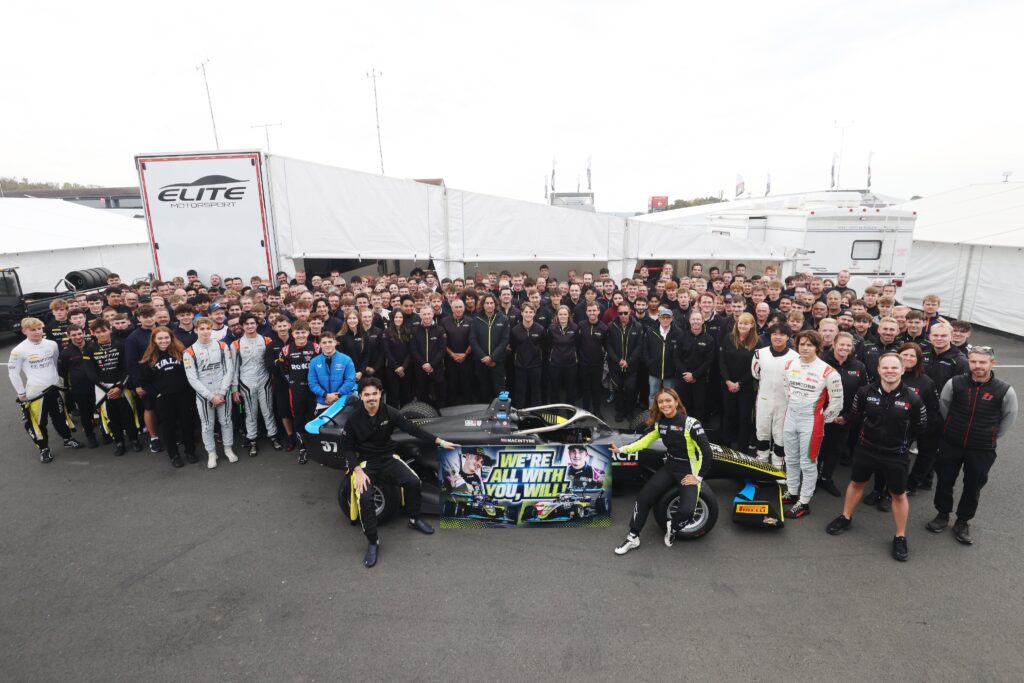
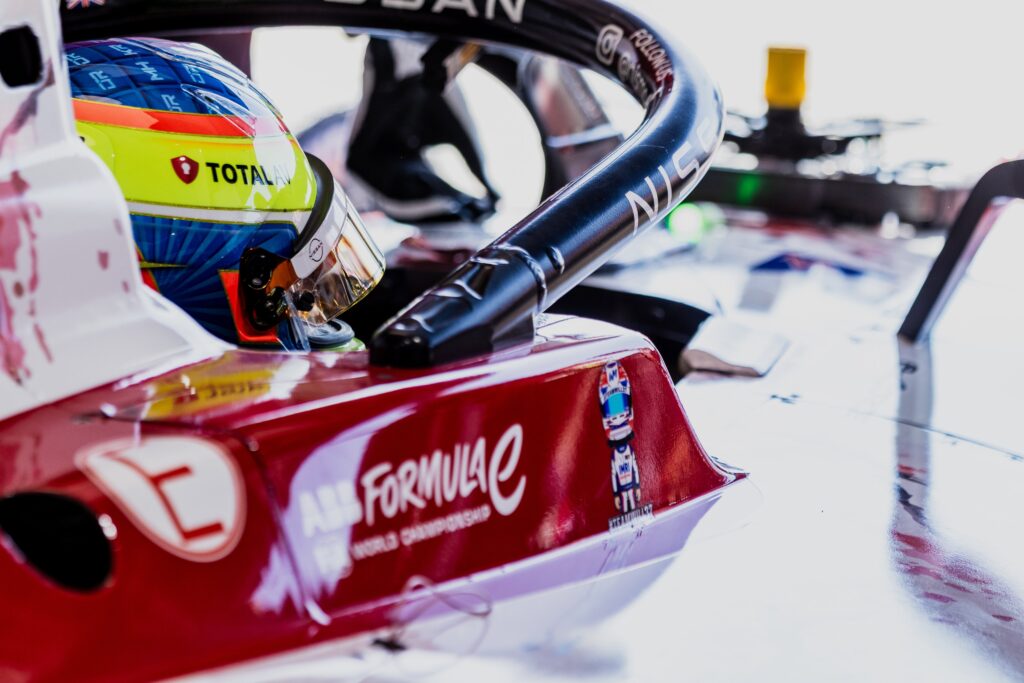
Cars competing in championships around the globe now carry #TeamWill37 stickers, while drivers, teams, officials and fans have united behind one of the sport’s brightest young talents.
Among them is Sky Sports F1 commentator David Croft, who first met Macintyre at a local gym and has since become a passionate supporter of the fundraising campaign.
“This was a young, funny, bright kid that has the rest of his life ahead of him, and an amazing talent on the track as well, and suddenly everything changed overnight,” Croft commented.
“One thing I’ve really admired in getting to know Will more is how positive he’s been, and how he has accepted that ‘right, life is really tough at the minute, but I can be quite positive about it, and it doesn’t stop me being interested in everything that’s going on as well.
“Will is going through a tough time, and is battling away, but he is not alone, and the motorsport community has got behind Will from not just the GB3 world but the world of F1, F2 and F3, karting too. His battle on the track with that motorsport family is now replicated in the real world with a different battle and a more important battle.”
How to get involved and support
Donations can be made via the University of Cambridge website or by purchasing a sticker from his website.
As fundraising efforts continue, Macintyre is also seeking a stem cell donor to give him the best possible chance of recovery. With only a one-in-200 chance of finding a matching donor, people aged between 16 and 30 are being encouraged to join the stem cell register through Anthony Nolan, with the process beginning with a simple cheek swab.
The fundraising campaign aims not only to support Macintyre’s recovery but also to help deliver a facility that could transform the diagnosis and treatment of patients facing similarly complex neurological conditions in the future.