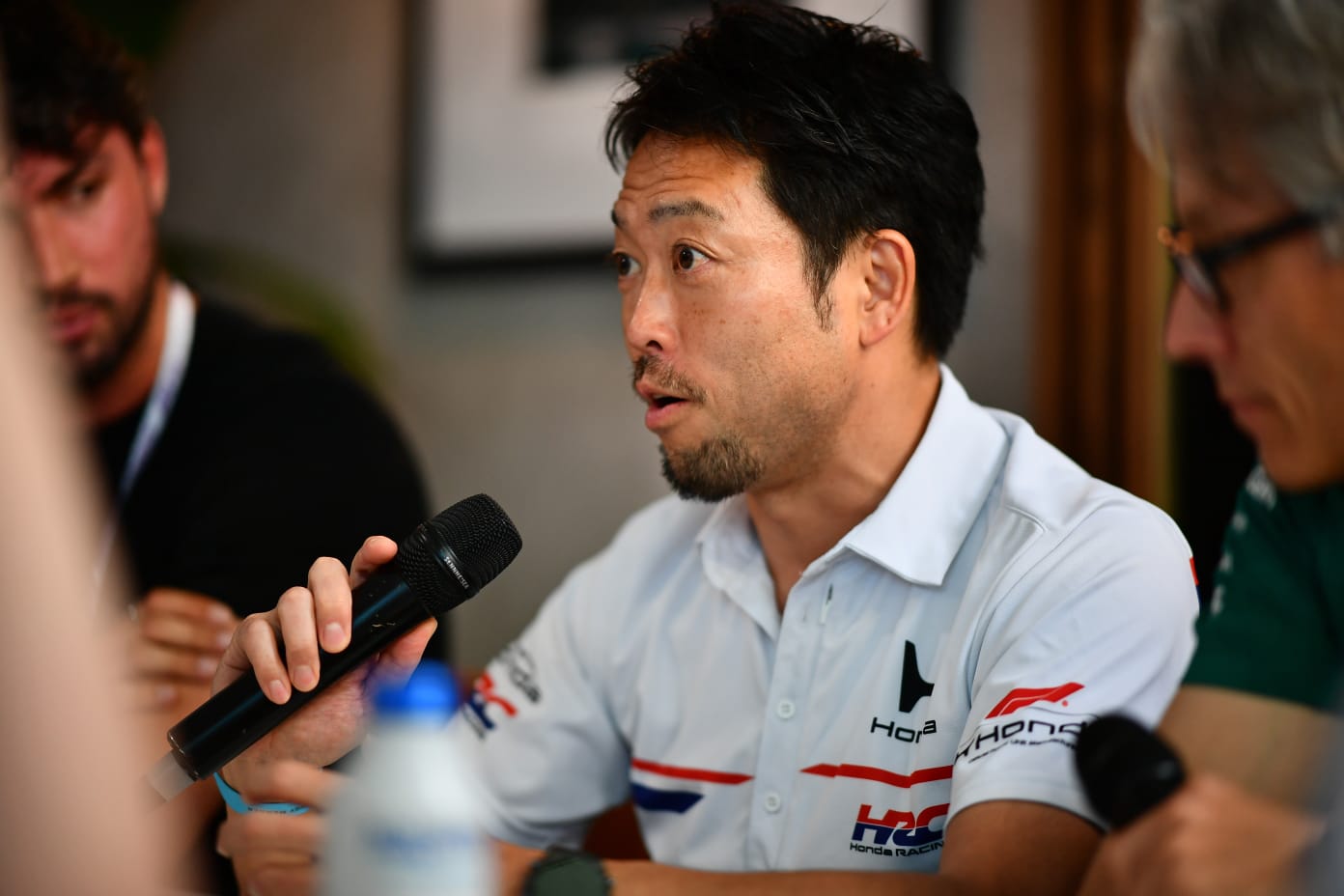
Honda’s trackside general manager and chief engineer, Shintaro Orihara, has opened up about the improvements the Aston Martin F1 team made in Miami, the challenges they expect to encounter at the Circuit Gilles Villeneuve, and the targets they have set for the 2026 Canadian GP Sprint weekend.
Despite not bringing any official upgrades to the fourth round of the 2026 F1 season, both drivers managed to bring their cars home for the first time. While Fernando Alonso crossed the line in P15, Lance Stroll took the chequered flag in seventeenth place.
What Honda achieved in Miami
Previewing the 2026 Canadian GP weekend, Shintaro Orihara revealed that they took a step forward in Miami when it comes to remedying the AMR26’s debilitating vibrations and overall engine reliability problem.
Orihara also stated that Honda and Aston Martin utilised the previous round to gain a better understanding of the complex energy management system, as the 2026 F1 regulations underwent certain revisions ahead of the race weekend in Miami. Moreover, he confirmed that they would carry on with their explorations in Canada.
“At the Miami Grand Prix, we confirmed our battery vibration improvements and our overall power unit reliability.
“It was also a key opportunity to learn on the energy management side under the updated 2026 regulations, and this will continue in Canada.”
Orihara on what their goals are for the 2026 Canadian GP weekend
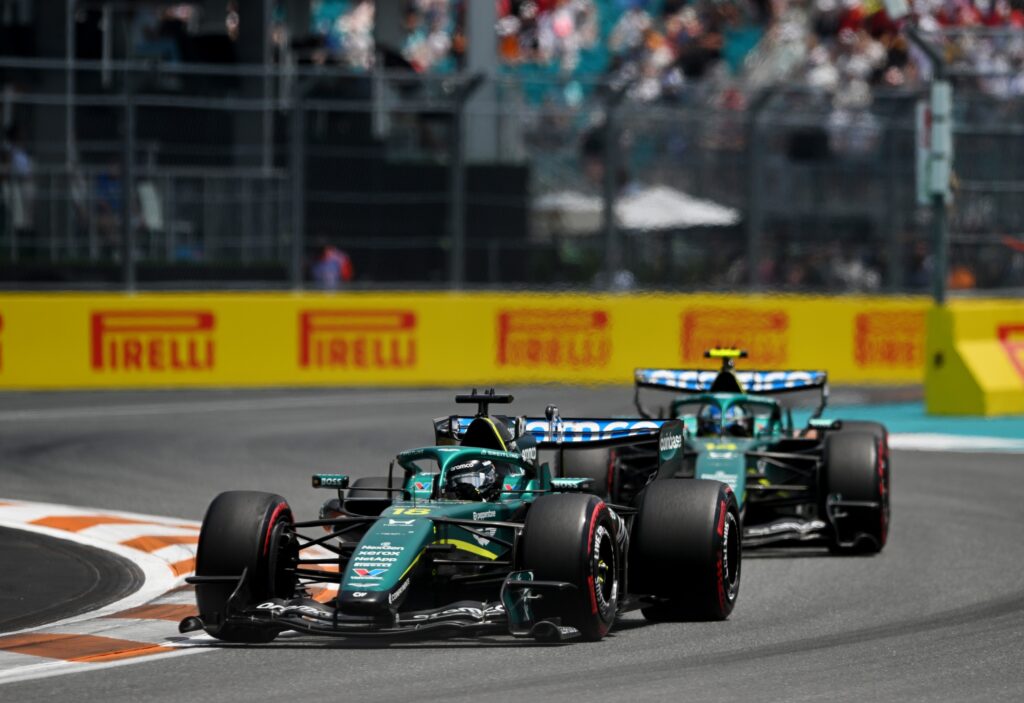
With Aston Martin gearing up for the upcoming F1 races on Stroll’s home turf, Shintaro Orihara elaborated on what power unit supplier Honda’s objectives are for the 2026 Canadian GP Sprint weekend.
Disclosing that they seek to improve the AMR26’s drivability and formulate more efficient deployment strategies, the Japanese engineer remarked that enabling the drivers to push more in the corners would inevitably lead to tangible performance gains.
“In Montreal, which is Lance’s [Stroll] home race, we will focus on enhancing the driveability and our energy management strategy to support the drivers in building more confidence.
“In fact, this is an important target of our race weekend. If we can give more confidence to the drivers in entering the corners faster and carrying more speed, then we unlock lap time.”
The particular problems they would face at the Circuit Gilles Villeneuve
Emphasising how the hour-long free practice session on Friday would play a crucial role in setting the tone for the rest of the F1 Sprint weekend, Shintaro Orihara also underlined the challenges the unique traits of the Circuit Gilles Villeneuve would pose.
The 4.361 km track on Notre Dame Island in Montreal features the impressively long Casino Straight—stretching between the Turn 10 hairpin and the last chicane. Thus, Honda’s trackside general manager drew attention to how demanding the energy requirements would be in the final sector of the Circuit Gilles Villeneuve.
Noting that the circuit also boasts a couple of rather slow-speed sections, Orihara furthermore pondered the impact of potentially cooler temperatures and low-grip conditions on the optimisation of the hybrid system and overall drivability during the 2026 Canadian GP weekend.
“Canada is another new Sprint race format, making FP1 very important. At this event, it’s the usual 60-minutes, so it’s crucial to optimise everything during this session.
“Another characteristic is that the circuit has a long straight, so it’s vital to adjust energy deployment in this section of the lap. We also have a slow speed corner section before the back straight, but also Turns 1 and 2.
“Additionally, we have to consider possible wet conditions and cooler temperatures. This can be tricky for grip, and driveability becomes even more important with a combination of MGU-K delivery, accuracy and torque delivery accuracy.”