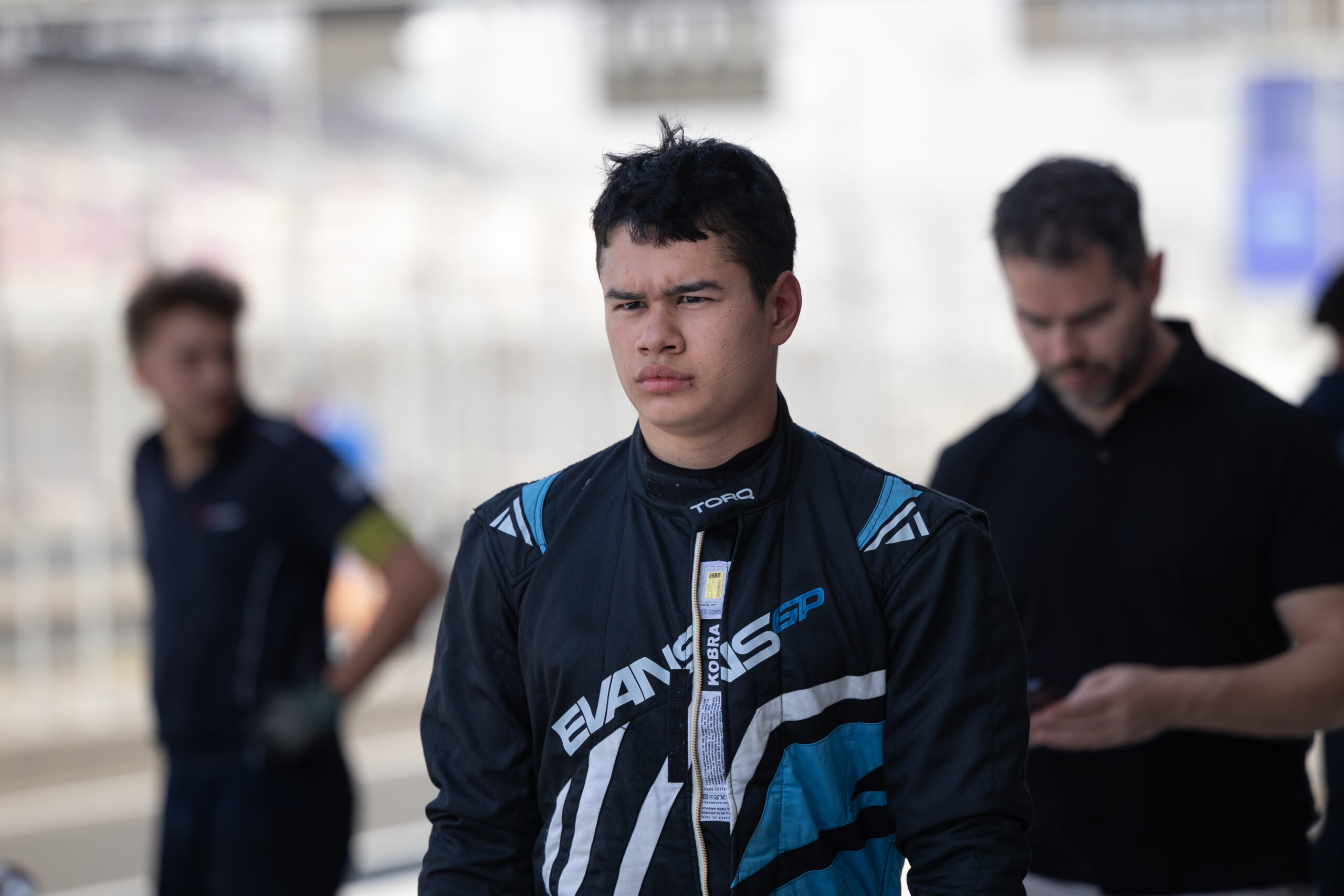
For Rafael Vaessen, building a career in motorsport means far more than turning up at the circuit and delivering on race day.
While fans often see results, timing screens, and on-track battles, much of a young driver’s development happens away from public view. Physical training, simulator work, preparation, discipline, and communication all form part of the process. For Vaessen, those details have become central to his progression as he continues to move through cars.
In an exclusive interview with Pit Debrief, Vaessen reflected on the work that happens between race weekends, the discipline he has developed, the structure of a typical event, and the personal milestones that matter alongside results.
Behind the results: Vaessen on what people misunderstand about racing
From the outside, motorsport can look simple. A driver arrives at the track, gets in the car, and competes. However, Vaessen believes that view misses most of the work required to build a career at this level.
For him, the biggest misconception is the idea that performance begins and ends on a race weekend. The races themselves may be the most visible part of the job, but he sees them as only a small part of the overall workload.
“Okay, so I would say people think you just rock up to the race weekend and you just win. That’s it. Like they think Max Verstappen just pulls up, wears a suit and wins. Because actually, the racing is only like 10% of the work. And then what do you do the rest of the week?
Between race weekends: Filling the gaps with preparation
That question is central to Vaessen’s approach. With long breaks often built into junior single-seater calendars, the time between events becomes part of the work rather than time away from it.
For Vaessen, those gaps are filled with training, simulator work, and physical preparation. His routine is built around making sure he arrives at the next race weekend ready to perform, rather than using the event itself to catch up.
“If you know the European season for Italian F4, FREC or any other season, there are always big breaks, like three weeks. For me, at least, I am training six days a week physically. And I spend every day, I would say, three to four hours on the simulator.
Simulator work forms a central part of that routine. For Vaessen, it is not simply an extra tool, but one of the reasons he feels he has been able to make progress in cars. Alongside physical training, he uses the simulator to keep building the habits and awareness needed before he returns to the real car.
“That’s just my schedule: simulator and the gym, basically I have a PT as well so… and I do my own runs to make sure I am physically ready, and driving ready, for the simulator. So, yeah. I mean, iRacing, it’s been a big, a big tool for me to get to where I am for cars, because without the sim, I don’t think I would have been near where I am today.
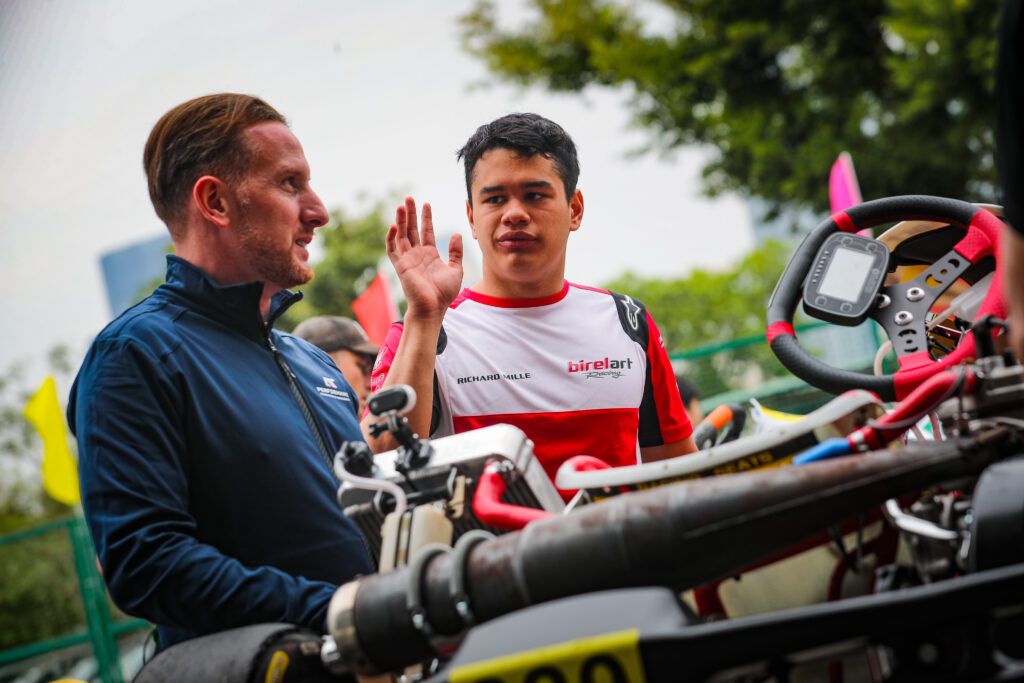
Physical preparation: Why an F4 car still demands work
For Vaessen, the unseen work behind racing comes down largely to simulator preparation and physical training. Both matter because, as he points out, even an F4 car carries a physical demand that people outside the sport may underestimate.
That preparation challenges the idea that driving a single-seater is simply a matter of getting into the car and turning laps.
“So yeah, definitely the misunderstood thing is the work put behind the scenes, meaning simulator work, just physical training. Because a lot of people think just getting a car is easy and driving in circles, but the physical demand is still quite heavy, even for an F4 car.
Looking up the ladder: Building for the cars ahead
As Vaessen gains experience in faster machinery, he also sees how much physical preparation matters for the categories ahead. His recent experience in a Formula Regional car gave him a clearer sense of the strength required as he moves up the ladder.
“So, I recently drove the Formula Regional car. And that, that thing still has quite heavy steering. So, I can’t imagine what F2 feels like, because F2 doesn’t have any power steering. And this is only FREC, so I can’t imagine F2.
Rather than preparing only for the car he currently drives, Vaessen already looks further ahead. His training is aimed at making each future step feel more manageable when it comes.
“So I’m always building myself physically. I’m trying to prepare myself physically for F2 so that when I get in the car, it’s like nothing for me. For me, the F4 car right now is quite easy physically. I think the F3 car is probably my max right now. The F2 car is difficult right now.
That long-term approach reflects the way Vaessen views development. The work away from the track is not separate from performance; it forms part of the same progression.
“But yeah, that’s behind the scenes. I would say the work on a daily, daily basis that you have to put in, in the simulator physically, people don’t really see that as well.
Coaching others: Learning through teaching
Vaessen’s development also extends beyond his own driving. At his home track, he coaches other drivers, including newer and current national-level competitors. That role gives him another way to think about driving, because explaining something clearly requires a deeper understanding of it.
For Vaessen, coaching does not only help those drivers improve. It also sharpens his own understanding of technique, communication, and racecraft.
“As for me, I coach other drivers, like new drivers and current drivers and the national level at my home track. So that also helps me a lot to learn more things about myself and learn my things about other people. Because my logic is if you can coach another driver to do something well, that means you understand it. And you can apply it to your own driving. So, yeah, I think, those are the main things that people don’t know about what you’re doing when you’re not racing. That’s for sure.”
In that sense, Vaessen treats development as something active even when he is not racing. Training, simulator work, and coaching all feed back into the same goal: becoming more complete as a driver.
Discipline and balance: Vaessen on focusing fully on racing
While motorsport demands sacrifice, Vaessen believes his current situation allows him to focus fully on racing. Having completed school and national service, he now has the time to dedicate himself completely to improvement.
That focus gives structure to his everyday life. Rather than splitting attention between school, service, and racing, Vaessen can now place his development as a driver at the centre of his routine.
“I’m not too sure because I’m definitely in a better position to focus just on racing because I finished school already and I finished my service. So I can currently focus a hundred percent of my time just on how to get better as a driver, just focusing on racing.
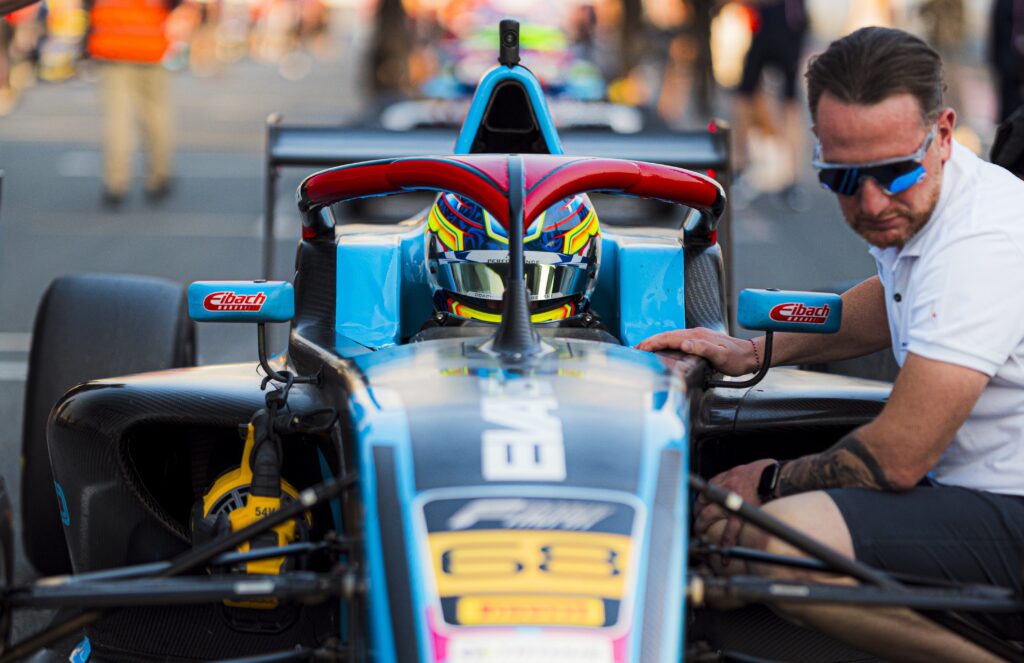
Growing into discipline: The impact of national service
However, that focus did not come without change. Vaessen acknowledges that discipline has played a major role in his development, especially compared to when he was younger.
“I wouldn’t say I’m in a difficult position or I would say, yes, like getting to where I am was definitely hard work and dedication. Definitely a lot of discipline because I wasn’t the most consistent human in the world when I was younger.
National service became an important part of that shift. The habits Vaessen developed there now carry into his training routine, particularly in the gym.
“So, I would say discipline has been a big change, especially. I learned that in the national service — the army, they really kicked it into me — and now when I go to the gym, discipline-wise, I will not miss a day because I do not want to go back to just missing it because I don’t want to go.
For Vaessen, that change now shapes how he approaches both racing and daily life. The discipline he developed has become one of the clearest differences between the driver he is now and the person he was when he was younger.
“So definitely for me in terms of the question, discipline has been the biggest change from when I was younger and growing up. It’s helped a lot for me at least.
A healthy balance: Racing, family, and time away
Although Vaessen’s focus remains firmly on racing, he also recognises the importance of balance. His routine includes training and sim work, but it also leaves room for his girlfriend, friends, and family.
That balance appears to come from structure rather than from stepping away entirely. Vaessen still keeps key parts of his routine in place, even when he takes time away from racing work.
“I would just say discipline, just my improvement in the last couple of years. I don’t think I’m in a difficult position with balancing stuff.
On days when he spends time with his girlfriend, Vaessen still makes room for the gym. On other days, he returns to his usual rhythm of simulator work, review, and time with the people close to him.
“I mean, I have a girlfriend, but that’s quite easy to balance. It’s just one thing. So I spend time with her on the days when she’s off school, when she’s not at university. So, I just, when those days are happening, I take a break from the racing and do my gym, and that’s it. And then the days where she’s schooling and university, I will do my normal things like sim race review, and maybe just spend time with your friends for sure. That’s needed and family.”
For Vaessen, that structure works. It gives him space to keep improving while still maintaining the support system around him.
Race-weekend preparation: Starting with the small details
Vaessen’s attention to detail becomes especially clear when he explains how a typical race weekend begins. Long before he gets into the car, preparation starts with something simple but important: making sure he has everything he needs.
That habit may seem basic, but Vaessen sees it as part of a wider mindset. A missing item can create stress before the weekend has properly started, and for a driver already managing pressure, that extra distraction matters.
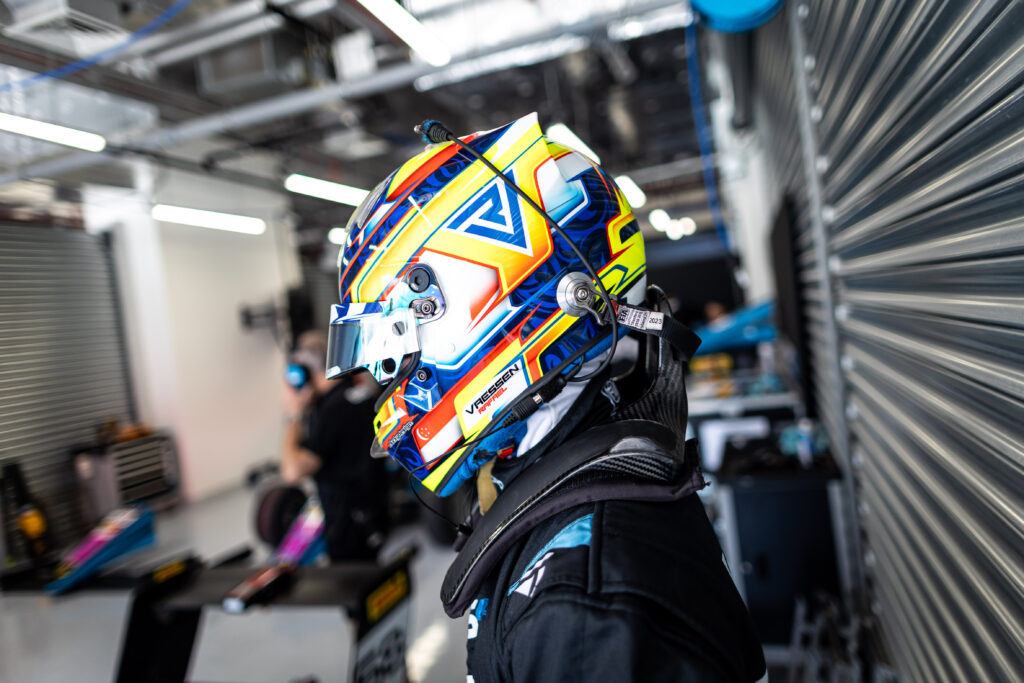
“Okay. So for me, I always start by packing my stuff. I will double, triple-check I have everything: the suit, the gloves, the helmet, the radio. Because it won’t be a good look if I arrive at the track and I’m missing something.
For Vaessen, preparation also means getting the basics right before any driving begins. Being on time, arriving properly, and starting the weekend in control all form part of the same approach. If the easiest details go wrong, they can affect the rest of the process.
“And Andrea wouldn’t like that. So it’s one of the things where I said, if you start wrong, even starting with the easiest thing wrong, you can’t imagine what happens in the car. So you got to get those things right, from being on time for your flight, arriving at the track.
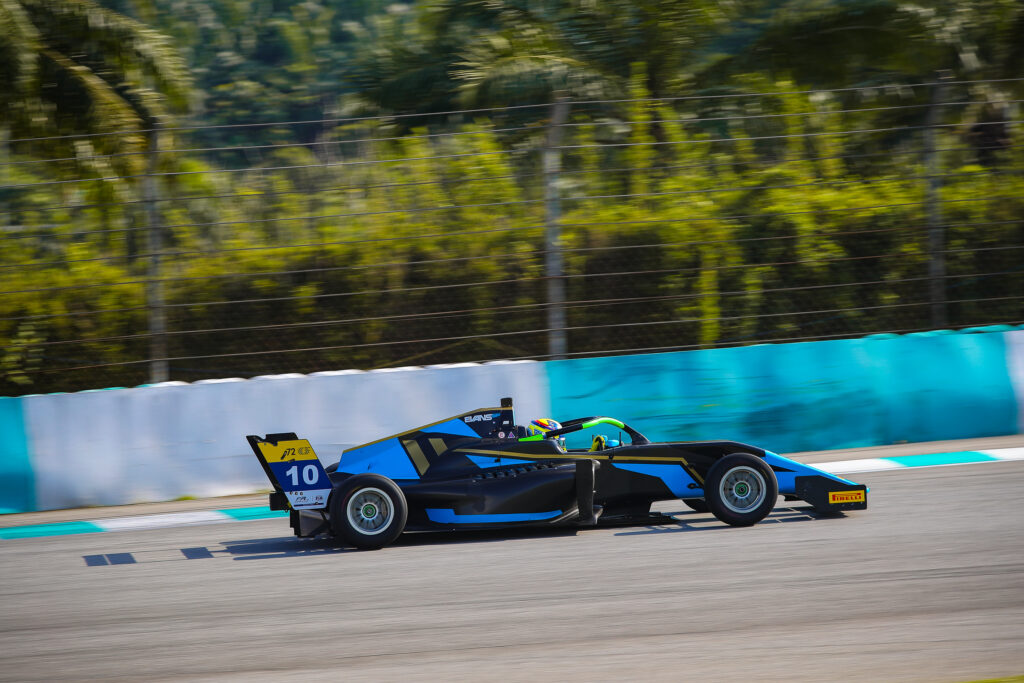
Before the sessions: Track walks, video, and planning
From there, the weekend begins to take shape through preparation at the circuit. Before the competitive sessions begin, Vaessen wants to understand the track, the weather, the braking points, and the tyre strategy.
That early work gives him a clearer picture of what to expect once he gets in the car. It also means the weekend starts before the first timed lap.
“So normally I would arrive at the race weekend a day before the track walk. So, like, let’s say if it’s an F2 weekend, I would arrive on Wednesday. Then on Thursday, do the track walk, talk about the tracks, watch a video, ask for braking points, ask for what the weather’s like this week, ask for tyre strategy for the weekend.
Friday work: Building pace through feedback
Once Practice begins, Vaessen does not focus only on the timing screen. Free Practice gives him a chance to understand where he stands, identify the biggest areas for improvement, and begin working with the team.
That approach allows him to treat the first run as a starting point rather than a final judgement. Instead of becoming too focused on the lap time immediately, he uses the session to gather information.
“Then on Friday, it’ll be free practise. So I’ll go into free practise not caring what my time is at the end of the session, because everyone starts somewhere. So it can be two seconds off, one second off.
After each run, Vaessen looks at the gaps, listens to feedback, and works with Andrea Todisco and the engineers to make the next step. The process combines what he feels in the car with what the team sees from the outside and on the onboard.
“Then, as I see my pace, I’ll come in, talk to the engineers, see what my biggest improvement is, what I need to improve on. Andrea will put his, he will say something to me because he’ll be around the track. He’ll be watching around the track, seeing corners that are crucial in the lap. He will say things to me, give me a pep talk on what I can do to try and prove something. He’ll watch the onboard as well. Go out for the next session, for example. Try that.
Finding the balance: When improvement takes longer
If the improvement does not come immediately, the conversation becomes more detailed. Vaessen then works through the reasons behind the struggle, including what he feels in the car and why a certain corner or technique may not yet be working.
That process also links directly to setup. In F4, Vaessen sees car balance as an important part of the weekend, especially because understeer can make the car harder to manage.
“If I still don’t get it right, we’ll have a longer talk about how to do it. Then I’ll start to think about ways of bigger changes and explain why I can’t do it, why I struggle with it. Because the setup is quite a big deal in F4, because the cars are very heavy and a big factor in F4 is understeer. And you know understeer is terrible for cars. So finding that right balance is very important on Friday.
Qualifying focus: Calm, preparation, and support
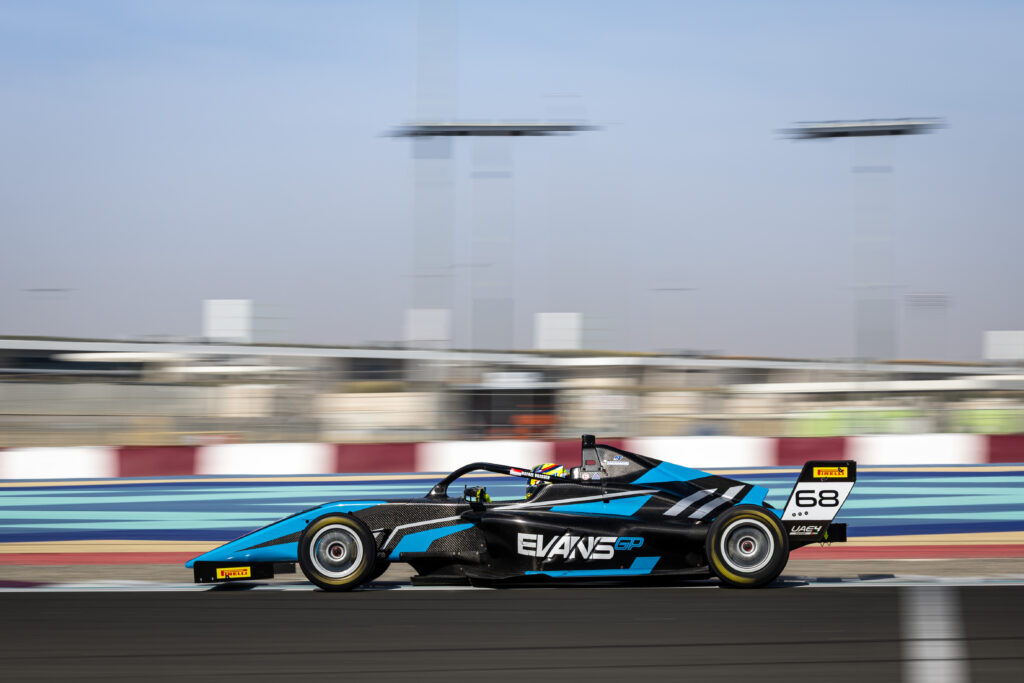
By Saturday, the focus shifts towards Qualifying. Vaessen builds his preparation around arriving early, warming up properly, and getting mentally ready before the session. That preparation includes reaction work, neck work, and arm warm-ups. For Vaessen, those details reflect the physical demands of the car even before the session begins.
“Then come Saturday, I will always arrive at the track one and a half hours before because it’s Qualifying normally. Get ready 30 minutes before. I will warm up with Andrea: reaction time, a little bit of neck and my arms because there’s no power steering. So I think the arms are still important.
Before Qualifying, Todisco helps him stay calm and focused. At the same time, his father plays a different but equally important role by reminding him to enjoy the moment.
“Then start Qualifying. Andrea will always give me a pep talk, making sure I’m calm. My dad will always be there. He won’t say anything to me. He’ll just make sure to remember to have fun because that’s the most important thing.
That balance between expectation and enjoyment matters to Vaessen. The team wants performance, but his father helps keep the moment grounded and removes one source of pressure.
“Andrea and the team, they have expectations, obviously. But my dad is the guy to not worry about. So I have one thing less to worry about, just to have fun and enjoy myself.
After Qualifying: Resetting and planning the race
Once Qualifying ends, Vaessen adjusts his mindset depending on the result. A strong session brings calm, while a more difficult one requires him to reset and think carefully about the race ahead.
That response connects back to the mental lessons he has already discussed. If Qualifying does not go to plan, the priority becomes moving forward rather than carrying the disappointment into the race.
“Then Qualifying happens. Come in, see what my position is. If it’s a good Qualifying, I’ll be a lot more relaxed, obviously. If it’s an okay or bad Qualifying, I try to reset and focus on where I can overtake and what my strategy is for the race.
Race execution: Practising under pressure
Even during the race procedures themselves, Vaessen looks for ways to improve. With clutch control still an area of focus, he uses the formation lap as another opportunity to practise.
That detail reflects the wider theme of Vaessen’s approach. Development does not only happen in big steps or after major debriefs. It also comes through small repetitions across a weekend.
“Then on all three races, I always try to practise my clutch on the formation lap because I’m still not the greatest at clutch control in terms of release. Still not the best, so I’m still trying to work on that because you can only practise it so many times, so you just got to do it.
Debriefs and feedback: Learning after the race
After the racing ends, the work continues through debriefs with drivers and engineers. Those discussions help Vaessen understand what improved, what did not, and what he can take into the next event.
For him, the debrief is part of the same development process as the sessions themselves. It gives him a chance to connect feedback on the car with feedback on his own performance.
“Then after the race weekend, there will always be a debrief with all the drivers and all the engineers to see what we could have done better, opinions and feedback on the car, on myself, and what I think I can improve as a driver.
Closing the weekend: Details until the end
Even the end of the weekend still demands attention. Vaessen returns to the same focus on details that began before he arrived at the track, from speaking with mechanics and drivers to packing properly before leaving.
That final stage matters because the weekend does not simply end when the chequered flag falls. It ends when the work is reviewed, the relationships around the team are maintained, and the practical details are handled properly.
“And then we just go around talking to the mechanics, talking to the drivers before we leave and make sure I have a good dinner and pack up, make sure I don’t forget anything again because small things against small things are very important. Small details arriving at the track, making sure everything is A-okay.
A race weekend, for Vaessen, does not consist only of the minutes spent on track. It becomes a full working day, built around preparation, performance, analysis, and recovery.
“It’s always 8 a.m. till 6 p.m. at the track every day.”
Avoiding distractions: Why preparation matters
Vaessen’s focus on packing and preparation also comes from a practical understanding of pressure. Drivers already manage a large mental load during a race weekend, so forgetting equipment only adds another unnecessary concern.
A missing item may seem small from the outside, but for a driver, it can create another distraction at the exact moment they need to focus on performance.
“If you forget something, it gives you another thing to think about. Drivers, I think, already think about a lot when it comes to a race weekend. So imagine you forget your radio kit and have to worry about something else, and then that’s added on, and it can really spiral and go wrong for the weekend. Just because you forgot something.”
For Vaessen, preparation therefore acts as a form of control. By handling small details properly, he removes distractions and gives himself a better chance to focus on driving.
Defining success: Improvement beyond results
Although podiums and points remain important, Vaessen measures success more broadly. For him, a strong season does not depend only on final results. It also depends on whether he keeps improving from one race to the next.
That improvement can take many forms. It may involve communication with engineers, conversations with Todisco, race starts, overtaking, or the way he handles himself as a person and as a driver.
“For me, as long as I get better every single race — as a person or as a driver, doesn’t matter to me. As long as I’m better than the previous day, meaning how I communicate with my engineers, how I talk to Andrea, how I do race starts, how I overtake.
That mindset reflects Vaessen’s wider approach to development. Every part of a weekend becomes an area where progress matters.
“As long as I improve every race, that only means I’m going up. And that’s the goal for me: to go up in the ladder.
Because of that, standing still represents one of the things Vaessen wants to avoid most. Progress, even in small steps, remains central to how he evaluates his season.
“So obviously, it’s important for me to not be stale and stay the same for a period of time. It’s important for me to keep on improving and moving forward, not moving back. Definitely, that’s the biggest thing.
A personal measure: Making racing meaningful for family
Beyond his own development, Vaessen also sees success through a personal lens. His father’s enjoyment matters to him, especially given the role he has played in Vaessen’s racing journey.
For Vaessen, a successful season therefore includes both improvement and shared enjoyment. Racing remains his pursuit, but it also carries meaning because of the people who support him.
“Also, making sure my dad has a good time watching me race. Because he’s a big motorsport fan, and he always has a smile on his face when he’s at the track compared to when he’s at home. So definitely making sure that he’s having a good time watching me drive. Those two things.”
For Vaessen, the unseen work behind racing includes discipline, preparation, training, and long days at the track. Yet it also includes the people who make that work meaningful. As he continues to move through cars, his focus remains clear: keep improving, keep learning, and make each step count.