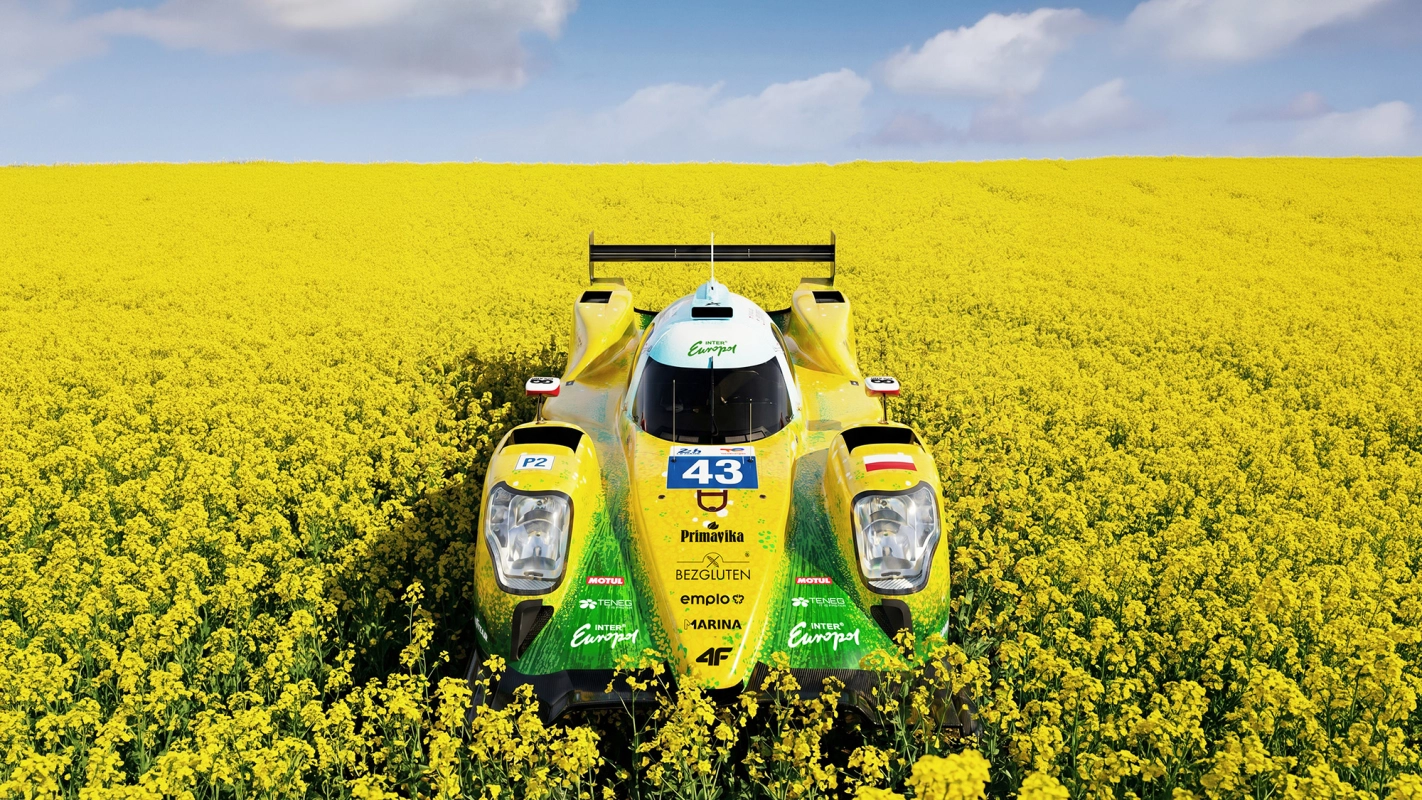
Inter Europol Competition has revealed a remarkable Art Car concept for the 2026 24 Hours of Le Mans, blending endurance racing with Polish artistic heritage in one of the most ambitious visual projects seen in modern motorsport.
The Polish team will field the specially designed #43 LMP2 entry at this year’s race with Kuba Śmiechowski, Tom Dillmann, and Nick Yelloly returning to the Circuit de la Sarthe. Together, the trio aims to challenge for top honours while carrying a design that extends far beyond traditional racing liveries.
Created by Polish designers Aleksandra and Gustaw Lange of Lange & Lange Design, the project combines motorsport, culture, and storytelling into a single identity that reflects both speed and artistic expression.
Polish impressionism shapes the design as Inter Europol Competition unveils Art Car for Le Mans 2026
The Art Car takes inspiration from Inter Europol Competition’s signature yellow and green colours, which originate from the rapeseed fields often associated with the Polish landscape. However, the designers transformed that simple concept into a deeper artistic narrative rooted in Polish Impressionism and visual culture.
The project references celebrated Polish artists including Leon Wyczółkowski, Edward Dwurnik, and Waldemar Świerzy. In addition, it draws influence from the iconic Polish School of Poster Art, known for its bold compositions and layered symbolism.
Rather than relying on direct national imagery such as flags or historic emblems, the designers chose a more nuanced approach. Consequently, the rapeseed field motif evolved into a flowing visual language that reflects movement, speed, and aerodynamics.
The colours themselves play an active role within the design. Instead of serving as decoration, they create the impression of motion, giving the appearance of the LMP2 prototype slicing through space at high speed.
“Our goal was to create something that works on an immediate visual level, but also carries deeper layers of meaning. This is not just aesthetics, it is a language that connects history, emotion, and function.”
Balancing art with motorsport performance
Although the project embraces artistic freedom, the designers still had to work within the strict technical realities of endurance racing. Every visual detail needed to respect aerodynamic efficiency, sponsor visibility, and functional requirements.
As a result, the final design balances creativity with engineering precision, ensuring the car remains competitive while delivering a distinctive visual identity.
“A key element of the project was combining art with the rigours of motorsport. As the creators emphasize, the Art Car had to meet all technical requirements, from aerodynamics to brand visibility. In motorsport, function is critical. The design must comply with real technical constraints. When beauty meets function, the best results emerge.” they add.
For Inter Europol Competition, the project represents a natural evolution of the team’s identity. Motorsport increasingly overlaps with design, fashion, and lifestyle culture, and the team believes racing cars can communicate stories as effectively as they chase results on track.
Motorsport as a creative platform
Inter Europol Competition Sport Director Sascha Fassbender explained that the Art Car reflects a broader vision for what modern motorsport can represent.
“Winning the 24 Hours of Le Mans twice and finishing second once has shown us what it takes to perform at the very highest level of endurance racing. But motorsport today is more than just competition, it is a powerful communication platform and an opportunity to think beyond the obvious.
“With this Art Car project, we wanted to go further than performance alone. It is about expressing who we are as a team, telling a story, and connecting with people in a way that goes beyond the track. Motorsport gives you a unique stage, and we believe it should also be a space for creativity, for bold ideas, and for thinking truly out of the box.”
The 24 Hours of Le Mans now provides the perfect stage for that philosophy. Under the demanding conditions of the legendary endurance race, every detail matters, both technically and visually.
Therefore, the Art Car will not only compete for victory but also stand as a symbol of how motorsport can intersect with wider creative industries.
Drivers ready for 2026 Le Mans challenge
The experienced line-up of Kuba Śmiechowski, Tom Dillmann, and Nick Yelloly adds further strength to the programme. Their familiarity with endurance racing and teamwork will prove vital during the gruelling race around La Sarthe.
At the same time, the drivers understand the wider significance of the project beyond pure performance.
“Le Mans is a place where every detail and every decision counts. This project shows that motorsport is not only about performance, but also about emotion and storytelling in a unique way. We are proud to be part of something so special and we can’t wait to get started.” says Kuba Śmiechowski, driver and team owner of Inter Europol Competition.
A story designed to reach beyond racing
The Lange & Lange project extends far beyond a one-off livery reveal. Instead, it forms part of a wider communication concept designed to merge motorsport, art, and Polish visual identity into one cohesive story.
As the countdown to Le Mans continues, Inter Europol Competition has positioned its Art Car as both a racing machine and a cultural statement. While the #43 entry will fight for success on the track, its visual impact could resonate far beyond endurance racing itself.