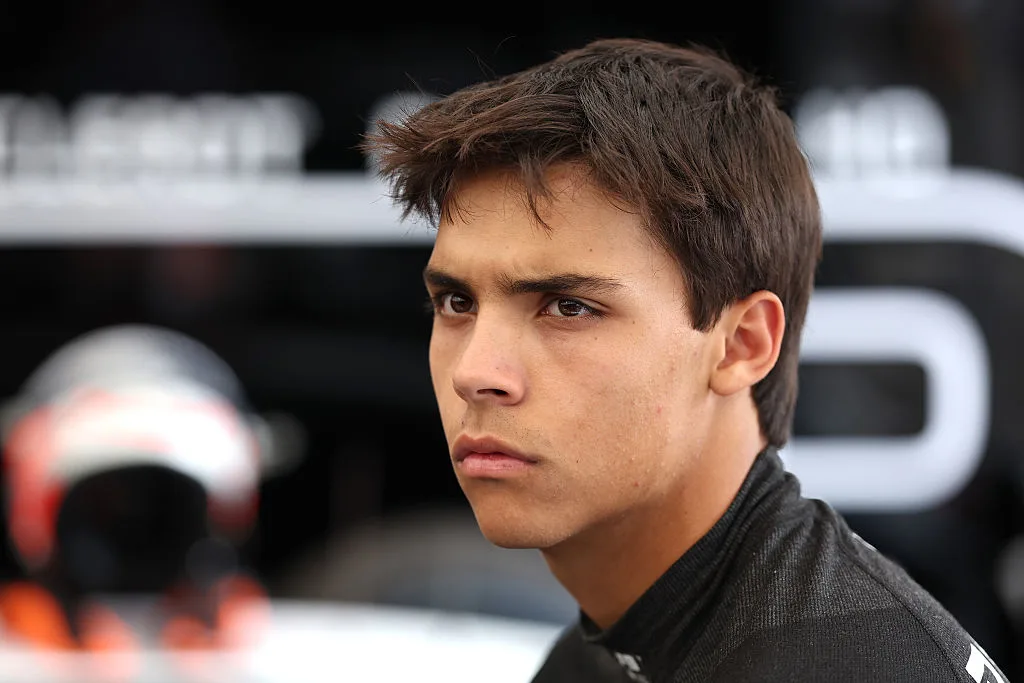
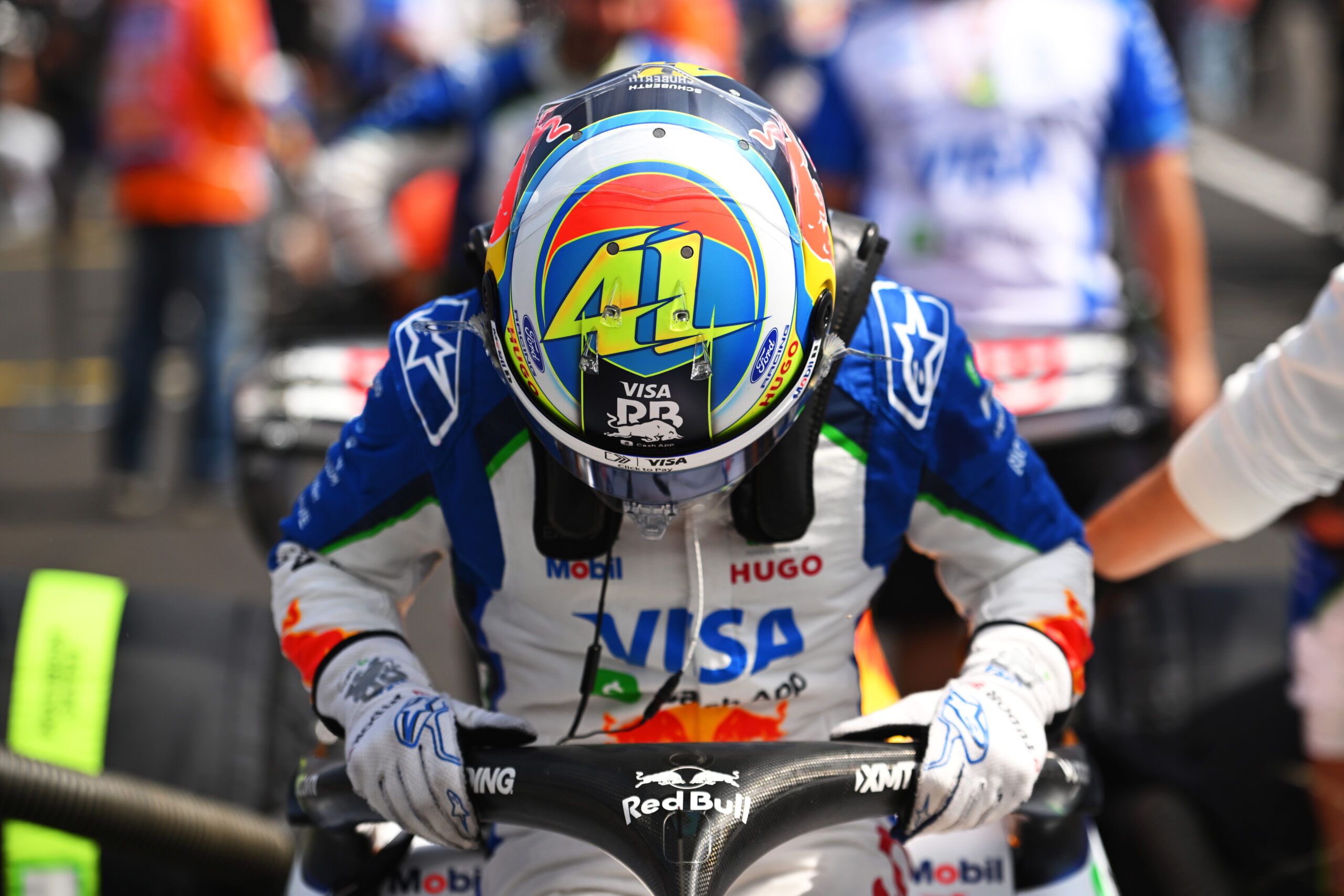
For Racing Bulls’ Arvid Lindblad, the 2026 F1 Hungarian GP marked a sixth consecutive points-scoring finish, while teammate Liam Lawson crossed the line in P8 to secure another double points finish for the team. Following a successful weekend, the Racing Bulls move ahead of Alpine in the Constructors’ Championship, climbing to 5th with 66 points.
Qualifying P9, he remained there on the first lap. While he passed George Russell, he lost out to his teammate. Later on, Lawson and Hülkenberg went for a second stop to switch to softs, with both catching and passing the rookie inside the final 10 laps. Nonetheless, thanks to Oscar Piastri’s retirement, he secured a point.
Reflecting on his race in the print media zone afterwards, Lindblad said: “I mean, it wasn’t a great lap one, so obviously I’m not that happy with that, but I’ll look into it. Then from there, I think pace was quite similar, maybe he [Liam Lawson] was a tiny bit quicker.”
“And then on the strategy, yeah it was a bit of a shame the one-stop didn’t work, but I fully understand from the team’s point of view, it was a big question mark going into the race.”
After pitting on lap 20, one lap after Audi’s Nico Hülkenberg, the Briton committed to a one-stop strategy and nursed a set of hard tyres to the chequered flag. He admitted that, had the strategy worked perfectly, the gamble could have made them look like heroes but was nevertheless pleased the team had extracted the maximum from the weekend heading into the summer break.
“Then we saw Nico [Hülkenberg] trigger the two, and we decided to split the strategy with the cars, which made sense, because if the hard hung on better, I would have looked like a hero being P8, and unfortunately I didn’t, so Liam was the one that maximised.”
“So I think from the team’s point of view, it was the maximum that was possible today, so I don’t have any regrets about the one-stop not working, because it could have also been the other way around quite easily.”
Lindblad: Two-stop strategy was “in the back of our mind” during F1 Hungarian GP
While the one-stop strategy ultimately saw him finish in P10, Lindblad admitted that he had always expected the race to unfold as a two-stop. When asked whether he was involved in the decision-making during the race, he explained: “I don’t know what Liam was asking, but I was saying I think it’s going to be a two, so maybe I helped him out.
“But yeah, I was saying I think it could be a two, and they need to be on it, and even before the race I was telling them that I think it’s going to be a two. The default plan was a one, but we had it in the back of our mind.”
Issues with blue flags “wasn’t ideal”
Throughout the race, blue flags became a major talking point, with several backmarkers appearing slow to move aside and allow the frontrunners through. The issue proved costly, particularly for Oscar Piastri, as Carlos Sainz forced him off the track while he attempted to navigate through traffic.
“I mean, well, it’s not too difficult because we have the virtual mirror, so we know the car in front and behind and we can see the gaps, and we have mirrors, which makes it a bit easier. I think it’s more for the cars that were coming through that it was just a bit of a shame maybe,” Lindblad said when asked about the issues drivers encountered with blue flags.
“But yeah, it wasn’t ideal, I mean I remember at one point I was coming around on lap seven and I saw blue flags for Checo [Perez], which you know, lap seven, he can’t be that far back, so I didn’t really know what was going on with the system.”
He added: “And then yeah, they never showed the numbers, they just showed a blue flag, which was obviously not the most useful message, but the team helped me out and I was looking at my delta on the dash to try to not disturb the leaders race.”
“I could feel before the race” says Lindblad on the two-stop strategy
Given the hot conditions, the Briton expected the race to favour a two-stop strategy from the outset.
“I don’t know, I could feel before the race, I just smelt it and thought it was going to be a two, because there wasn’t much deg in FP2, FP1 was already a bit deggy, but then it’s 20 degrees hotter today and I don’t feel that these tyres are very good when it gets hot.”
Recalling two previous ocassions where the two-stop strategy proved to be the right call this year, Lindblad noted that both races took place in much warmer conditions.
He explained that his pace on the opening stint with the medium tyres was relatively slow, and with the prospect of completing a 50-lap stint on the hard compound until the chequered flag, he felt a two-stop strategy was always likely.
“Both of the other two stops we’ve had this year were Barcelona and Red Bull Ring, which were both very hot. These tyres are not good thermally, so I just got that feeling and then the medium was just, I was going pretty slow in the beginning and they still weren’t very nice and we ended up boxing on lap 21, it was going to be like a 50 lap stint, it just felt like it was going to be a two.”