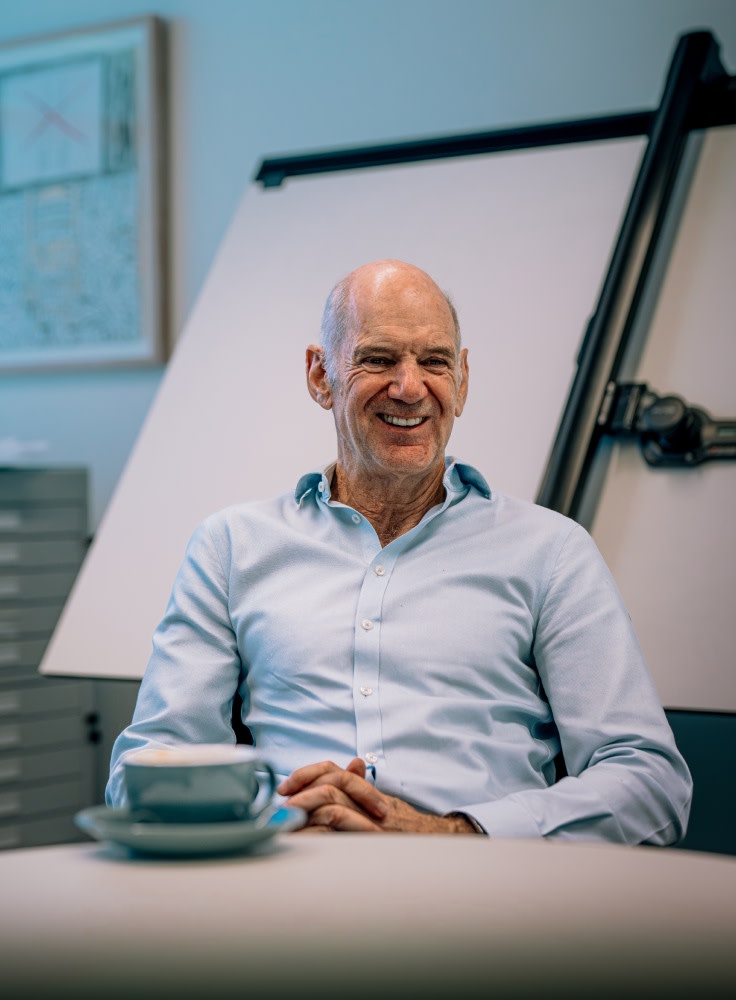
Adrian Newey has admitted it has been an “extremely challenging” first half of the 2026 F1 season for Aston Martin. However, he said that a major upgrade was arriving in Hungary which will bring “a big aerodynamic package” designed to close the gap to the front.
Speaking candidly about where things stand, Newey didn’t shy away from the scale of the struggle. “Extremely challenging,” he said. “On both the chassis side and the power unit side, we’ve been on the back foot from the start. In hindsight, we probably put too much expectation on ourselves – and of course, you must never forget the quality of the opposition you’re up against across the grid.”
Part of the problem, Newey explained, traces back to a late start on the Aston Martin’s 2026 F1 car project. “We didn’t start serious work on the ’26 car until mid-March 2025 and didn’t get a model into the wind tunnel until mid-April. That left us several months behind our rivals – and that’s a huge gap to close.”
Newey on F1 Aston Martin’s deeper issues beyond timing
When asked whether the team’s struggles came down purely to scheduling or pointed to something more structural, Newey was direct: timing was significant, but it wasn’t the whole story.
“We’ve got a very talented group of people, but as an organisation we weren’t yet working together as well as you would like and operating as one cohesive unit,” he said. “Expectations were sky-high, but the reality of where we were didn’t match.”
Furthermore, he pointed to the weight as a persistent headache on the chassis side as part of the technical shortfalls. “On the chassis side, we’re quite a long way overweight. Some of that comes from integrating the power unit and dealing with vibration issues we’ve had to work through with Honda, but we also didn’t do as good a job as we should have on our side at saving weight. When you design in a rush, weight is the first thing that suffers because you don’t have the time to thoroughly optimise everything.”
The aerodynamic concept also came under scrutiny – one Newey takes personal ownership of. “Aerodynamically, we also took a bold direction – which was largely pushed by me – without the luxury of exploring multiple concepts in depth because time was against us. I wouldn’t say the direction we’ve taken is fundamentally wrong, but it has thrown up challenges we didn’t anticipate.”
Despite the difficulties, Newey was keen to stress the mood within the F1 team factory remains resilient. “You walk around the AMR [Aston Martin Racing] Technology Campus at night and the lights are still on. There are a lot of late evenings, a lot of motivation and a real determination to prove that we can do this.”
Newey confirms Aston Martin’s upgrade for F1 Hungarian GP
Turning to the fix, Newey confirmed timing on the team’s major upgrade. “We plan to introduce our upgrade in Hungary on both cars,” he said.
On the scale of the changes, he was clear this isn’t a clean-sheet car, but it is a substantial revision. “The main structural elements remain the same – the chassis and gearbox architecture don’t fundamentally change – but we’ve taken weight out of both, which required re-homologating and crash testing the forward chassis.
“The front suspension is unchanged. The rear suspension is slightly revised. We’ve developed a new nose and substantially revised aerodynamic surfaces. So, while the core structure is similar, it’s a big aerodynamic package coupled with significant weight reduction. The target is to get very close to the weight limit.”
The upgrade also carries significance beyond the numbers with Newey noting its relevance to Fernando Alonso’s commitment to the project. “Fernando [Alonso] wants to see clear tangible progress. If we can show that we’re moving decisively in the right direction, he’s absolutely committed to being behind the wheel.”
How big a step is Aston Martin expecting?
Pressed on the projected gains, Newey was cautious about attaching figures to the upgrade ahead of track running. “We’re predicting a large step, but I’m reluctant to put specific numbers out there. We’ll have to see when the car gets on track.”
He also pointed to a longer-term investment behind the scenes that won’t bear full fruit until later in the year. “Historically, at this team, there hasn’t been enough investment in engineering simulation tools – not just project management systems, but the core physics tool themselves. We’re putting that investment in now, but you don’t rewrite and validate those tools overnight. Correlating them properly with the real car takes time.
“At the moment, they’re improving, but the real gains from that work will come later in the year.”