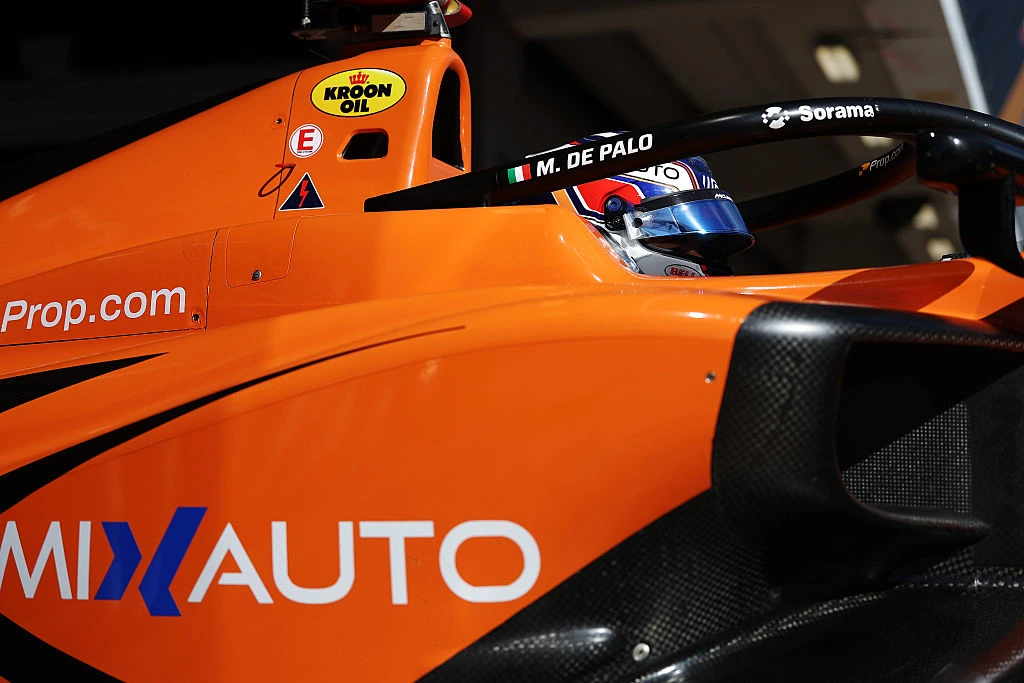
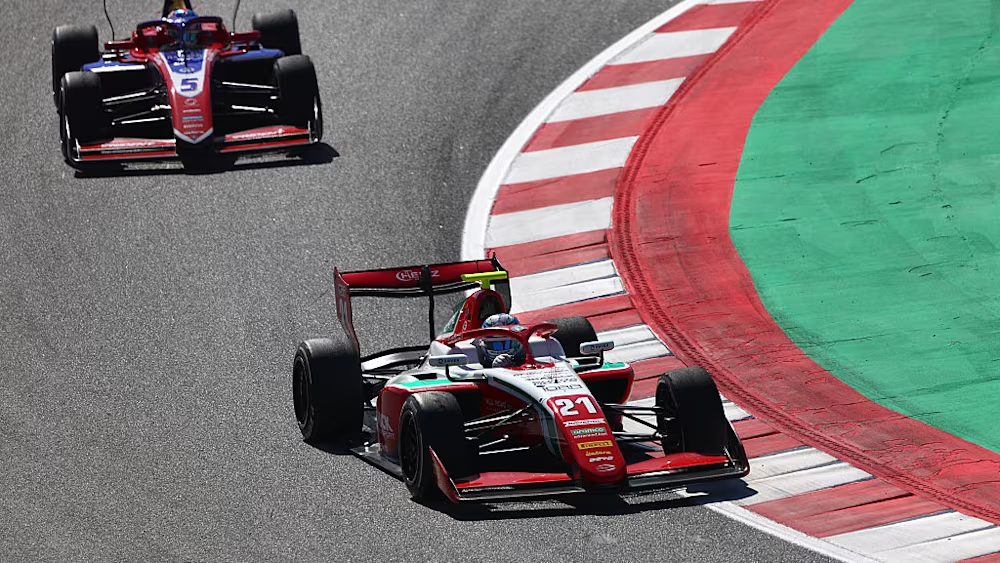
PREMA Racing Team Principal Stephen Mitas praised James Wharton’s composure and race management after the Australian secured victory in the 2026 Barcelona F3 Sprint Race.
Wharton recovered from a difficult opening phase, overtook Freddie Slater and Gerrard Xie, and then controlled two Safety Car restarts to earn PREMA its first F3 victory since Spa-Francorchamps in 2024.
The result represented an important step forward for the Italian outfit after a challenging start to the season. It also highlighted the strength of PREMA’s race package, even though Mitas acknowledged that the team must still improve its qualifying performances to maximise each weekend.
Wharton recovers from early F3 Sprint Race setback in Barcelona
Wharton started from second on the reverse grid but lost ground during the opening phase of the race, dropping behind both Xie and Slater.
However, he avoided panic and remained within striking distance of the leaders. As the race settled, Wharton began to place pressure on the cars ahead before taking advantage of his opportunities to move back towards the front.
He first passed Slater and then overcame Xie to secure the lead. From that point, the Australian controlled the pace and managed the race with maturity despite the interruptions created by two Safety Car periods.
For Mitas, the victory rewarded the work PREMA had completed during a transitional winter. The Team Principal also praised Wharton for maintaining control when the pressure increased.
“We’re very excited,” he said to Formula 3. “We’ve been working hard. Obviously, it’s been a bit of a transition over the winter, but step by step we’re pushing back to where PREMA belongs.
“James was outstanding. He managed the beginning of the race very well, took his opportunities where they were, and then once he was in front he managed the race perfectly. So, we’re very proud of him.”
Wharton withstands pressure from Slater in final phase
Wharton still faced a demanding final phase after moving into the lead. Slater remained close behind and applied pressure whenever the race restarted. The Rodin Motorsport driver had already shown strong pace throughout the weekend, so Wharton could not afford to make a mistake while managing his tyres and preparing for each restart.
Nevertheless, the PREMA driver controlled the gaps, protected his front tyres and repeatedly denied Slater an opportunity to attack. His ability to balance pace with tyre management proved particularly important at a circuit where degradation can quickly change the competitive order.
Mitas believed Wharton’s decision-making separated him from the opposition. Rather than overusing his tyres in the early laps, he positioned the car carefully and attacked only when the right opportunities emerged.
“James is a class act and today he proved that,” said Mitas. “For sure we knew it was going to be tough with guys like Slater behind, it’s always going to be a hard race.
“But James was smart, took his opportunities where they were, managed the front tyres properly, managed the Safety Car situations and delivered for the team. We’re very proud of him.
“We know we have a competitive package in the race. We still need to do some work on our Fridays, and we’ll be focusing on that moving forward to make sure that we can qualify the cars where they belong and basically deliver race results like that.”
Sharp underlines PREMA’s race pace
Wharton did not provide PREMA’s only encouraging result in the Sprint Race.
Louis Sharp also moved forward from 16th on the grid and crossed the line in ninth. His recovery placed a second PREMA car inside the points and reinforced the team’s belief that it possesses strong pace across a race distance.
Sharp had to navigate the midfield, manage his tyres and find opportunities within a tightly packed field. Although his low starting position limited his ultimate result, his progress offered further evidence that PREMA could compete effectively once the race began.
However, Mitas stressed that the team cannot rely on recovery drives every weekend. Poor qualifying positions increase the risk of incidents, place the drivers in traffic and make strong results significantly harder to achieve.
“It’s great,” said Mitas on Sharp’s result. “The problem is if you’re underperforming in qualifying, races are always more complicated.
“We were obviously lucky that we qualified in P11, which put us on the front row in the reverse grid, which helped us. We demonstrated quite obviously that the race pace is there.
“James obviously delivered as well. We just need to keep working on how we execute our Fridays, maximise the opportunities for all our drivers in qualifying, and then do the same again on race day – in the Sprint Races and then obviously the Feature Races.”
Qualifying remains PREMA’s main concern in the 2026 F3 Championship
Although Wharton’s victory gave PREMA reason to celebrate, the team also recognised that the reverse-grid format helped create the opportunity.
Wharton qualified 11th, which placed him on the front row for the Sprint Race. However, that same qualifying result left him outside the top 10 for the Feature Race and created a much more difficult route towards another podium.
PREMA therefore plans to focus on improving its Friday execution. Better qualifying performances would allow its drivers to start closer to the front in both races, reduce their exposure to midfield incidents and give them more control over tyre strategy.
The team already appears confident in its long-run performance. The next challenge involves extracting more speed over one lap and ensuring all three drivers can place their cars in stronger starting positions.
2026 Barcelona F3 Feature Race presents a different challenge for PREMA
The Feature Race offers fewer advantages to drivers starting outside the leading positions.
Wharton will begin from 11th, where he may quickly become trapped in a DRS train. At Barcelona, cars can remain closely grouped for long periods, while the aerodynamic effect of following another driver can make overtaking more difficult than the timing gaps suggest.
As a result, PREMA will need to combine tyre management, strategy and decisive overtaking to move forward. Mitas nevertheless expressed confidence that the team’s drivers could create opportunities.
“We can move forward,” he added. “But obviously with the way the races play out here in Barcelona with the DRS, once you get in a DRS train, it does get difficult to make progress quickly, but we’ll do our best.
“We’ve got a talented group of drivers, so I’m sure they’ll do their best too.”
Barcelona win provides a foundation for recovery
Wharton’s victory ended PREMA’s wait for another FIA F3 win and confirmed that the team can still produce front-running race pace.
Moreover, Sharp’s recovery into the points showed that the performance did not depend on one car alone. Both drivers demonstrated that PREMA can move forward and manage tyre degradation effectively over a full race distance.
However, the team now needs to convert that strength into stronger qualifying results. Starting further forward would allow PREMA to challenge more consistently for podiums and victories rather than relying on reverse grids or recovery drives.
Wharton’s composed Barcelona performance therefore gave PREMA more than a single win. It provided evidence that the team’s rebuilding process has begun to deliver results and established a clearer path towards returning to the front of F3.