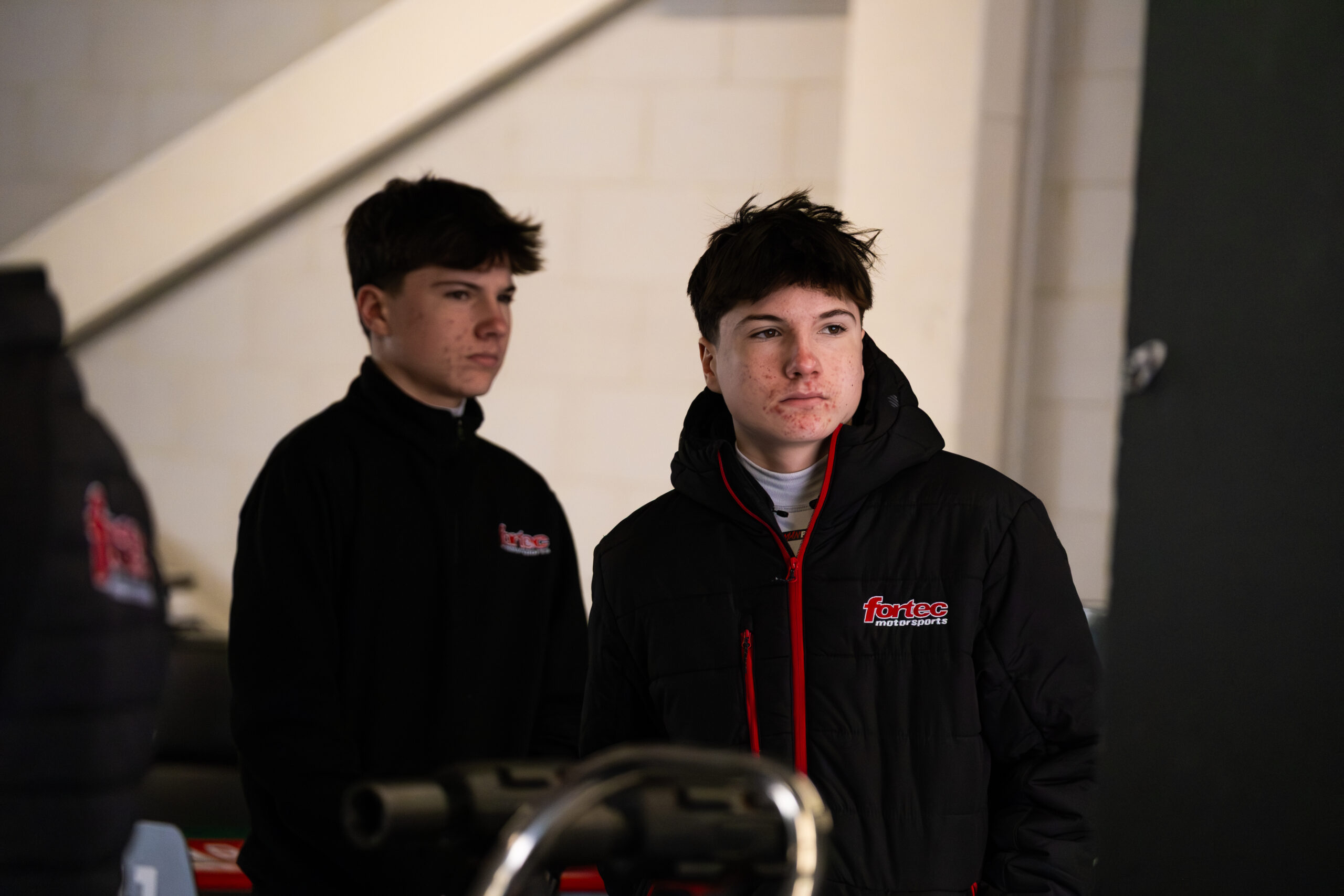
In modern junior motorsport, progression rarely follows a straight line. Drivers typically spend years refining their craft, building experience category by category, before reaching the highly competitive world of Formula 4. However, Cash and Roman Felber, both set to race in the 2026 British F4 championship, have approached their motorsport journey differently. Their rise has been rapid, their development compressed, and their performances increasingly difficult to ignore.
What sets them apart is not simply their pace, but the dynamic that underpins it. As identical twins, they operate within a constant feedback loop—each pushing the other, each learning from the other, and each refusing to fall behind. One leans towards instinct and adaptability, the other towards structure and precision. Yet despite those differences, their lap times often converge within fractions of a second.
In an exclusive interview with Pit Debrief, the Felber brothers opened up about the origins of their journey, the nature of their rivalry, and the mindset that continues to drive their development. Their answers reveal not only how they compete, but how they evolve—together and individually—within one of the most demanding development ladders in motorsport.
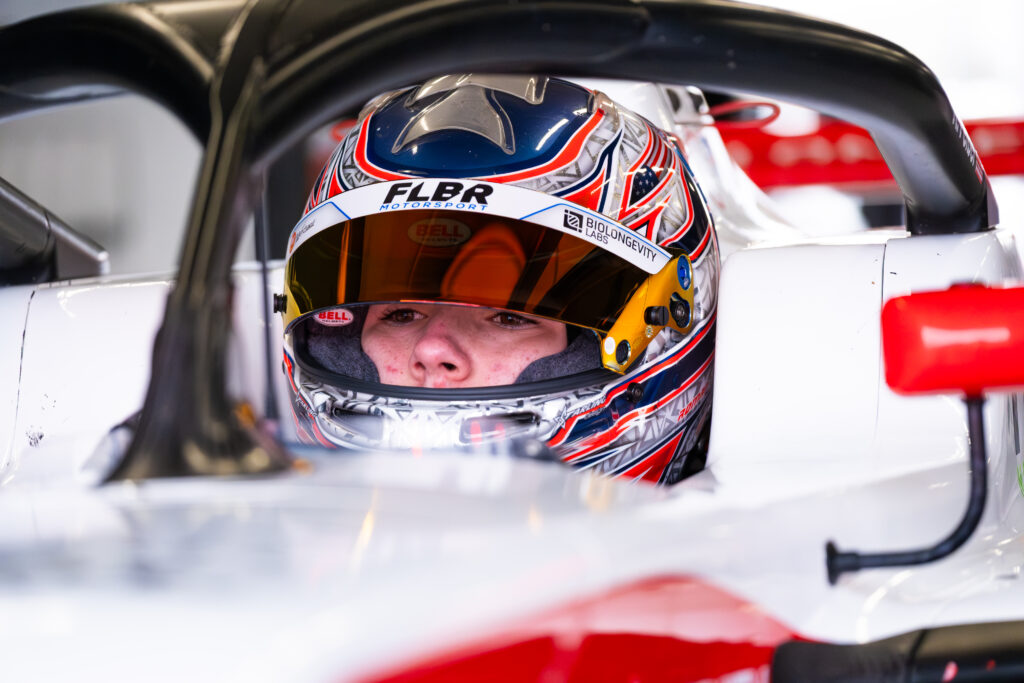
From spectators to contenders: the Felber twins’ first step into competitive motorsport
Every racing career begins with a moment of inspiration. For the Felber twins, that moment arrived in 2022 at the United States Grand Prix in Austin. What they witnessed that weekend did more than entertain—it reshaped their ambitions.
“Yes, so we did go to the Austin F1 race in 2022, and we loved it. So we were like, how can we do this? And then we got put in a go-kart, and we loved it. And then, so we started testing in F4 and everything. And we raced the championship F4 US last year. And now we have come overseas into the UK, that’s the next step to F1,” explained Cash Felber, with the agreement of his brother Roman.
That progression—from spectator to participant—did not unfold gradually. Instead, it accelerated almost immediately. Exposure turned into action, and curiosity quickly became commitment.
From that point onward, their trajectory moved at pace. Karting laid the groundwork, but Formula 4 quickly became the focus, signalling a clear intent to pursue motorsport at a professional level.
Adapting at speed
Such a rapid transition naturally raises questions about how young drivers adapt to increasingly complex machinery and competitive environments. For the Felber twins, the explanation lies not in a single breakthrough but in familiarity, repetition, and careful foundational development.
“I don’t know what allowed me to adapt so fast,” Roman admitted, before adding, “We had our, like, a go-kart at home before that we were driving, so it kind of helped a bit.” That early, informal exposure created a level of comfort that translated directly into their racing. It reduced the initial learning curve, allowing them to focus on refinement rather than basic adaptation.
Starting both karts and F4 cars within just a few months of each other gave the twins another advantage: beginning car racing at age 12 meant they had no bad habits to unlearn, allowing them to focus entirely on what it takes to be fast. Their preparation was methodical—they tested between two and four days per month for the first 11 months, gradually building skill and confidence before their first junior race.
That debut came at Circuit of the Americas when they were just 13 years old. Cash dominated, finishing first in both races, while Roman claimed second. Remarkably, their group started at the back of fields exceeding 35 cars but worked their way through the pack, ultimately finishing in the top 13–15.
Importantly, this foundation continues to influence their development. Rather than relying on isolated moments of improvement, they build performance incrementally—session by session, lap by lap—ensuring that their growth remains steady, sustainable, and firmly grounded in skill rather than luck.
Rivalry as a driving force behind the Felber twins’ journey in motorsport
At the core of their progression lies an unfiltered and ever-present rivalry. Competing against each other is not an occasional occurrence. It is a constant, and it shapes how they approach every session, every lap, and every phase of their development.
“Yeah, I just want to beat him most of the time. I was faster than him at Zandvoort last time, so that was pretty cool,” said Roman, highlighting the competition between them and his pride at having emerged on top in Zandvoort.
“I think there’s a first time for everything… yeah, I’m kidding,” Cash joked, grinning at his brother.
That competitive instinct does more than drive performance. It establishes a relentless internal benchmark. While many young drivers measure themselves against the wider field, the Felber twins always have an immediate and deeply personal reference point. As a result, consistency becomes essential, with neither driver able to afford complacency while the other continues to search for incremental gains.
Consequently, every lap becomes a form of evaluation. Every corner offers an opportunity to improve or fall behind. That pressure, however, does not create instability. Instead, it sharpens focus and reinforces discipline, ensuring both remain fully engaged in their development.
“Anyway, I mean, we push each other to do better, and we help each other, I guess. Like, if one was doing one corner better, or vice versa, then we can compare data,” Cash agreed.
Even so, the underlying objective remains unchanged.
“Yeah, I just want to beat him,” Roman summarised. Cash agreed, adding, “Yeah, we want to beat each other.”
Ultimately, this balance between rivalry and cooperation creates a unique developmental environment—one where competition accelerates improvement rather than hindering it
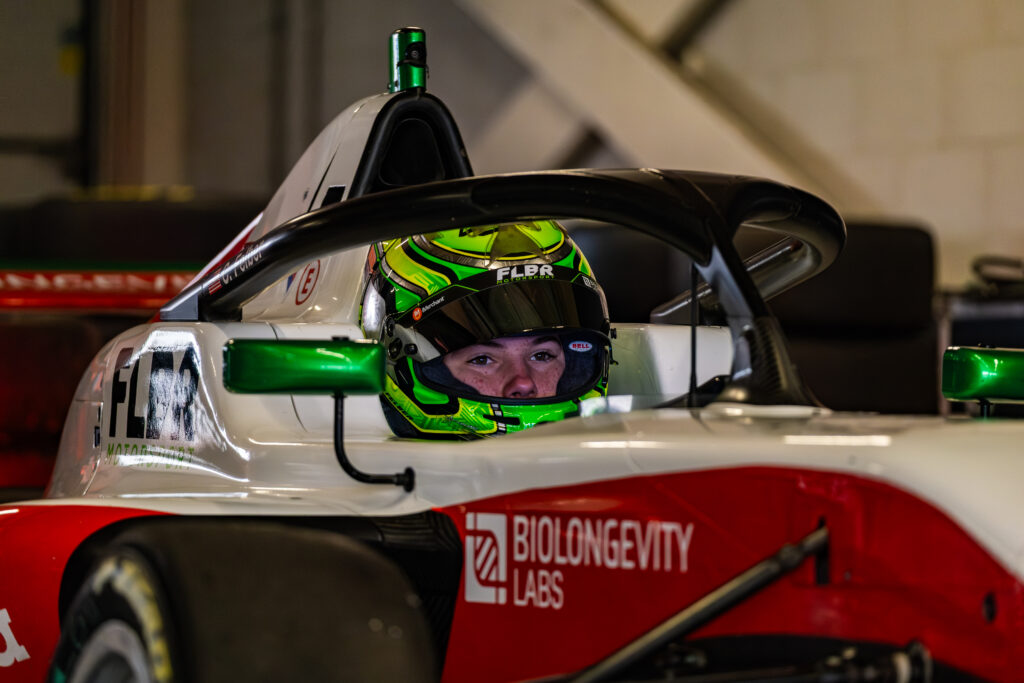
Where they push each other most
Of course, the rivalry between the Felber twins extends far beyond the track. It influences their preparation, physical training, and overall approach to performance. The competitive mindset that defines their racing carries into every aspect of their routine, ensuring improvement is not limited to race weekends.
“Yes, definitely,” Cash said when asked where they push each other most. “I think in the gym, maybe some of it’s on track, because we like pushing each other. I’m stronger than him, he wants to be stronger than me, and vice versa. Same on track—we want to be quicker than each other and quicker than everybody else.”
Their rivalry operates on multiple levels. Strength training becomes comparative, preparation routines gain extra intensity, and every session—physical or mental—feeds performance on track. They also spend extensive time on simulators in both the U.S. and the U.K., practicing, testing, and battling to refine race craft and learn tracks. Pushing each other virtually translates directly to their real-world performance; both are ranked in the top 0.5% of iRacing drivers, evidence of the skill honed in this shared environment.
Still, when reduced to its simplest form, the answer is clear.
“Yeah, probably I’d say on track,” Roman said. Despite the preparation, the circuit remains the ultimate proving ground—where physical training, technical understanding, and mental focus converge, and where their competition finds its clearest expression. Within this dynamic, both drivers evolve side by side, their progress constantly challenged, refined, and elevated by the relentless push of sibling rivalry.
How the Felber twins balance rivalry with teamwork on their shared motorsport journey
Despite their competitiveness, both drivers demonstrate a clear awareness of boundaries. They understand that success requires more than individual performance—it depends on collaboration and control.
“Probably not hitting him, not crashing him, not, like, having contact,” Roman said when asked how he and his brother balance their rivalry with teamwork. “But, [on the teamwork side], probably just, like, sharing our data to each other and just, like, learning off what we can do. It’s like, if I’m faster one day, I’ll help him.”
Cash agreed, highlighting the shared benefits of their collaboration. However, he also noted the value of a strong relationship with their other teammates, noting that a good working relationship between all parties ultimately contributed to shared learning and success.
“I mean, we’re like the same thing, you know, as in, like, we don’t want to crash into each other. And obviously that would suck, but, you know, we help each other. And then, like, I think the team likes it because we push each other. And same with all of our other teammates, like, all of our other teammates push us, we push them to do better, and it’s a good combination,” said Cash.
By maintaining that balance, the twins explained, they help create an environment where rivalry enhances performance rather than undermines it.
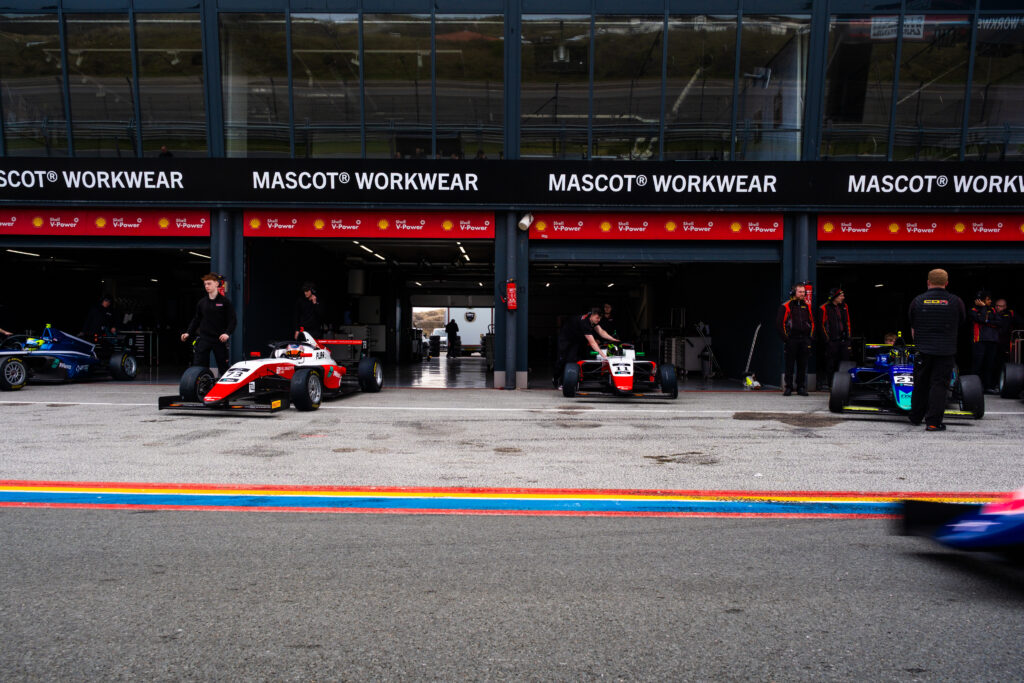
Racing each other: the Felber twins on balancing instinct versus awareness
When the lights go out, instinct inevitably takes over. Yet familiarity adds a layer of awareness that shapes how the Felber twins race each other. Years of competing side by side have fostered an understanding that goes beyond typical on-track awareness. They do not just react to a rival’s movements—they anticipate them, informed by experience and trust built over countless laps together.
“Normally, if I see him, which I always do, I’m not more cautious, but, I mean, if he sees me, we’re not going to—like—kill each other. You just know it’s him and give room. He’s probably not going to crash into you,” Roman explained when asked about wheel-to-wheel situations with his twin.
Cash added, “If I see him on track, I’m more willing to work with him than another competitor. I won’t fight him as hard and maybe leave a little more room.”
That familiarity allows them to race closely without unnecessary risk. Intensity remains, but it is balanced by a shared understanding of tendencies and limits. Beyond cautious respect, they actively support each other while racing. If one is quicker in a race or performing better on a particular day, the other knows he has his back, allowing both to maximise performance while minimising avoidable incidents.
As a result, their on-track interactions combine aggression with restraint—a dynamic born of trust, experience, and mutual accountability. This balance allows them to push the limits of speed and skill, confident that each lap is guided not only by competitiveness but by a shared commitment to racing smart.
Managing risk in motorsport
Despite this trust and familiarity, motorsport’s inherent risks remain ever-present, particularly at the speeds reached in Formula 4. However, both drivers approach this reality with a deliberate mindset, not allowing such fears to influence their approach once the helmet goes on.
“I don’t really think about that,” Cash admitted. “It’s not something that only affects you on track. I mean, if you’re thinking about that, if you have that in the back of your mind, I think it will affect your performance. So you just don’t think about it, to be honest.”
That perspective ensures that focus remains entirely on execution. By removing unnecessary distractions, they maintain the clarity required to perform consistently under pressure, which, in turn helps minimise the added risks of motorsport.
The value of individuality in motorsport
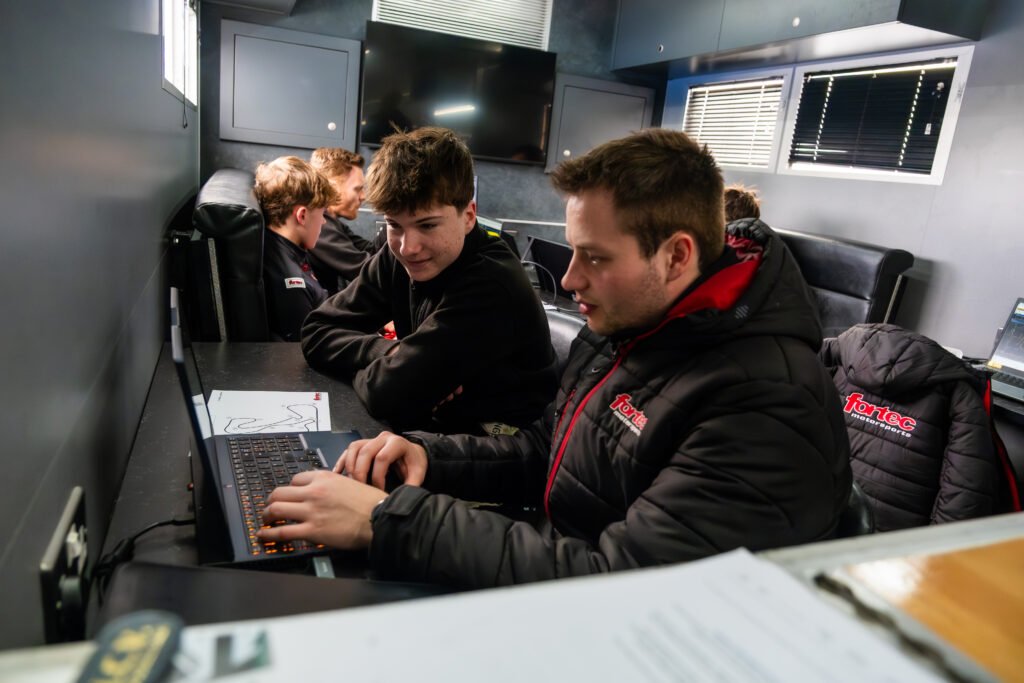
Although their journey is shared, both drivers recognise the importance of establishing individual identities within the sport. Motorsport, after all, extends beyond performance into visibility, marketability, and long-term opportunity. In a competitive environment where talent alone is not always enough, building a personal brand becomes an essential part of progression.
“I guess I’d say it’s pretty important,” Roman said, when asked about the importance of building his unique identity in motorsport.
That importance becomes even more pronounced when considering the commercial realities of racing. Drivers are not only judged on results, but also on their ability to attract backing and represent teams and sponsors at the highest level.
As Cash explained, “I think it’s pretty important because you obviously want to have a big following. You’ll attract sponsors, and then the more sponsors you can bring on, I guess the more the team wants you, especially in F1. So I think it’s pretty, pretty important.”
His perspective highlights an awareness that extends beyond the cockpit. Success in modern motorsport depends on a combination of performance, visibility, and commercial appeal—factors that increasingly shape a driver’s trajectory through the ranks.
Even so, their priorities remain firmly aligned when it comes to their relationship with each other.
“I don’t really know, but I don’t think we want to stand out. I think we want to stand out from other people, but I don’t think we want to stand out from each other,” Cash stated.
This perspective reinforces the idea that their partnership remains central to their development, balancing individuality with a shared ambition.
Differences behind the wheel
Despite their shared experiences, subtle differences define how the Felber twins approach driving. These distinctions shape their performance and influence how they extract lap time, particularly in high-pressure situations where instinct and technique must align.
“I think I’m a bit more aggressive than Cash,” Roman said. He drives with calculated aggression, thinking through each move—much like Max Verstappen—combining instinct with careful analysis. This approach allows him to remain composed under pressure while still pushing aggressively when the moment demands it.
Cash agreed, highlighting his calmer, smoother approach: “He’s definitely a bit more aggressive on the wheel. I mean, the differences between us, I haven’t really looked at it, but I might be a bit more calm.” He makes adjustments largely on feel and feedback from the car and team, similar to Oscar Piastri’s composed, measured style. This allows him to adapt quickly to changing conditions while maintaining consistency throughout a race.
Rather than creating division, these differences provide complementary perspectives. When analysing data or refining performance, Roman’s calculated aggression and Cash’s smooth, instinctive style offer two distinct approaches to solving the same problem. Together, they enhance each other’s development, pushing individual limits while sharing insights that neither could achieve alone.
By blending aggression with control, and instinct with analysis, the Felber twins maximise performance on every lap, demonstrating how contrasting driving styles can coexist and thrive within a shared competitive framework.
Continuous improvement through data
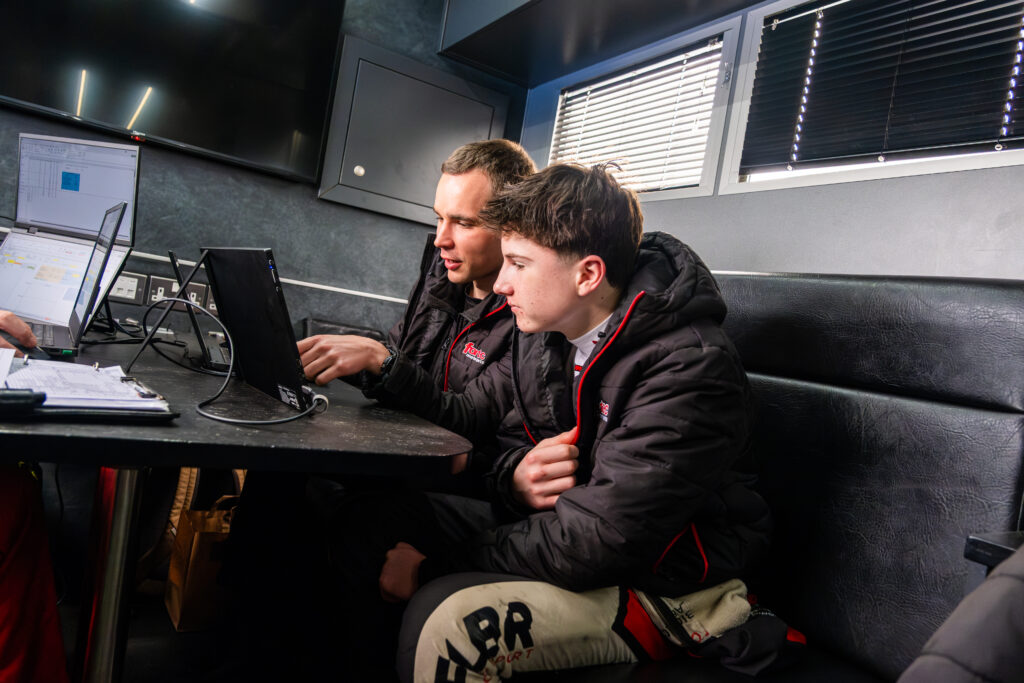
At the heart of their development lies a shared commitment to meticulous analysis and constant adaptation. While their driving styles may differ—one more assertive, the other more composed—their preparation remains closely aligned, forming a foundation that supports both consistency and growth.
“For preparation, we do the same. We do the same stuff. We have the same routine before we go out on track, and we both do it. So I guess nothing really to improve from that. I mean, there’s always stuff you can improve, but I guess we’re both doing the same stuff,” Cash explained.
Yet, while preparation provides structure, execution evolves continuously. Every circuit presents its own challenges, with variations in layout, surface, and weather forcing each driver to adapt. “But on track, I don’t really know. We look at the data, but it changes track by track, obviously. Like, if it’s driving style-wise, one track might suit one of us better and the other vice versa. But then, obviously, we’ll have a look at the data and see, and then I’ll make adjustments. And if I’m the slower one, I’ll make adjustments to my driving to help me gain pace, and vice versa.”
Beyond routine and data analysis, the twins integrate biohacking into their training, recovery, and performance. From red light therapy, sauna sessions, and cold plunges to working with mindset coach Enzo Mucci, they are constantly learning, improving, and adjusting anything that isn’t working. Their confidence and bravery are further reinforced by years as third-degree black belts in Taekwondo, competing on the National Fight Team, where discipline and mental toughness were paramount.
By combining consistent preparation, adaptive execution, and a holistic approach to mind and body, the Felber twins ensure their growth never stagnates.
A shared journey forward in motorsport for the Felber twins
As Cash and Roman Felber continue their ascent through Formula 4, their story remains defined by balance. They compete fiercely, yet collaborate instinctively. They differ in style, yet converge in performance.
In a sport where success depends on marginal gains and relentless development, that dynamic offers a significant advantage. More importantly, it provides a foundation for sustained growth—one that extends beyond results and into long-term potential.
Their journey is still unfolding. However, one thing remains clear: they are not simply progressing through the ranks—they are doing so together, each shaping the other’s path along the way.