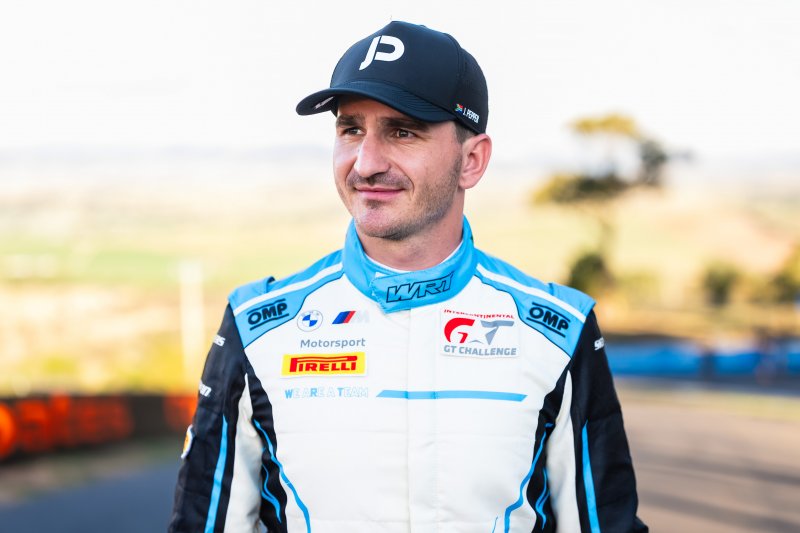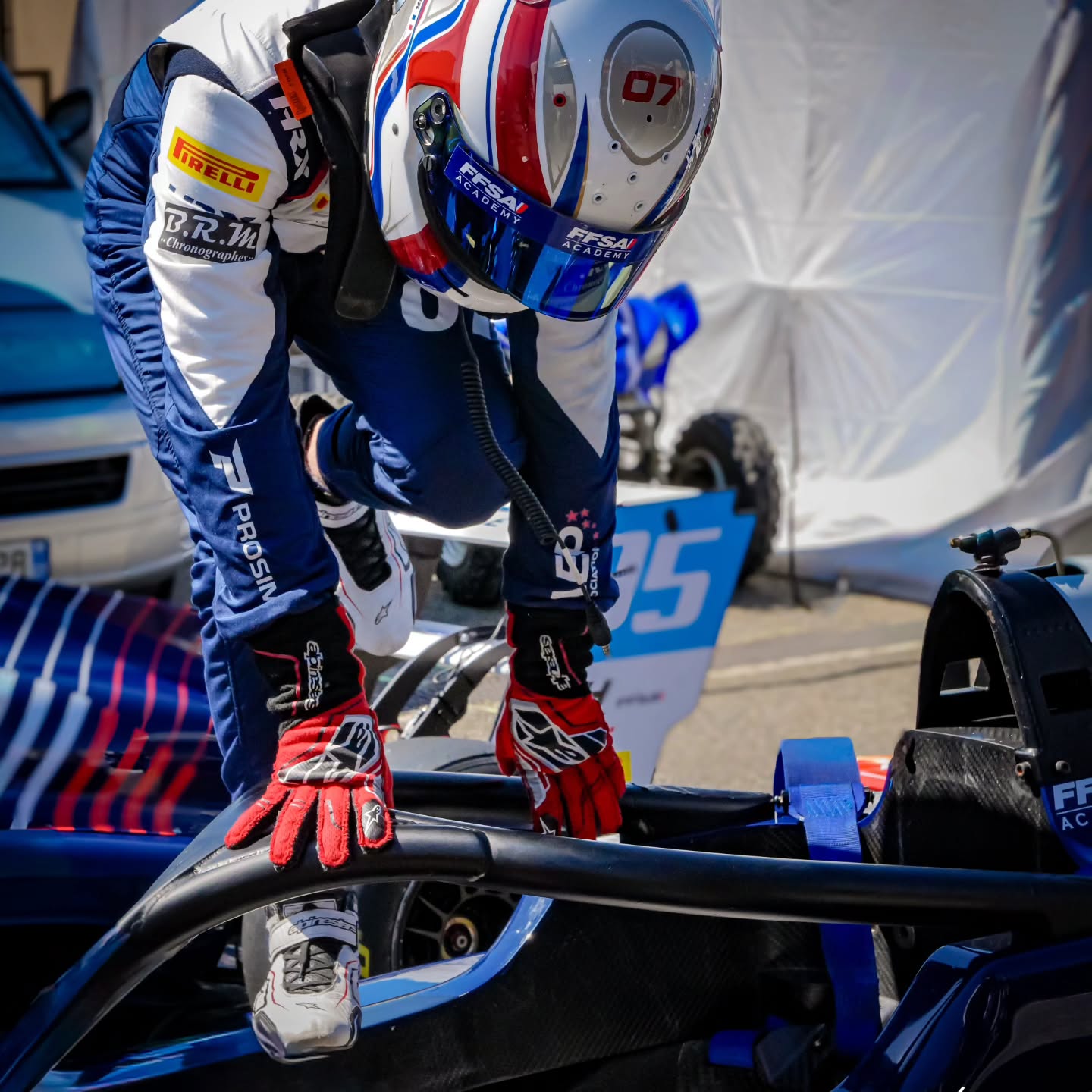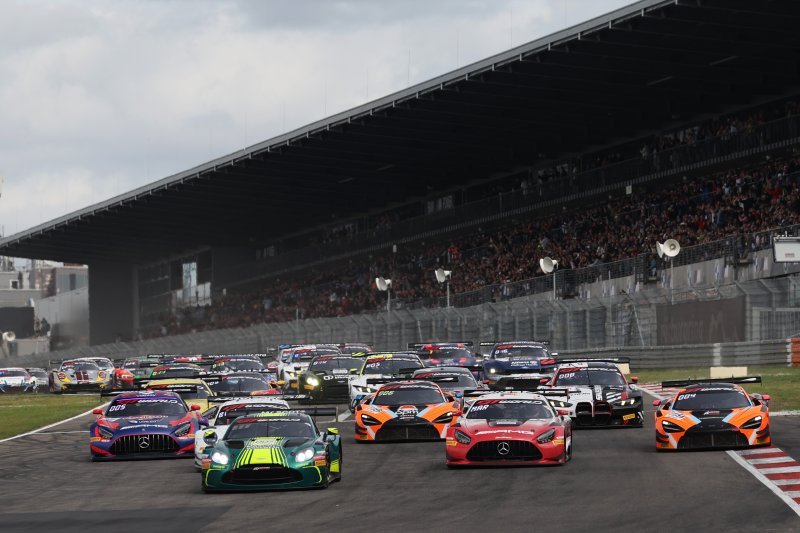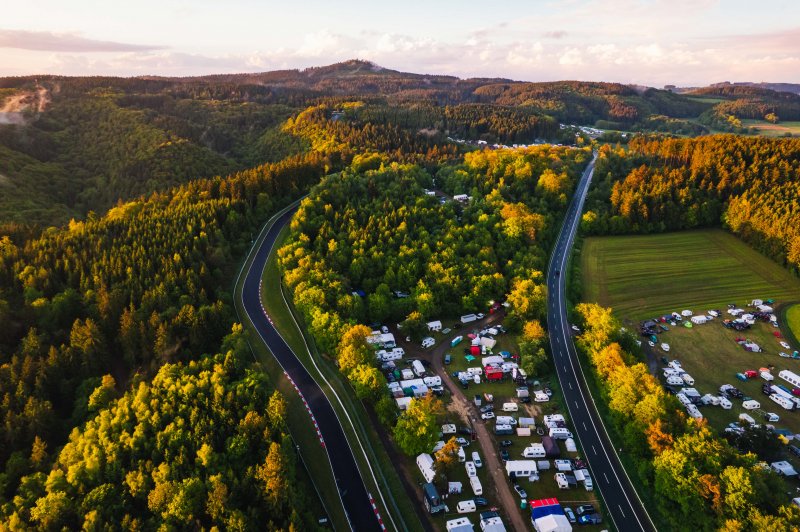
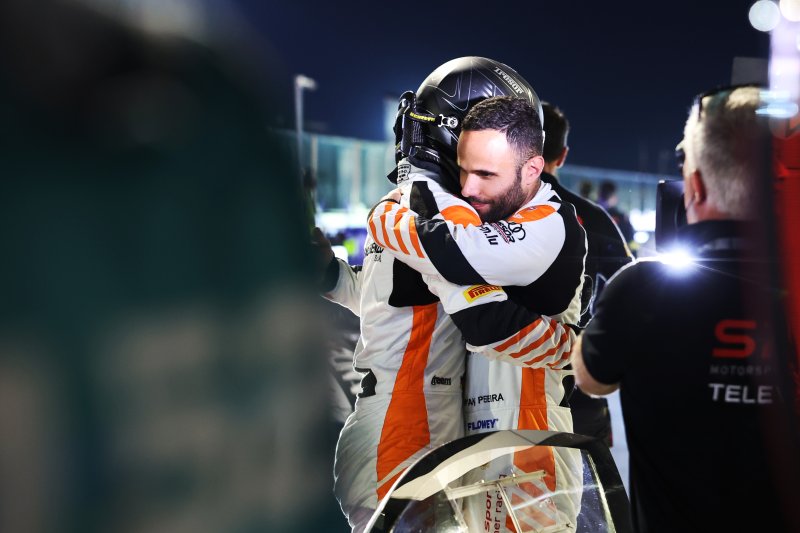
Dylan Pereira’s Magny-Cours weekend was always going to be measured by more than results.
The Luxembourgish driver attempted one of the most demanding schedules of his season, splitting his weekend between the NLS Nürburgring Langstreckenserie and the GT World Challenge Europe Sprint Cup (GTWC). He travelled between the Nürburgring and Magny-Cours by road, with only a narrow window between his NLS stint in Germany and the first GTWC Europe race in France.
On paper, the challenge looked like one of logistics: two championships, two circuits, two long journeys and two different GT3 cars. Yet, speaking exclusively to Pit Debrief after the weekend, Pereira explained that the harder part was not only the travel. It was switching his body and mind between cars, steering wheels, procedures and race situations at the highest level.
Late decision to attempt both races
The double attempt was not locked in months in advance. Pereira knew a calendar clash existed, but he waited to see how both campaigns developed before committing to racing in both championships on the same weekend.
Both title fights remained important, and once the GTWC Europe timetable confirmed a late Saturday race at Magny-Cours, Pereira saw a way to make the plan work.
“Basically, it was also decided really, really shortly before the weekend. It was not really planned super, super long ago. So basically, I knew there was a clash about those championships I was going to do this year,” he said.
“So I decided myself, okay, let’s see how the season goes and then decide which race I will do. Basically, I was not planning to do both. But at the end, it came out that in both championships, you could fight for the class championship, let’s say.”
“And yeah, so I decided, okay, let’s try it. And as soon as the timetable came out, and I saw that Magny-Cours is a really late race at nine o’clock at night, I decided, okay, let’s go. Let’s try to do it.”
“It’s possible. And yeah, luckily, the team, both sides accepted and arranged everything from the drivers team-wise that it’s possible. And yeah, then I just had to do it.”
Switching cars became the real challenge
Pereira stressed that the weekend demanded perfection because both championships operate at a high level. While the travel was demanding, the biggest adjustment came from switching between cars and procedures.
“So at the end, it was definitely not the easiest thing to do because at the end, it’s two championships. It’s in the highest level ever. So it really has to be everything on point to perform well.”
“And yeah, luckily, we did really good. But at the end, I think the biggest change for me was how to switch from cars one side to the other. So at the end, going on the Nordschleife was okay.”
“So I had two days before Magny-Cours. Then I went to Nordschleife having only five laps in qualifying. And then going straight away to the start of the race, which is probably one of the most dangerous moments on the track.”
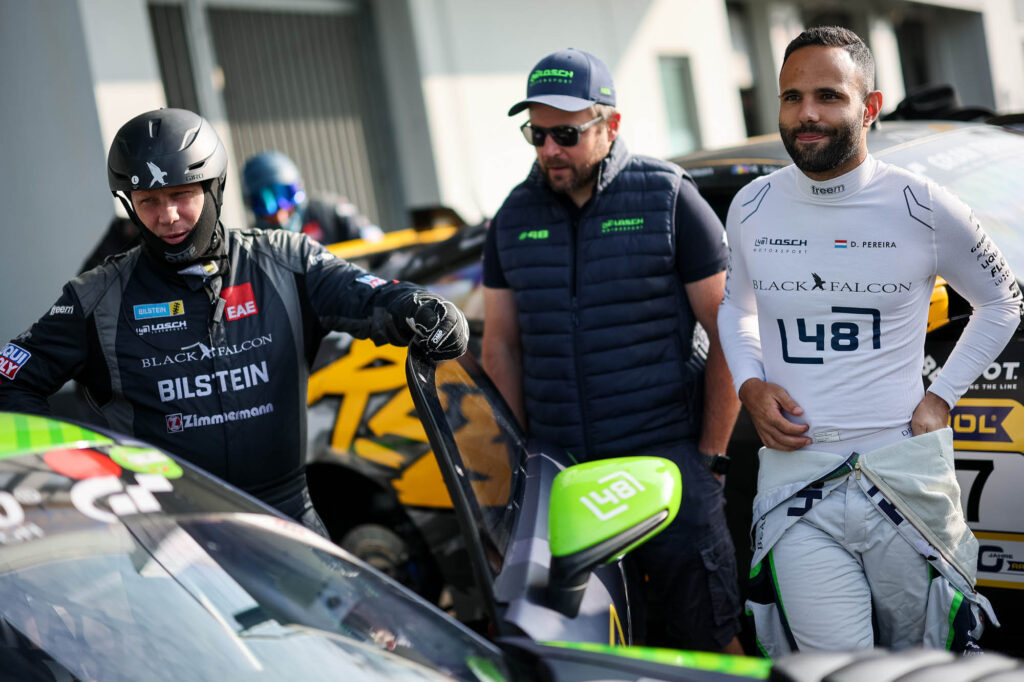
“It’s anyway already dangerous, but there is a bit more. So to be really careful to not do mistakes and not to lose too much time. So yeah, but I find really good in the rhythm and I always had a little bit of time to prepare myself.”
Pereira finds rhythm quickly at Magny-Cours
After completing his Nürburgring programme, Pereira travelled straight to Magny-Cours and had to perform immediately in race conditions. Despite the tight turnaround, he settled into the car quickly.
“But going then Saturday night straight away to Magny-Cours, jumping straight away into the race, which you have to perform straight away, was also somehow worked quite well. I went out to purple sector one straight away in first lap. So I find the rhythm kind of well.”
“Just the only thing I feel is more difficult is all the buttons on the steering wheel, all the to do the belts and everything. It’s kind of changing the automatic of your body. So this is a bit more difficult.”
“Sometimes you have to think a little bit more and maybe forget one or twice. So for example, I forget to do the driver ID because it’s just on a different place and it doesn’t pop up on my eyes straight away. So it’s things like this.”
“It’s more stuff which, yeah, which it’s a bit more difficult to have an automatic thing that your body does it. You have to just start to think a bit more and do it then.”
Pereira’s explanation showed how much of a race weekend normally relies on muscle memory. In one car, driver ID, belts, radio controls and steering wheel functions become automatic. Across two cars in two championships, those habits no longer sit in the same place.
Saturday promise slips away after FCY penalty
Pereira’s weekend initially looked set to deliver on both sides. At the Nürburgring, his Black Falcon teammates Tobias Müller and Patrick Assenheimer went on to secure third overall and a Pro-Am class victory in the NLS race after Pereira had completed his part of the programme.
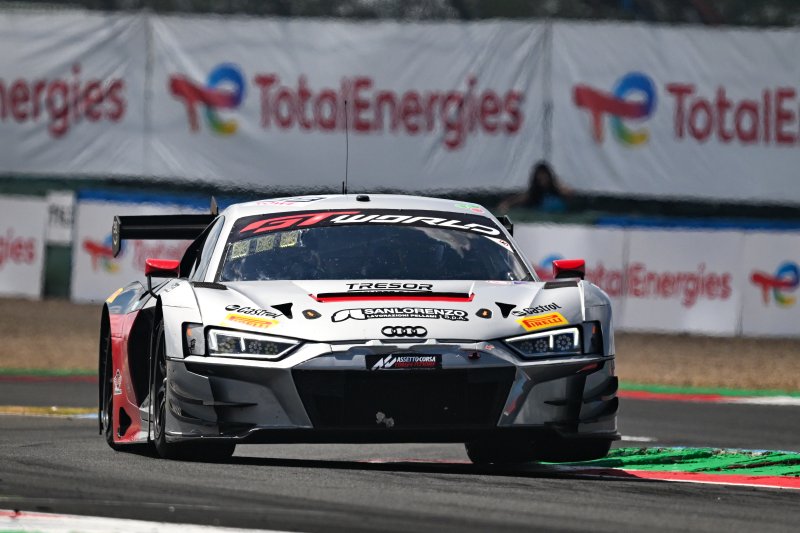
At Magny-Cours, Pereira took over the #99 Tresor Attempto Racing Audi from Alex Aka and climbed to second in the Gold Cup class. However, officials later handed the car an 18-second penalty for speeding under Full Course Yellow, dropping the pair from second to fourth in class.
Pereira said the penalty came from a chain of communication problems rather than a simple driver error.
“Yeah, definitely it wasn’t easy because at the end we were successful. We could have done even P1 in class. And yeah, unfortunately, something small like we have a Marshall display in the car, which stopped working during the race.”
“And yeah, and then also the radio was not working. So I had no information about full course yellow coming out. So and I myself, I just took three seconds then to go back to 80 kph in that moment.”
“And for that, we got the penalty. It was no real fault for anyone. It’s just something which happens sometimes in racing that the system is not working and there’s no other way to react to it.”
“So at the end, a penalty, which cost us a little bit some points for the championship also.”
Sunday chance disappears after brake issue
Despite the Saturday penalty, Pereira still believed the #99 Audi had the pace to fight back on Sunday. The Balance of Performance looked favourable, and the car felt strong.
“Yeah, that’s the motivation. But we are there.”
“We knew the BoP of the car was good. The car was feeling really nice. And we knew we could have done something really nice on Sunday race.”
“Yeah, but unfortunately, motorsport is not always so easy. And it came, it showed us. So it’s really one day you can be a hero, next day you can be zero.”
Sunday started badly when brake issues prevented him from setting a qualifying lap. That left Pereira and Aka starting from the back of the grid, turning the race into a recovery mission before it had even begun.
Recovery drive ends in retirement
Once the race began, Pereira pushed forward and climbed through the field. However, he said one problem can quickly lead to another when a team starts chasing lost ground.
“So and that’s what was this weekend was the case. It was, we went out, we had, yeah, some brake issues in the qualifying. So I had no laps straight away on Sunday.”
“On qualifying, we had to start from the back of the grid. And then, as I always say, it’s like a combination. Like you have one mistake on the weekend, you just get, you just follow, follow by my mistakes.”
“Because you’re always trying to catch up and trying to do everything better and everything. And it’s just something that happens. And it’s then even harder than it is already to just stay focused and just don’t do any mistakes.”
“Because you need to try everything you can to go back forward and to collect some points. So at the end, in the race, you were already, I think, top, I think, P23 from 43. And then unfortunately, we had a contact with one of our teammates, which destroyed our race.”
“We had a puncture straight away. And we had to DNF afterwards because we had some damage on the car.”
Pereira still recommends the challenge
Despite the difficult outcome, Pereira did not regret attempting the double. For him, the decision made sense because both championships still carried value, and both teams worked together to make the schedule possible.
Asked whether he would recommend such a demanding weekend to other GT drivers, Pereira said it depends on the timetable, the stakes and whether the driver feels capable of doing it.
“I think this is always, I think, if you can do it, I think there’s a way you will find a way. If the timetable allows you to do it. At the end, I think if the driver feels able to do it, that’s good,” he said.
“He should do it. I think, especially in the case I had, that we are fighting for both championships. Then having the opportunity to still fight for the championship now, it’s just a good feeling.”
“And also, I think, good for both parties. For me and also for the team, they don’t have to change. They find other drivers and everything.”
“It’s a kind of a second family. So if you can win together, it’s just nice. And at the end, I think I would recommend to do it.”
“Definitely it’s tough, but for me, what helps in the last couple of years, I was driving a lot of different cars, changing all the time. So this, I think, teach me a little bit how to go into those weekends.”
Another doubleheader already awaits
The Magny-Cours weekend did not deliver the results Pereira wanted, but it did not make him step back from demanding race schedules. In fact, another doubleheader already waits for him.
“And yeah, because one, it’s not enough.”
“At the end of the month, I will do another doubleheader,” he revealed.
That final line says plenty about Pereira’s mentality. The weekend proved both sides of the challenge. Pereira had the speed to make the double worthwhile, but racing punished every problem that fell outside the plan.
The travel could be arranged. The teams could prepare. The timetable could work. However, once Pereira started switching between cars, championships and pressure points, the margin became far thinner.