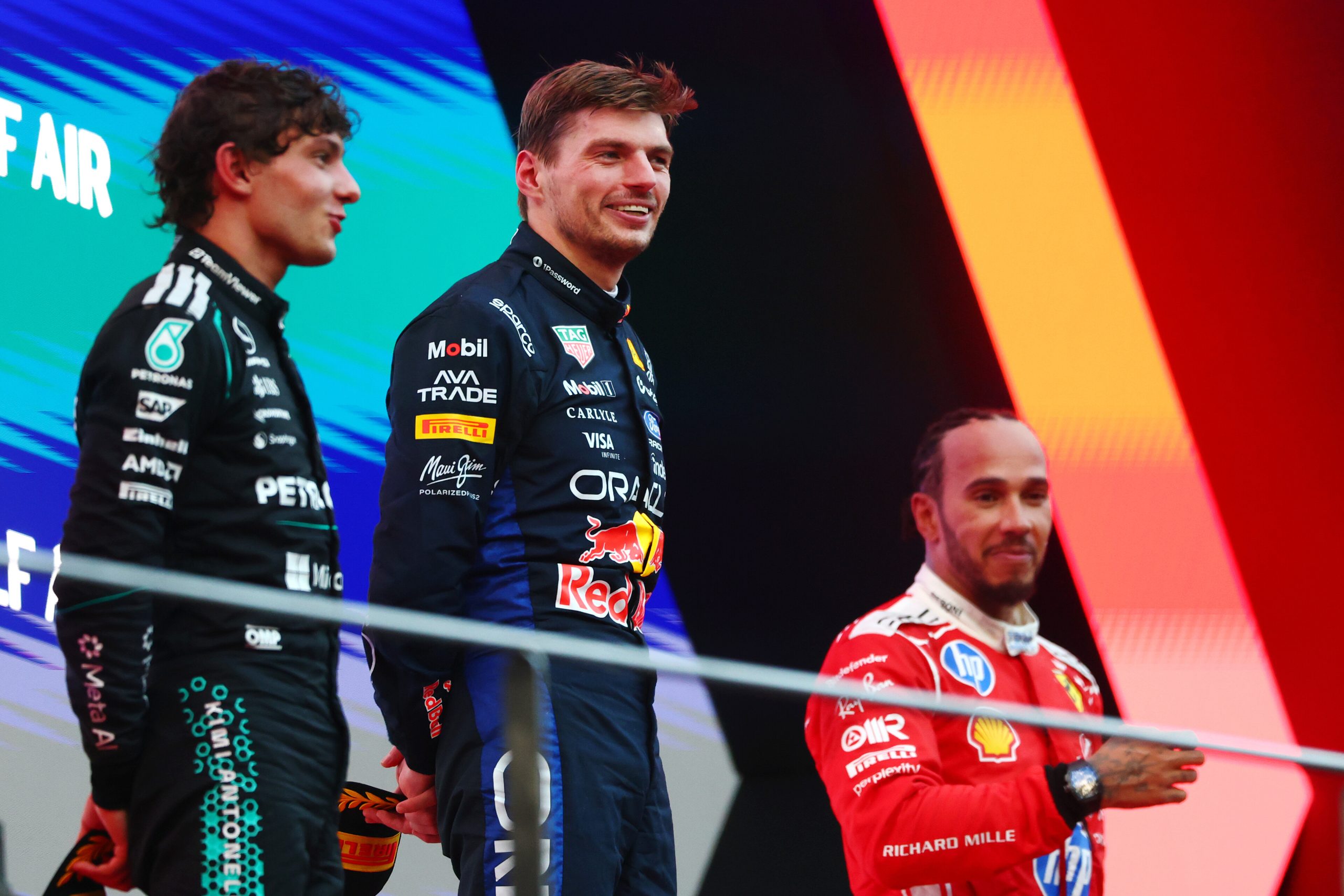
With multiple cars experiencing power loss on the formation lap, F1 drivers shared their thoughts on the unprecedented software glitch and how the rain impacted the behaviour of the 2026 cars following a chaotic race in Malaysia on Sunday.
As the teams and the drivers geared up for the first rain-affected race under the new power unit regulations, a substantial downpour resulted in the initial start getting delayed by 40 minutes.
A minimum of two laps was supposed to take place behind the Safety Car before a standing start. However, that schedule had to be abandoned soon after.
Polesitter Max Verstappen slowed down at the front of the field, reporting that he was unable to accelerate. Lewis Hamilton, who had lined up on the front row, experienced a similar power issue before stopping on the start-finish straight. The Ferrari driver eventually got going again but was now massively out of position.
Given that more cars were encountering problems and lapping considerably slower than usual, Race Control was forced to suspend the starting procedure and throw a red flag.
Nikolas Tombazis, the single-seater director of motorsport’s supreme governing body, explained that a bug in the software supplied to all teams by the FIA had triggered the chaos.
The FIA issued a software patch for all 11 teams to install during the red flag period, removing the standard wet-weather power delivery restrictions in the affected zones.
Following a delay of 93 minutes in total, the race resumed with the drivers in the original starting grid order.
The F1 podium finishers weigh in on the formation-lap fiasco in Malaysia
Max Verstappen addressed the loss of power on the first formation lap in the post-race press conference in Malaysia and emphasised how the 2026 F1 engines—featuring a near 50-50 split between the ICE and electrical energy—have become too complex due to their increased reliance on software algorithms.
“That’s the problem that we have. You know, these engines are so complicated and a lot of software is implemented. And, yeah, when there’s like some kind of [glitch], call it [whatever you want], that’s the problem.
“And, yeah, I triggered it first and then I look in my mirror, I just see everyone… I was like, ‘wait, are they waiting for me or what’s going [on]’?
“Yeah, we had the same speed.
“Then we did a lap and then I see eight other cars crawling still. And I saw you [Hamilton] by yourself crawling.
“What can you say? I mean, that’s not what you want, right? For the sport. Yeah, I hope there is a lesson learned.”
Meanwhile, Lewis Hamilton compared the speed of their cars on the formation lap at Sepang to the custom-built electric go-karts Lego had supplied for the drivers’ parade at Silverstone earlier in the year.
“It was like the Lego race. The same speed. The Lego power.”
The seven-time world champion also proclaimed that he had never encountered such an anomaly before.
“Well, I had to stop on track and stop the car and engine and restart it. I’ve never done that before.”
Kimi Antonelli, who secured a P2 in Sunday’s race, added: “It was insane. Like, at some point, we were five-wide in the straight, because we couldn’t understand what was going on.”
Verstappen on what caused the cars to lose power and the subsequent software update
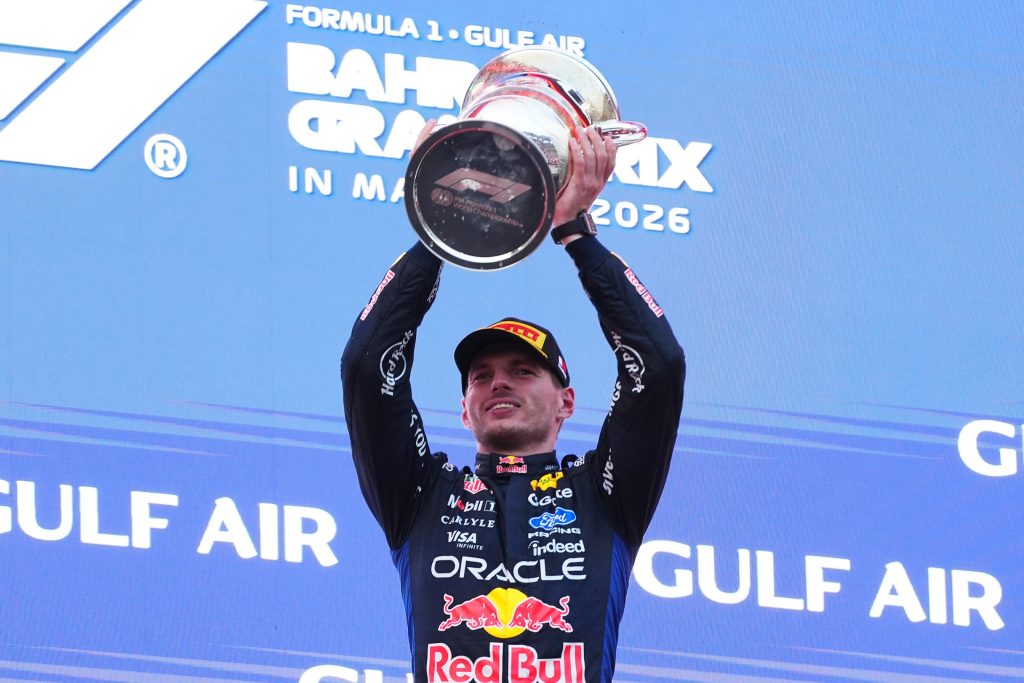
With regard to what had caused the long delay after the initial start got derailed, Max Verstappen revealed that it took longer to restart the race in Malaysia because the F1 teams had to update the software.
“It was because they had to update the software and then you have to load it into the car. I guess some had some faster laptops than others.
“Yeah, that was the delay, just getting the software transferred, I guess, for everyone.”
Asked if anything specific had led to the cars getting bogged down, the Dutchman touched on what typically happens when cars drop to very slow speeds behind the Safety Car and the role of the software in resetting energy limit constraints.
“Yeah, there was nothing going on. That was the problem. It was just like driving at, what, 35 kilometres, going uphill, actually losing speed.
“So, yeah, I don’t know exactly, because when you go too low in speed and too low RPM, for whatever reason, then it just bogs down. And normally it takes one or two seconds and it comes back. That’s basically also what I had in the start.
“But somehow that didn’t trigger in the first software round, and then in the second software round it was a bit better, luckily.
“Otherwise, I think I would’ve been stuck as well in the start, which I had probably a few times in the beginning of the year as well when I had a poor start. But it meant that I was last. So, at least now it was a bit better.”
McLaren F1 drivers talk about cars getting stuck at Sepang and the pitfalls of increased electrification
Lando Norris chalked up the software glitch and termination of the start procedure in Malaysia to the increased electrification of the 2026 F1 cars in a post-race print media session.
“It’s just horrible. I don’t know; it proves that we shouldn’t have any of that stuff, the electronic side.”
The reigning world champion’s teammate, Oscar Piastri, said mockingly, “I’ve never seen an F1 race delayed by a bug; that was a new one.”
While disclosing that he had encountered a momentary power loss as well, the Australian couldn’t provide a definitive answer to why the cars got stranded.
“I got stuck for about a second. Not really sure what happened. I think, obviously, we have a rule where you can’t deploy any MGU-K before 50 kilometres an hour. Everyone’s obviously recharging their packs and stuff like that.
“So, I don’t know if people just got stuck, and then, yeah, when the turbo doesn’t work for these things, you might as well push the car instead of using an engine. So, it was quite bizarre.
“It wasn’t a great look, but I think it would be unfair to point the finger before there’s an explanation.”
Leclerc thinks the 2026 F1 cars are dangerous to drive in the wet after Sunday’s race in Malaysia
As to how weird the first formation lap was in Malaysia with the cars getting stranded, Ferrari’s Charles Leclerc elaborated on his tricky experience and also clarified why the 2026 F1 cars are not well-suited to racing in wet conditions.
“Well, very tricky. I mean, very strange. At first, I thought that the Safety Car had switched off the light. I couldn’t see the Safety Car. I mean, there was too much spray. So, I thought the Safety Car had gone, and Max [Verstappen] was taking the gap to warm the tyres, which I was like, ‘okay, fine’.
“And then they told me on the radio, ‘we think Max has a problem’. I was like, ‘okay’. Then Max went, then Lewis [Hamilton] was slow, and I waited.
“Then at one point, I was just like, ‘okay, I’m probably just going to go’. And when I went on throttle, I had exactly the same problem, and I realised everybody was in the same boat. We were stuck at like 20 kph.
“So, I don’t know. It’s a little bit scary to see that onto a Formula 1 car. I think that’s a bit of our worry with these cars. Not to that extent, of course. This was a problem, but whatever you have, when you get out of the corner, sometimes you can have 100 horsepower more, 100 horsepower less. You are not completely in control of the power you are given.
“And then with this kind of visibility, like at the start of the race, you can have big shunts because of that. So, yeah, it’s not the greatest cars to drive in these conditions, for sure.”
Russell believes fans deserved better; Lawson says start procedures in 2026 are too complex
George Russell, who had suffered a DNF due to a power unit failure with 5 laps to go, stated that the spectators who had braved the weather and turned up to celebrate F1’s return to Malaysia deserved a better show.
“The whole day felt like a bit of a faff, with the delay and then the red flag and then endless laps under the Safety Car and then suddenly doing extra laps to allow Checo [Sergio Pérez] to overtake [behind the Safety Car], it didn’t feel very F1 today.
“I’d have been a bit disappointed if I was in the stands, watching that unfold. So, you know, that wasn’t good.”
Crossing the line in P7, Liam Lawson talked about how a radio malfunction had made the start procedure at Sepang even more confusing for him.
“I had no radio, and I knew I had no radio before I even pulled away for the formation lap.
“So, I was very stressed because there’s a lot of procedures especially on this year’s car that you have to do. And I literally was like, ‘no idea what’s going on’, no idea what mode I was meant to be in, and I had to look at my pit board on the way by to read a certain switch change I had to do.
“So, yeah, very stressful. That was probably the most alone I’ve ever felt and obviously very confusing when all the cars were slowing down. But again, I couldn’t talk to the team; I didn’t know if I was allowed to overtake or what. So, just a lot of confusion.”
Lindblad calls his formation-lap experience “weird”
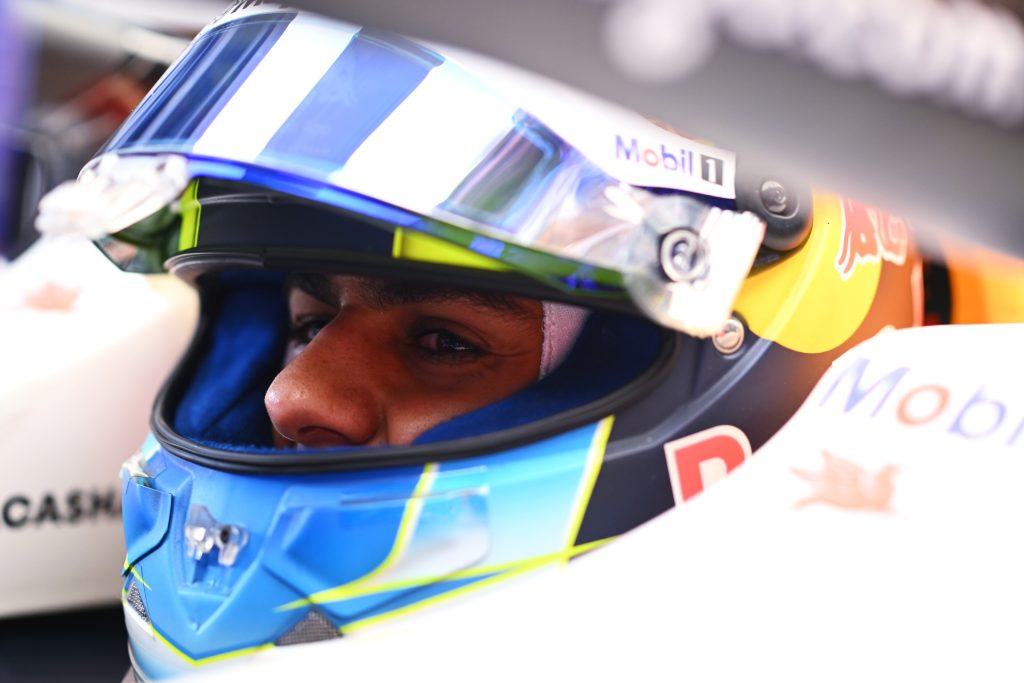
Reflecting on what driving the VCARB 03 on the first formation lap of Sunday’s F1 race in Malaysia felt like, Arvid Lindblad labelled it as a weird experience.
The Racing Bulls rookie also drew attention to the rule of how drivers are not permitted to pass one another on the formation lap and reckoned that multiple cars suddenly left powerless made the unintentional overtakes awkward.
“It was a bit weird. You’re kind of like, ‘what’s going on here?’ Even for myself, at one point, I had no power. The pedal just didn’t work. It’s pretty weird.
“We’ve had it before in the sim. In the sim, sometimes there’s some weird stuff that happens. But when you’re in the real car and you’re pressing the throttle and the thing just doesn’t move, it’s a bit weird.
“Luckily for me, I was able to go to a different mode. and I had the power. It was just very awkward because obviously you’re not allowed to pass on the formation lap.
“When me and Franco [Colapinto] decided to start passing some of the cars that had clear issues, they went red flag. It was obviously just a bit awkward for everyone, and it was a bit of a mess.”
While Bearman compares 2026 F1 cars to go-karts, Ocon quips about Windows restart after software issue in Malaysia
Ollie Bearman said that it was unsettling to have his throttle pedal being controlled by something beyond his control.
“I’ve never seen anything like that. No sickness, but I was shocked.
“I didn’t even know that the FIA could control our throttle pedal; that was quite scary, actually,” quipped the Brit.
“But, yeah, that’s a new experience in Formula 1. I don’t think we were expecting that one.”
In terms of what the situation felt like inside the cockpit, Bearman responded, “My throttle pedal stopped working.
“I was like, ‘that’s weird, my throttle pedal stopped working’. But it looks like everybody’s stopped working as well. So weird.”
Asked if there were any revs, the 21-year-old clarified that there were none and went on to liken the throttle malfunction to loss of power in go-karts with two-stroke engines.
“I mean, no. It was like it was not connected. The engine was just idling.
“Yeah, it just turned off. It was so weird. I mean, shocking.
“Like, never known anything like that in my life. It’s kind of like when you do in karting with two-stroke engines. You just boil up and just lose power. It was like that. Boiled up.”
With Esteban Ocon being one of the drivers who had stopped on the track, the Frenchman admitted that he was unsure of what was going on at that moment. Nonetheless, he cracked a joke that his VF-26 started working again once he restarted it like a Windows computer.
“Not too sure, no. The throttle was not working. So, that was quite interesting. I’ve never seen that before.
“I did a restart Windows, and everything went back fine. So, I stopped the car, just restart Windows, and went again. So, it was quite funny.”
Whether the Audi drivers did anything different
Reflecting on their perspectives of the formation-lap fiasco in Malaysia, Audi’s Nico Hülkenberg and Gabriel Bortoleto described how peculiar it was and revealed if they had done differently relative to the rest of the 2026 F1 grid.
“I think half the field was [affected],” said the German.
“That was very, very, I don’t know, obviously peculiar and strange. I mean, it was a hell of a day, you know, with so many weird things happening and in the race.”
As to if he had received any instructions regarding how to reset, Hülkenberg claimed that a software update fixed the issue during the red flag stoppage.
“Yeah, we were just cut, like a power cut down to idle, that kind of thing.
“No, there was nothing to do. You just had to come back, and then, I think, it was done by software during the red flag. But there was nothing; I couldn’t do anything during that formation.”
When asked if he knew what had triggered the lack of power, Bortoleto answered, “No, no clue; I just know there was an FIA issue and that’s it.”
Furthermore, the Brazilian driver disclosed that he had not attempted to reboot his R26 before the initial start procedure was aborted at Sepang.
“I was limited at 30 kph, and I was going super slow, and to the pits and then I boxed because it was red flagged.
“Some people, I think, power cycled the car, and I didn’t. But, I think, it was the safest call to go to the pit lane. We knew it was going to be a red flag at some point.”
Cadillac drivers unhappy with F1’s software problem in Malaysia
Cadillac’s Sergio Pérez, who was behind the wheel of one of several Ferrari-powered cars that were affected in Malaysia, did not hold back in his criticism of the 2026 F1 regulations and compared the experience to driving a rental go-kart.
“It felt like you were in the rental kart thing, and you run out of time. Basically, that’s how it felt.
“I mean, it’s obviously not great what happened today. I’m sure we will learn from it as a sport. But yeah, what happened today is totally unacceptable for the sport.”
Valtteri Bottas discussed how his throttle was no longer responding and that he had to run his MAC-26 through a power cycle to get it going again. Nevertheless, he appeared hopeful that a solution will eventually come forth.
“Basically lost the response of the throttle. So, we were all just going on idle.
“I’ve never seen anything like this. Some software issue, obviously.
“I was just waiting for an instruction. Because sometimes you can clear some sensors or something. But in the end, I stopped. We power cycled the car. And then it was fine.
“It was pretty clear that it was a bigger issue, not just our car. But yeah, quite strange. And I’m sure it will be worked out.”
Alonso, Stroll, and Albon share their thoughts on F1’s over-reliance on technology
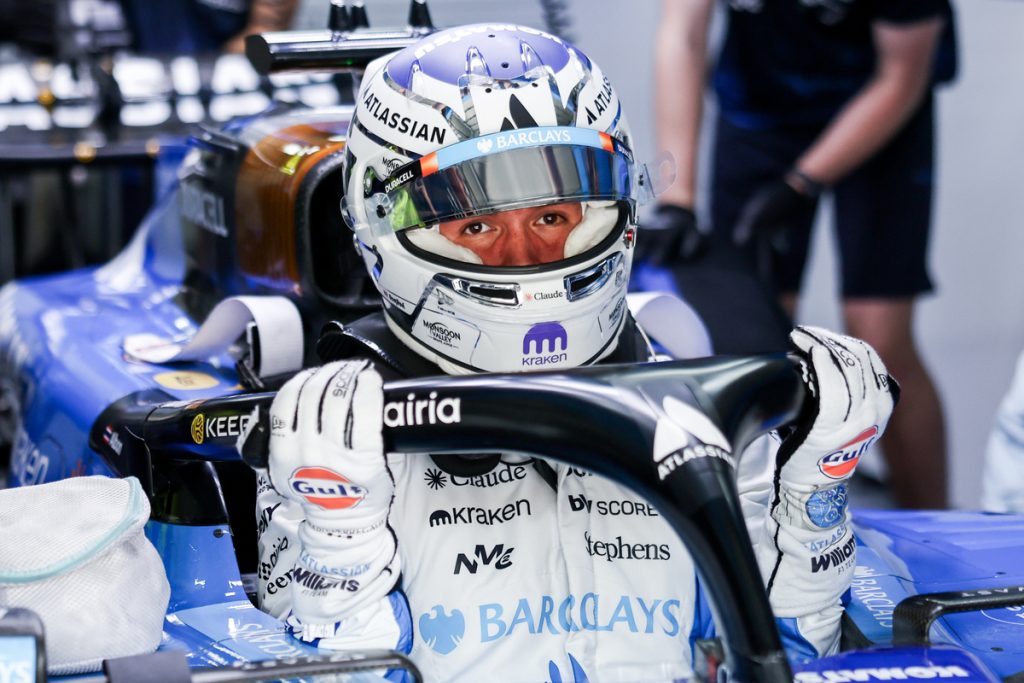
Speaking to Spanish media, two-time world champion Fernando Alonso made it clear that he isn’t too pleased with technology taking over the sport and claimed that viewers aren’t content with this development in 2026.
“There’s too much technology; in the end, the spectator doesn’t appreciate it.”
Asked if he had experienced the same throttle issue as several other drivers on the grid, Lance Stroll confirmed, “No.”
The Canadian also agreed with Norris’s statement that F1 is heavily dependent on software under the new regulations.
“For sure, for sure. We know that, it’s too much.”
Stroll also stated the teams awaiting a new software update and the restart getting pushed back prevented them from delivering a great spectacle in the first wet race of the 2026 F1 season in Malaysia.
“Yeah, we missed some good racing, I think. The wet tyres at the beginning, we should have been out there running. Instead, several cars were fixing their software issues. I think it’s a bit sad to see.”
Alex Albon, who had retired from the race on Lap 43 after suffering a gearbox problem, described the bug-induced power loss as funny.
“I thought everyone was waiting for everyone. But actually, because everyone had an issue, everyone was behind everyone.
“I was like, wow, ‘I’ve never seen drivers so courteous and waiting for everyone to go’. I was like, ‘it’s very not Formula 1 driver-like’, until I realised everyone had the same issue.
“Then I thought, ‘okay, that makes sense’. A little bit funny. I don’t want to say embarrassing; I want to use the word funny.”
Sainz argues the 2026 F1 regulations are not ideal after tricky race in Malaysia and calls for a return to V8
With respect to the optics of F1 having crippling software issues and an aborted race start in Malaysia, Carlos Sainz remarked that they should dwell on why the 2026 F1 regulations were approved in the first place and learn from their mistakes.
“I think F1 needs to have a hard look at themselves and see how we ended up in this situation. It is clear the regs are extremely complicated for the drivers, for the teams, for the PUs, for the manufacturers.
“Switching power, dry to wet, it is too complicated. Again, my only question mark is who, five years ago, decided that this was the direction to go? Now that we are in this situation, I think, we are doing the best with what we are given as a sport and as regulations.
“I think the FIA and F1 are doing the best they can with what was decided four years ago, five years ago. But clearly what was decided four or five years ago is wrong and today proves it again.
“Not a lot more to say. Let’s just learn as a sport not to do those mistakes again and not suffer from the same strange cases again.”
The Spaniard also lamented the over-reliance on the electronic side that’s superseding driver skill and claimed that F1 wouldn’t encounter similar glitches with an aspirated V8 engine.
“I was enjoying it as I was gaining places for free, but it could have happened to me also. It was a software glitch probably. I was on the lucky side.
“Clearly something to understand from that, but that is what happens when there is so much software, so much controls involved. If it was a V8 aspirated, it would have never happened. We all know that.”