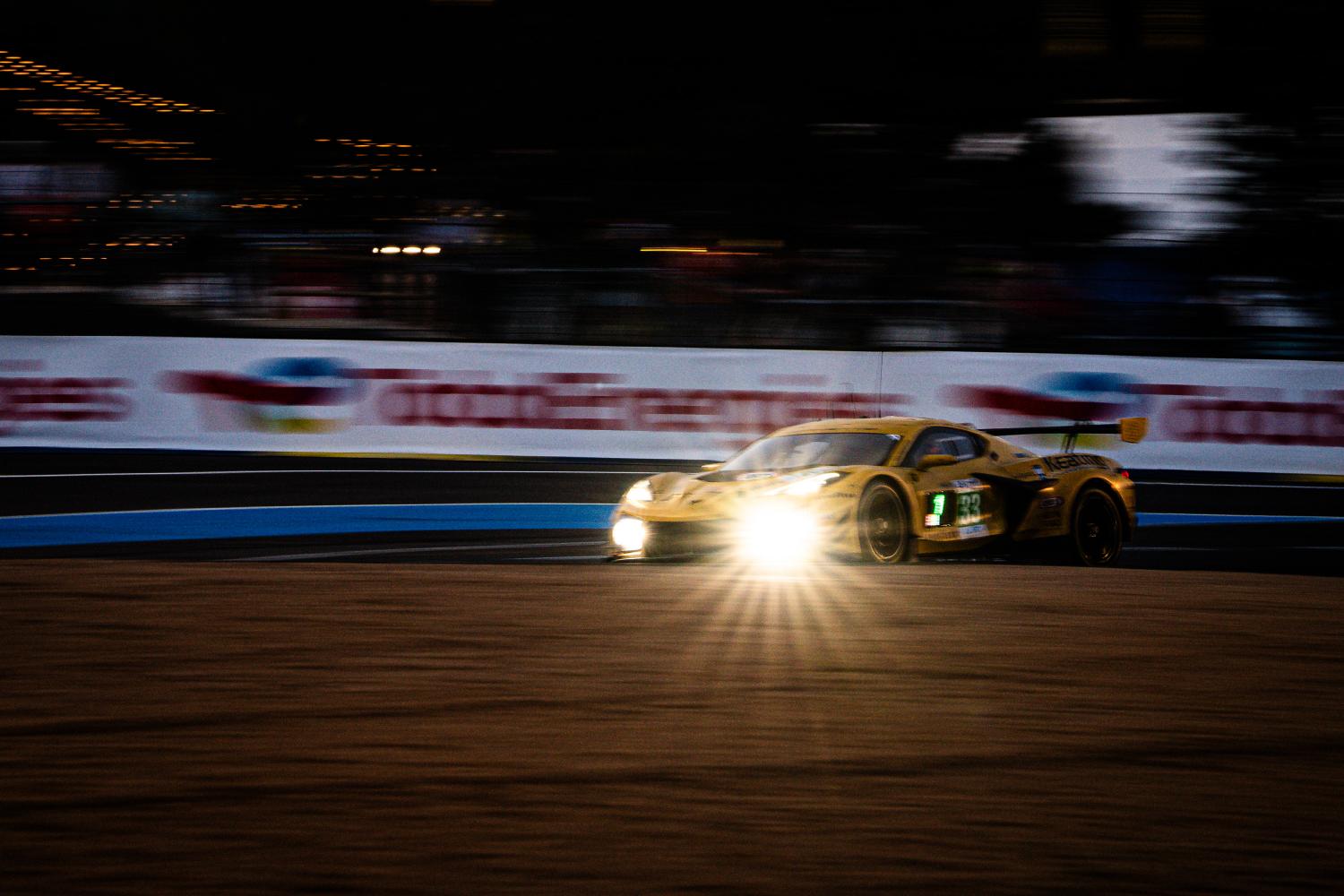
Genesis Magma Racing made history at the 2026 24 Hours of Le Mans as one of its GMR-001 Hypercars reached the chequered flag on the manufacturer’s first appearance at the event.
Paul-Loup Chatin, Mathieu Jaminet and Dani Juncadella completed 372 laps in the #19 Genesis before finishing 13th overall. Although technical problems ended any hope of a leading result, the car survived one of motorsport’s most demanding races and gave the team valuable information for the next phase of its Hypercar programme.
The result also made Genesis the first South Korean manufacturer to compete in the 24 Hours of Le Mans and reach the finish. Meanwhile, the sister #17 car retired after 16 hours because of a suspension failure.
However, the final classification only showed part of the story. The team qualified both cars inside the top 10 and ran among the leading Hypercars for several hours, demonstrating far greater potential than many expected from such a young programme.
Genesis shows early promise at Le Mans
Genesis arrived at the Circuit de la Sarthe with limited experience. The GMR-001 had completed only three races before the team faced its first 24 Hours of Le Mans, placing it against manufacturers and teams with years of experience at the event.
Nevertheless, both cars immediately showed competitive pace. Genesis secured sixth and ninth positions on the starting grid, confirming that the new Hypercar could challenge established rivals over a single lap.
The team then adopted a measured approach for the race. Rather than chasing an immediate headline result, Genesis focused on consistency, clean execution and operational efficiency. The drivers avoided unnecessary risks, while the crew worked to understand how both cars performed across longer stints and changing conditions.
That approach allowed Genesis to remain in contention during the opening stages. Accurate pit stops and effective management of neutralisation periods helped the team advance through the field without compromising either car.
Strategy moves both GMR-001s towards leaders
Genesis made one of its most important strategic decisions during a safety car period when it kept both cars on track. The move brought the #17 and #19 back onto the same lap as the leader and placed them close to the front-running group.
As darkness fell, Jaminet and Mathys Jaubert continued to demonstrate the GMR-001’s potential. Jaminet moved the #19 into fourth place, while Jaubert kept the #17 involved in the top-10 battle.
For several hours, Genesis raced alongside the strongest teams in the Hypercar field. The performance suggested that the project had already developed meaningful pace, despite its limited competition mileage.
However, Le Mans soon exposed the reliability problems that the team still needed to address.
Technical problems disrupt Genesis challenge
At approximately 04:00, the #19 stopped between Mulsanne Corner and Indianapolis after suffering a technical problem. Jaminet managed to restart the car on track, but the issue returned soon afterwards and ended the team’s hopes of finishing near the front.
The #17 then suffered a suspension failure after 16 hours of racing. The problem forced Genesis to retire the car and brought an early end to the Le Mans debut of Jaubert, André Lotterer and Pipo Derani.
Rather than allow those setbacks to end its weekend, Genesis concentrated its efforts on getting the #19 to the finish. The mechanics and engineers continued working through the problems, while Chatin, Jaminet and Juncadella remained focused on completing the race.
Jaminet praised the team’s determination after the #19 reached the chequered flag.
“It’s definitely been a roller coaster for us, but that’s what you expect in your first 24 Hours, as a new team, a new car. Obviously, I think we showed better pace than maybe we expected. For sure we had a couple of issues, but we fought back. […] No one ever gave up. We just made history. The first ever Korean brand to make it to the 24 Hours of Le Mans, the first one for Genesis,”
Genesis completes historic first Le Mans
Although 13th place fell below the positions Genesis occupied during the first half of the race, the finish represented an important achievement for the programme.
The #19 completed 372 laps after the team overcame technical difficulties that could easily have ended its race. Chatin, Jaminet and Juncadella therefore gave Genesis a classified finish on its first attempt at Le Mans.
The result also provided the team with data that it could not gather during shorter races or private testing. Le Mans placed the GMR-001 under sustained pressure for a full day and revealed how the car, drivers and operational team responded to fatigue, traffic and mechanical stress.
Genesis left the event with a clearer understanding of the car’s strengths and the reliability weaknesses that require urgent attention.
Abiteboul outlines reliability priority
Team Principal Cyril Abiteboul viewed the finish as a positive result because Genesis achieved its main objective of bringing one car to the chequered flag.
However, he acknowledged that the problems affecting both entries prevented the team from converting its early pace into a stronger finish.
“Our first 24 Hours of Le Mans with Genesis Magma Racing ends on a positive note. Getting one car to the finish was our main objective. […] The #17 unfortunately retired with suspension failure. We faced a number of reliability challenges which will be our priority moving forward. Despite this, the car showed strong potential throughout the week, especially during the first half of the race, where we were consistently fighting inside the top 10. While we faced challenges, the team showed great resilience, composure and teamwork.”
Abiteboul’s assessment reflected the contrasting elements of Genesis’ debut. The GMR-001 displayed enough speed to compete near the front, but the team still needs greater reliability before it can sustain that challenge throughout a full 24-hour race.
Nevertheless, Genesis now has the information required to target those weaknesses as it continues developing the car.
Lotterer says Genesis exceeded expectations
Three-time Le Mans winner Lotterer brought extensive experience to the new programme and helped guide the team through its first appearance at the event.
Although the suspension problem ended the #17’s race, Lotterer believed Genesis had already shown the wider motorsport world what the manufacturer could achieve.
“We definitely showed the world who Genesis is. I think we surprised a few people and achieved more than we could hope for with our new team, new car, new brand, everything. But our engine lasted, everything around it lasted until that point and we didn’t have any big problems during the race which was quite remarkable. We need to study and come back stronger, but I think for our first Le Mans appearance it was very positive, especially with the sister car reaching the finish to complete the weekend.”
Lotterer also highlighted the reliability of several major components before the suspension failure. While Genesis must investigate the problems that stopped the #17, the car completed 16 demanding hours without a major powertrain issue.
That durability, combined with the team’s front-running pace, gave Genesis several encouraging foundations on which to build.
Genesis leaves Le Mans with clear direction
Genesis did not arrive at Le Mans expecting to master the event at its first attempt. Instead, the manufacturer wanted to test its new team and Hypercar against the toughest conditions in endurance racing.
The programme achieved that objective. Both cars qualified inside the top 10, the team raced near the front and the #19 completed the full distance. At the same time, the technical failures exposed the areas that Genesis must improve before it can challenge for victory.
Le Mans also revealed the character of the new operation. The team remained composed after losing the #17 and continued working when the #19 dropped out of contention. That resilience ultimately allowed Genesis to finish its first 24-hour race.
The manufacturer’s first chapter at Le Mans therefore ended without a podium but with something equally valuable at this stage of the project: proven speed, a classified finish and a clear understanding of the work required to return stronger.