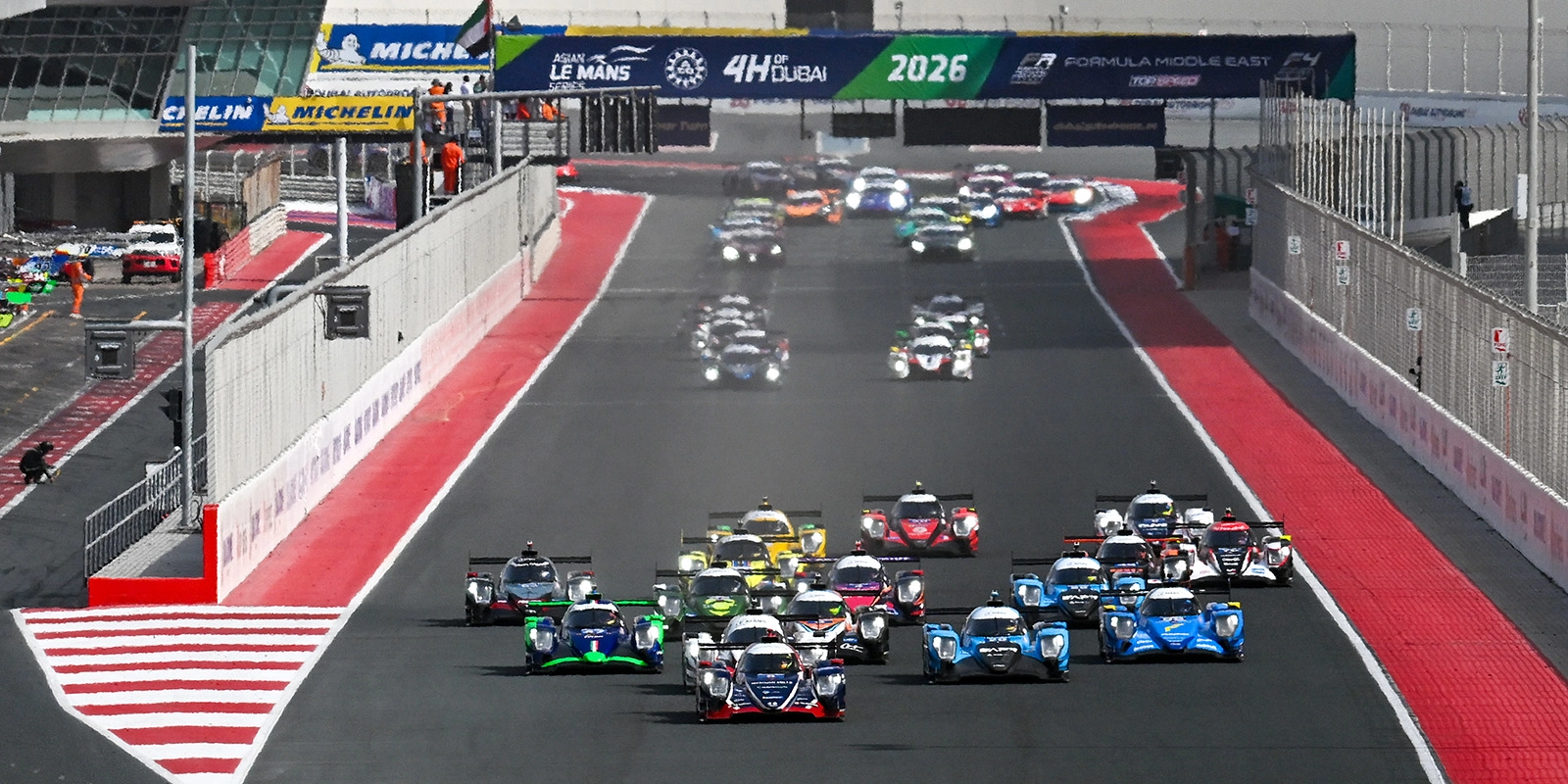
As reported by Sportscar365, the Asian Le Mans Series has confirmed the driver line-up rules for its new Pro-Am Hypercar class, which will debut in the 2026/27 season.
Series officials have now aligned the category with the LMP2 Pro-Am format. Each Hypercar entry must include exactly one FIA Bronze-rated driver, while teams may use a maximum of one Platinum-rated driver. The third seat can go to either a Silver or Gold-rated driver.
The decision marks a change from the structure outlined during the ACO press conference at Le Mans, where officials indicated a minimum of one Bronze, a Bronze or Silver option for the second seat, and a Gold or Platinum driver in the third seat. Following consultation with stakeholders, the series has now chosen a more familiar Pro-Am framework.
Asian Le Mans Series explains Hypercar line-up rules
The Asian Le Mans Series (ALMS) said it wants to prevent fully professional, factory-style crews from dominating the new class. Instead, the championship aims to give independent teams flexibility while protecting the role of Bronze and Gold drivers.
“Our main goal is to avoid pure factory (all-professional) line-ups in the Asian Le Mans Series Hypercar class. By setting these limits, we give independent teams the freedom to create many different, exciting driver combinations.
“Additionally, a key aim of this new rule is to give a true and meaningful role to Gold drivers. This structure ensures that Gold-rated drivers remain a valuable and essential part of a winning team.
“By adopting the exact same criteria as LMP2 Pro/Am, we are leaning on a format that has already proven to be highly successful. We are confident this will create a fantastic mix of drivers and deliver incredible Hypercar racing in the Asian Le Mans Series!”
The rules therefore create a different identity from the factory-led FIA World Endurance Championship Hypercar class. They also keep the Asian Le Mans Series focused on privateer participation, which has long formed a key part of the championship’s structure.
Series adopts LMP2 Pro-Am framework
A further statement to competitors confirmed that the championship had made the decision after close consultation with stakeholders.
“To achieve our shared goals, we have decided to use the same lineup rules for the Hypercar class that we currently use in LMP2 Pro-Am,” the statement read. “This system already works perfectly and is very popular with our teams and fans.
“Our main goal is to avoid pure factory (all-professional) lineups in the Asian Le Mans Series Hypercar class. By setting these limits, we give independent teams the freedom to create many different, exciting driver combinations.
“Additionally, a key aim of this new rule is to give a true and meaningful role to Gold drivers. This structure ensures that Gold-rated drivers remain a valuable and essential part of a winning team.
“By adopting the exact same criteria as LMP2 Pro-Am, we are leaning on a format that has already proven to be highly successful.
“We are confident this will create a fantastic mix of drivers and deliver incredible Hypercar racing in the Asian Le Mans Series.”
The format should allow teams to build varied line-ups around amateur and semi-professional drivers, while still leaving room for one elite professional in each car. As a result, the class could attract privateer teams that want access to top-level machinery without entering a full factory-style programme.
Ferrari and Peugeot interest already public
Interest in the new Hypercar class has already started to emerge.
Ferrari, through AF Corse, and Peugeot, through BBM Sport, have both shown public interest in the category. Meanwhile, Proton Competition and Algarve Pro Racing have looked at potential Porsche programmes, although neither plan has received confirmation.
However, not every possible route now appears likely. A privately entered Acura no longer seems to be under consideration. In addition, despite public comments around the availability of Vanwall and Isotta Fraschini machinery, neither outfit appears close to securing a race deal.
ACO President Pierre Fillon previously projected a grid of between three and six Hypercar entries. Under the class regulations, all of those entries must come from privateer teams.
Calendar decision creates another major question
The driver line-up rules arrive as the Asian Le Mans Series prepares to finalise its 2026/27 calendar.
The championship has not yet released a formal schedule. However, the initial plan reportedly involved moving the back-to-back UAE double-headers at Dubai Autodrome and Yas Marina to December, followed by a season finale at Sepang early in the new year.
Since then, wider geopolitical uncertainty in the Middle East has complicated the picture. Teams, drivers and suppliers now face questions around travel, logistics and insurance, and those concerns could influence the final calendar decision.
Europe emerges as possible alternative
If organisers decide to avoid the Middle East, the series could move towards a Southern European season. Officials also considered a season based entirely in South East Asia, while interested parties in Australia have reportedly pushed to bring the championship there.
A Europe-based calendar would likely reduce costs and simplify logistics for many European teams. However, it would also create its own challenges. Several parties interested in Hypercar entries have expressed limited appetite from clients for running expensive Hypercars in potentially poor weather conditions.
That concern matters because Hypercar budgets would sit far above current LMP2 costs. Therefore, the final calendar could play a major role in determining how many teams commit to the new class.
Hypercar plans take shape before 2026/27 debut
The Asian Le Mans Series has now given teams a clearer sporting framework for Hypercar’s arrival. By using the LMP2 Pro-Am line-up model, the championship has placed privateer racing, Bronze drivers and Gold-rated talent at the centre of the new category.
However, the calendar remains equally important. Manufacturer interest and privateer ambition can only translate into entries if teams receive a schedule that works financially and logistically.
For now, the Pro-Am Hypercar class has taken an important step forward. The next key decision will decide where its first season takes place.